


PaperRaven: a machine assistant for generating topic-bounded, verified samples of the scientific literature.
Science should be machine-readable - Marginal REVOLUTION
One of the leading tasks of our time: We develop a machine-automated approach for extracting results from papers, which we assess via a comprehensive review of the entire eLife corpus. Our method facilitates a direct comparison of machine and peer review, and sheds light on key challenges that must be overcome in order to facilitate […]

Span-level Detection of AI-generated Scientific Text via Contrastive Learning and Structural Calibration
The rapid adoption of large language models (LLMs) in scientific writing raises serious concerns regarding authorship integrity and the reliability of scholarly publications. Existing detection approaches mainly rely on document-level classification or surface-level statistical cues; however, they neglect fine-grained span localization, exhibit weak calibration, and often fail to generalize across disciplines and generators. To address these limitations, we present Sci-SpanDet, a structure-aware framework for detecting AI-generated scholarly texts. The proposed method combines section-conditioned stylistic modeling with multi-level contrastive learning to capture nuanced human-AI differences while mitigating topic dependence, thereby enhancing cross-domain robustness. In addition, it integrates BIO-CRF sequence labeling with pointer-based boundary decoding and confidence calibration to enable precise span-level detection and reliable probability estimates. Extensive experiments on a newly constructed cross-disciplinary dataset of 100,000 annotated samples generated by multiple LLM families (GPT, Qwen, DeepSeek, LLaMA) demonstrate that Sci-SpanDet achieves state-of-the-art performance, with F1(AI) of 80.17, AUROC of 92.63, and Span-F1 of 74.36. Furthermore, it shows strong resilience under adversarial rewriting and maintains balanced accuracy across IMRaD sections and diverse disciplines, substantially surpassing existing baselines. To ensure reproducibility and to foster further research on AI-generated text detection in scholarly documents, the curated dataset and source code will be publicly released upon publication.

Towards Automating Scientific Review with Google's Paper Assistant Tool
Artificial intelligence is driving a revolution in scientific discovery, accelerating everything from hypothesis generation to mathematical theorem proving. However, this rapid acceleration is creating a systemic challenge: traditional human peer review cannot scale to match the influx of AI-assisted science. Ultimately, to resolve this tension, we must also deploy AI to accelerate the verification and review process itself. To frame the discussion around this transition, we propose a taxonomy consisting of four progressive levels of AI-human collaboration in scientific evaluation, and discuss various trade-offs involved with each. As a step toward this future, we introduce the Paper Assistant Tool (PAT), an agentic AI framework built for deep scientific review and verification. PAT ingests full scientific manuscripts and produces a comprehensive evaluation, checking theoretical results, validating experiments, suggesting improvements, and identifying potential flaws. By utilizing inference scaling techniques, PAT is able to identify deeper issues than a single model call alone, achieving a 34% improvement over zero-shot recall on mathematical errors in the SPOT benchmark. Pilot deployments of PAT as a pre-submission tool for authors at two major Computer Science conferences -- STOC and ICML -- demonstrate its ability to identify critical errors and suggest substantive improvements to research papers. By catching errors early, PAT eases the cognitive burden placed on referees, while preserving their control over the outcomes of the review process.
Can LLMs Identify Critical Limitations within Scientific Research? A Systematic Evaluation on AI Research Papers
Peer review is fundamental to scientific research, but the growing volume of publications has intensified the challenges of this expertise-intensive process. While LLMs show promise in various scientific tasks, their potential to assist with peer review, particularly in identifying paper limitations, remains understudied. We first present a comprehensive taxonomy of limitation types in scientific research, with a focus on AI. Guided by this taxonomy, for studying limitations, we present LimitGen, the first comprehensive benchmark for evaluating LLMs' capability to support early-stage feedback and complement human peer review. Our benchmark consists of two subsets: LimitGen-Syn, a synthetic dataset carefully created through controlled perturbations of high-quality papers, and LimitGen-Human, a collection of real human-written limitations. To improve the ability of LLM systems to identify limitations, we augment them with literature retrieval, which is essential for grounding identifying limitations in prior scientific findings. Our approach enhances the capabilities of LLM systems to generate limitations in research papers, enabling them to provide more concrete and constructive feedback.
ReplicationBench: Can AI Agents Replicate Astrophysics Research Papers?
Frontier AI agents show increasing promise as scientific research assistants, and may eventually be useful for extended, open-ended research workflows. However, in order to use agents for novel research, we must first assess the underlying faithfulness and correctness of their work. To evaluate agents as research assistants, we introduce ReplicationBench, an evaluation framework that tests whether agents can replicate entire research papers drawn from the astrophysics literature. Astrophysics, where research relies heavily on archival data and computational study while requiring little real-world experimentation, is a particularly useful testbed for AI agents in scientific research. We split each paper into tasks which require agents to replicate the paper's core contributions, including the experimental setup, derivations, data analysis, and codebase. Each task is co-developed with the original paper authors and targets a key scientific result, enabling objective evaluation of both faithfulness (adherence to original methods) and correctness (technical accuracy of results). ReplicationBench is extremely challenging for current frontier language models: even the best-performing language models score under 20%. We analyze ReplicationBench trajectories in collaboration with domain experts and find a rich, diverse set of failure modes for agents in scientific research. ReplicationBench establishes the first benchmark of paper-scale, expert-validated astrophysics research tasks, reveals insights about agent performance generalizable to other domains of data-driven science, and provides a scalable framework for measuring AI agents' reliability in scientific research.
QTL mapping of carrot resistance to leaf blight with connected populations: stability across years and consequences for breeding
As generative NLP can now produce content nearly indistinguishable from human writing, it is becoming difficult to identify genuine research contributions in academic writing and scientific publications. Moreover, information in machine-generated text can be factually wrong or even entirely fabricated. In this work, we introduce a novel benchmark dataset containing human-written and machine-generated scientific papers from SCIgen, GPT-2, GPT-3, ChatGPT, and Galactica, as well as papers co-created by humans and ChatGPT. We also experiment with several types of classifiers—linguistic-based and transformer-based—for detecting the authorship of scientific text. A strong focus is put on generalization capabilities and explainability to highlight the strengths and weaknesses of these detectors. Our work makes an important step towards creating more robust methods for distinguishing between human-written and machine-generated scientific papers, ultimately ensuring the integrity of scientific literature.

SciFact-Open: Towards open-domain scientific claim verification
While research on scientific claim verification has led to the development of powerful systems that appear to approach human performance, these approaches have yet to be tested in a realistic setting against large corpora of scientific literature. Moving to this open-domain evaluation setting, however, poses unique challenges; in particular, it is infeasible to exhaustively annotate all evidence documents. In this work, we present SciFact-Open, a new test collection designed to evaluate the performance of scientific claim verification systems on a corpus of 500K research abstracts. Drawing upon pooling techniques from information retrieval, we collect evidence for scientific claims by pooling and annotating the top predictions of four state-of-the-art scientific claim verification models. We find that systems developed on smaller corpora struggle to generalize to SciFact-Open, exhibiting performance drops of at least 15 F1. In addition, analysis of the evidence in SciFact-Open reveals interesting phenomena likely to appear when claim verification systems are deployed in practice, e.g., cases where the evidence supports only a special case of the claim. Our dataset is available at https://github.com/dwadden/scifact-open.
PaperAudit-Bench: Benchmarking Error Detection in Research Papers for Critical Automated Peer Review
Large language models (LLMs) can generate fluent peer reviews but often miss sparse, subtle, and document-level scientific errors. We introduce PaperAudit-Bench, a benchmark for evaluating paper-level error detection and error-aware automated review. It comprises (1) PaperAudit-Dataset, 220 high-quality AI/ML papers containing more than 2,200 controlled synthetic errors across eight categories, and (2) PaperAudit-Review, an evidence-aware framework that links structured error detection to review generation. Experiments across models, error categories, paper sections, and analysis depths show that sparse long-context auditing remains challenging for current LLMs. Conditioning review generation on explicit, manuscript-grounded error evidence produces more conservative and discriminative assessments that align more closely with human judgments than representative automated-review baselines. The dataset also supports post-training compact detectors through SFT and RL; Qwen3-14B achieves 55.8% F1 at Detection@1 under a fixed held-out protocol. A PubPeer transfer study and deployment in ScienceOne, a scientific foundation-model platform led by the Chinese Academy of Sciences, further illustrate practical applicability. Code and Dataset Page: https://github.com/TU2021/PaperAudit ScienceOne Manuscript Review: https://www.scienceone.cn/lit/#/assistant
Denario Project: Deep Knowledge Artificial Intelligence Agents for Scientific Discovery
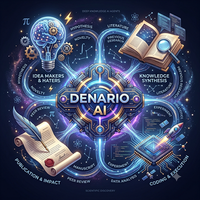
We present , an Artificial Intelligence (AI) multiagent system designed to serve as a scientific research assistant. can perform many different tasks, such as generating ideas, checking the literature, developing research plans, writing and executing code, making plots, and drafting a scientific paper. The system has a modular architecture, allowing it to handle specific tasks, such as generating an idea or carrying out near end-to-end scientific analysis using as a deep-research backend (end-to-end except for the novelty assessment, which is intentionally left for the user to inspect). In this work, we describe in detail and its modules, and illustrate its capabilities by presenting multiple AI-generated papers generated by it in many different scientific disciplines such as astrophysics, biology, biophysics, biomedical informatics, chemistry, material science, mathematical physics, medicine, neuroscience, and planetary science. can also produce work that combines ideas from different disciplines, which we illustrate with a single ( N = 1 ) example: a paper that applies methods from quantum physics and machine learning to astrophysical data. We report the evaluations performed on these papers by domain experts, who provided both numerical scores and reviewlike feedback. These papers were scored by domain experts on our team; we report these scores as an indicative self-assessment rather than an independent evaluation, and we flag the resulting conflict of interest explicitly. Most drafts were rated above the midpoint of a 0–10 scale, with several rated 8–9, indicating that the generated papers reach the level a good undergraduate or early graduate student could achieve after weeks or a few months of work. They should be regarded as first drafts that require expert development, not publication-ready papers. We also document an important failure mode in which, when the input data cannot be read, the system may silently generate synthetic data, which we flag explicitly as a key limitation. We then highlight the strengths, weaknesses, and limitations of the current system. Finally, we discuss the ethical implications of AI-driven research and reflect on how such technology relates to the philosophy of science. We publicly release the code at . A demo can also be run directly on the web at , and the full app will be deployed on the cloud.
Comparing the writing style of real and artificial papers
Recent years have witnessed the increase of competition in science. While promoting the quality of research in many cases, an intense competition among scientists can also trigger unethical scientific behaviors. To increase the total number of published papers, some authors even resort to software tools that are able to produce grammatical, but meaningless scientific manuscripts. Because automatically generated papers can be misunderstood as real papers, it becomes of paramount importance to develop means to identify these scientific frauds. In this paper, I devise a methodology to distinguish real manuscripts from those generated with SCIGen, an automatic paper generator. Upon modeling texts as complex networks (CN), it was possible to discriminate real from fake papers with at least 89\% of accuracy. A systematic analysis of features relevance revealed that the accessibility and betweenness were useful in particular cases, even though the relevance depended upon the dataset. The successful application of the methods described here show, as a proof of principle, that network features can be used to identify scientific gibberish papers. In addition, the CN-based approach can be combined in a straightforward fashion with traditional statistical language processing methods to improve the performance in identifying artificially generated papers.
Language agents achieve superhuman synthesis of scientific knowledge
Language models are known to hallucinate incorrect information, and it is unclear if they are sufficiently accurate and reliable for use in scientific research. We developed a rigorous human-AI comparison methodology to evaluate language model agents on real-world literature search tasks covering information retrieval, summarization, and contradiction detection tasks. We show that PaperQA2, a frontier language model agent optimized for improved factuality, matches or exceeds subject matter expert performance on three realistic literature research tasks without any restrictions on humans (i.e., full access to internet, search tools, and time). PaperQA2 writes cited, Wikipedia-style summaries of scientific topics that are significantly more accurate than existing, human-written Wikipedia articles. We also introduce a hard benchmark for scientific literature research called LitQA2 that guided design of PaperQA2, leading to it exceeding human performance. Finally, we apply PaperQA2 to identify contradictions within the scientific literature, an important scientific task that is challenging for humans. PaperQA2 identifies 2.34 +/- 1.99 contradictions per paper in a random subset of biology papers, of which 70% are validated by human experts. These results demonstrate that language model agents are now capable of exceeding domain experts across meaningful tasks on scientific literature.
PaperOrchestra: A Multi-Agent Framework for Automated AI Research Paper Writing
Synthesizing unstructured research materials into manuscripts is an essential yet under-explored challenge in AI-driven scientific discovery. Existing autonomous writers are rigidly coupled to specific experimental pipelines, and produce superficial literature reviews. We introduce PaperOrchestra, a multi-agent framework for automated AI research paper writing. It flexibly transforms unconstrained pre-writing materials into submission-ready LaTeX manuscripts, including comprehensive literature synthesis and generated visuals, such as plots and conceptual diagrams. To evaluate performance, we present PaperWritingBench, the first standardized benchmark of reverse-engineered raw materials from 200 top-tier AI conference papers, alongside a comprehensive suite of automated evaluators. In side-by-side human evaluations, PaperOrchestra significantly outperforms autonomous baselines, achieving an absolute win rate margin of 50%-68% in literature review quality, and 14%-38% in overall manuscript quality.
Can large language models provide useful feedback on research papers? A large-scale empirical analysis
Expert feedback lays the foundation of rigorous research. However, the rapid growth of scholarly production and intricate knowledge specialization challenge the conventional scientific feedback mechanisms. High-quality peer reviews are increasingly difficult to obtain. Researchers who are more junior or from under-resourced settings have especially hard times getting timely feedback. With the breakthrough of large language models (LLM) such as GPT-4, there is growing interest in using LLMs to generate scientific feedback on research manuscripts. However, the utility of LLM-generated feedback has not been systematically studied. To address this gap, we created an automated pipeline using GPT-4 to provide comments on the full PDFs of scientific papers. We evaluated the quality of GPT-4's feedback through two large-scale studies. We first quantitatively compared GPT-4's generated feedback with human peer reviewer feedback in 15 Nature family journals (3,096 papers in total) and the ICLR machine learning conference (1,709 papers). The overlap in the points raised by GPT-4 and by human reviewers (average overlap 30.85% for Nature journals, 39.23% for ICLR) is comparable to the overlap between two human reviewers (average overlap 28.58% for Nature journals, 35.25% for ICLR). The overlap between GPT-4 and human reviewers is larger for the weaker papers. We then conducted a prospective user study with 308 researchers from 110 US institutions in the field of AI and computational biology to understand how researchers perceive feedback generated by our GPT-4 system on their own papers. Overall, more than half (57.4%) of the users found GPT-4 generated feedback helpful/very helpful and 82.4% found it more beneficial than feedback from at least some human reviewers. While our findings show that LLM-generated feedback can help researchers, we also identify several limitations.
REPRO-Bench: Can Agentic AI Systems Assess the Reproducibility of Social Science Research?
Assessing the reproducibility of social science papers is essential for promoting rigor in research processes, but manual assessment is costly. With recent advances in agentic AI systems (i.e., AI agents), we seek to evaluate their capability to automate this process. However, existing benchmarks for reproducing research papers (1) focus solely on reproducing results using provided code and data without assessing their consistency with the paper, (2) oversimplify real-world scenarios, and (3) lack necessary diversity in data formats and programming languages. To address these issues, we introduce REPRO-Bench, a collection of 112 task instances, each representing a social science paper with a publicly available reproduction report. The agents are tasked with assessing the reproducibility of the paper based on the original paper PDF and the corresponding reproduction package. REPRO-Bench features end-to-end evaluation tasks on the reproducibility of social science papers with complexity comparable to real-world assessments. We evaluate three representative AI agents on REPRO-Bench, with the best-performing agent achieving an accuracy of only 21.4%. Building on our empirical analysis, we develop REPRO-Agent, which improves the highest accuracy achieved by existing agents by 71%. We conclude that more advanced AI agents should be developed to automate real-world reproducibility assessment. REPRO-Bench is publicly available at https://github.com/uiuc-kang-lab/REPRO-Bench.
Fact or Fiction: Verifying Scientific Claims
We introduce scientific claim verification, a new task to select abstracts from the research literature containing evidence that SUPPORTS or REFUTES a given scientific claim, and to identify rationales justifying each decision. To study this task, we construct SciFact, a dataset of 1.4K expert-written scientific claims paired with evidence-containing abstracts annotated with labels and rationales. We develop baseline models for SciFact, and demonstrate that simple domain adaptation techniques substantially improve performance compared to models trained on Wikipedia or political news. We show that our system is able to verify claims related to COVID-19 by identifying evidence from the CORD-19 corpus. Our experiments indicate that SciFact will provide a challenging testbed for the development of new systems designed to retrieve and reason over corpora containing specialized domain knowledge. Data and code for this new task are publicly available at https://github.com/allenai/scifact. A leaderboard and COVID-19 fact-checking demo are available at https://scifact.apps.allenai.org.
HalluCiteChecker: A Lightweight Toolkit for Hallucinated Citation Detection and Verification in the Era of AI Scientists
We introduce HalluCiteChecker, a toolkit for detecting and verifying hallucinated citations in scientific papers. While AI assistant technologies have transformed the academic writing process, including citation recommendation, they have also led to the emergence of hallucinated citations that do not correspond to any existing work. Such citations not only undermine the credibility of scientific papers but also impose an additional burden on reviewers and authors, who must manually verify their validity during the review process. In this study, we formalize hallucinated citation detection as an NLP task and provide a corresponding toolkit as a practical foundation for addressing this problem. Our package is lightweight and can perform verification in seconds on a standard laptop. It can also be executed entirely offline and runs efficiently using only CPUs. We hope that HalluCiteChecker will help reduce reviewer workload and support organizers by enabling systematic pre-review and publication checks. Our code is released under the Apache 2.0 license on GitHub and is distributed as an installable package via PyPI. A demonstration video is available on YouTube.