


The two transparency advocates recently met to talk about openness in business, what they keep confidential, and some things they've learned as their companies grow.
Building an Open Source Company: Interview with GitLab's CEO
Building an Open Source Company: Interview with GitLab's CEO

Salary Transparency at Stack Overflow - Stack Overflow
We believe (and developers tell us) that job seekers should be empowered with as much information as possible when looking for a job – especially salary. So we ran an experiment on Stack Overflow Jobs to see if the evidence would support it. Remarkably, we learned that job listings which include a salary range got 75% more clicks than job listings that don’t. With this experiment, we’re even more convinced that transparency isn’t just the right thing to do, it’s good for companies, too. Along with much of the tech community, we were impressed with Buffer’s boldness and leadership in salary transparency. So…

Team — GitLab Foundation
Ellie is President and CEO of the GitLab Foundation, with the mission of improving lifetime earnings and economic mobility of workers worldwide. With a background in the nonprofit, public and private sectors, she brings a shared value, cross-sectoral approach to drive sustainable impact.
OpenAI Has New Focus (on the IPO)
The Wall Street Journal recently reported that leadership wants OpenAI, the company, to focus. Seems like a plain old business strategy story. Nope! First, in more prosaic terms, the all-hands and …

What Google's Open Communication Culture Is Really Like | Backchannel
A veteran of Google’s communications team argues for preserving the company’s famous culture of debate—even after a controversial firing.

Reframing the narrative: How the data center industry can unite to improve its public image
By uniting around shared values of transparency, innovation, and responsibility, the data center industry can shift the conversation from criticism to collaboration

Why Big Tech's Privacy Promises Are Lies
The Rise of OPEN Innovation: The 3P’s for Building a Durable Open Software Company
Accel recently hosted more than 100 of the top open source executives and thought leaders for a full-day event covering the next wave of…

Improving Customer Compatibility with Tradeoff Transparency
Through a large-scale field experiment with 393,036 customers considering opening a credit card account with a nationwide retail bank, we investigate how providing transparency into an offering’s tradeoffs affects subsequent rates of customer acquisition and long-run engagement. Although we find tradeoff transparency to have an insignificant effect on acquisition rates, customers who were shown each offering’s tradeoffs selected different products than those who were not. Moreover, prospective customers who experienced transparency and subsequently chose to open an account went on to exhibit higher-quality service relationships over time. Monthly spending was 9.9% higher and cancellation rates were 20.5% lower among those who experienced transparency into each offering’s tradeoffs. Increased product use and retention accrued disproportionately to customers with prior category experience: more-experienced customers who were provided transparency spent 19.2% more on a monthly basis and were 33.7% less likely to defect after nine months. Importantly, we find that these gains in engagement and retention do not come at the expense of customers’ financial well-being: the probability of making late payments was reduced among customers who experienced transparency. We further find that the positive effects of tradeoff transparency on engagement and retention were attenuated in the presence of a promotion that provided financial incentives to choose particular offerings. Taken together, these results suggest that providing transparency into an offering’s tradeoffs may be an effective strategy for informing customer choices, leading to better outcomes for customers and firms alike. This paper was accepted by Vishal Gaur, operations management. Funding: Funding for this research, apart from the costs Commonwealth Bank of Australia internally incurred to support the experiment, was provided by Harvard Business School. R. W. Buell has received compensation from Commonwealth Bank of Australia in the past for executive education teaching. Supplemental Material: The online appendix and data files are available at https://doi.org/10.1287/mnsc.2024.4985 .

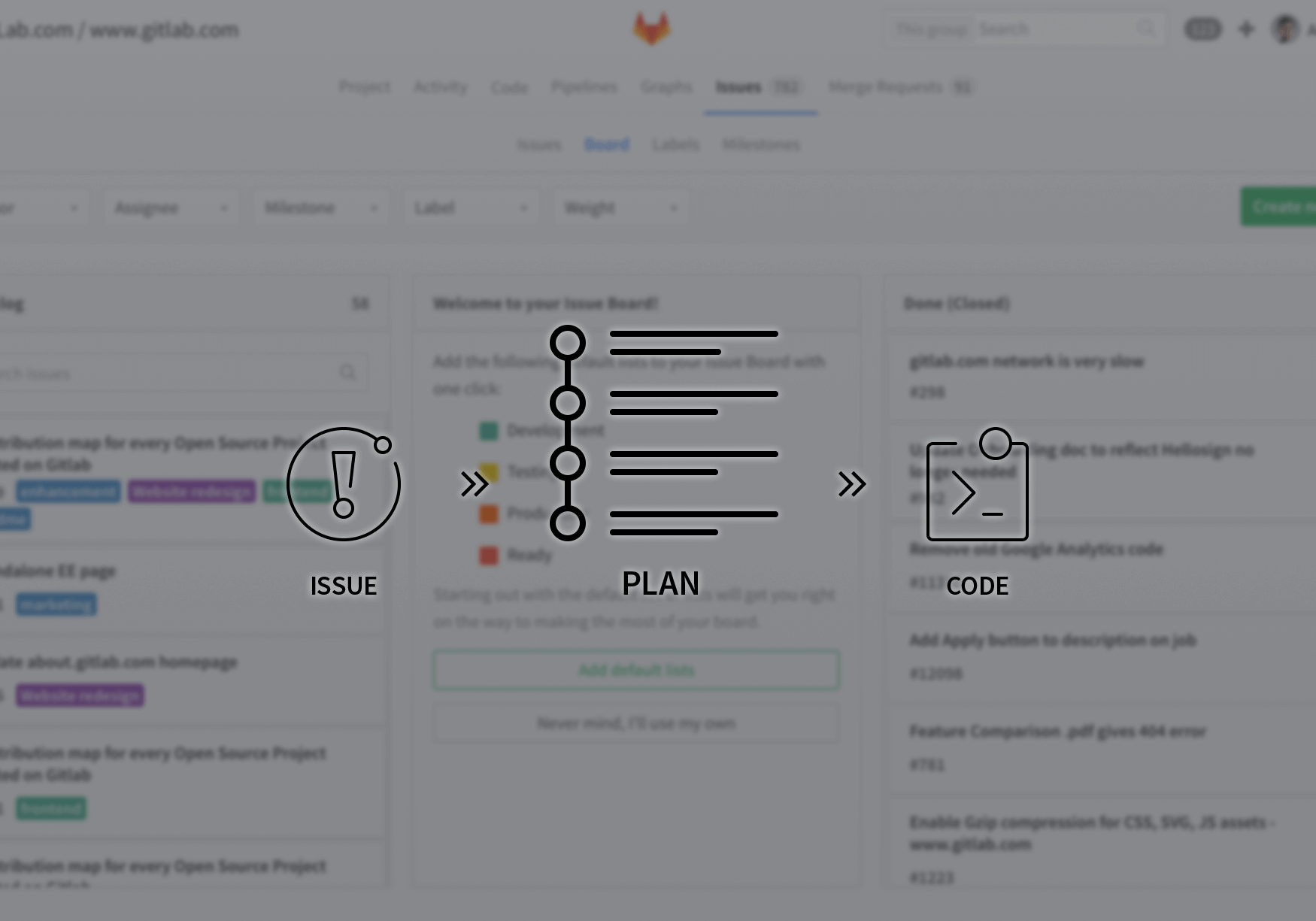
Announcing The GitLab Issue Board
Strengthen your Release Management Process: announcing the GitLab Issue Board!
The Open Organization Definition
Openness is becoming increasingly central to the ways groups and teams of all sizes are working together to achieve shared goals. And today, the most forward-thinking organizations—whatever their missions—are embracing openness as a necessary orientation toward success. They've seen that openness can lead to:
How Big Tech wrote secrecy into EU law to hide data centres’ environmental toll
Environmental footprint of Europe's data centres kept secret after industry lobbying in a move legal experts warn could violate transparency rules.
.jpg)
GitCoin: Harnessing the Power of Blockchain for Open Source
Interview with Kevin Owocki, founder of Gitcoin, on how they harness the power of blockchain for open source - and open source developers can make money.

Show your work: The new terms for trust in journalism - PressThink
The transparency movement has finally come of age. Power has shifted to the users. Their trust has to be earned in different ways now.


I understand perfectly well. My questions concern the people behind the flood of content about W since we launched our beta in June. Who are they? Who funds them? What other financial interests might they have? And why is the site anonymous? Those are reasonable questions about transparency.
