


AbstractBackground. Functional–structural plant models (FSPMs) explore and integrate relationships between a plant’s structure and processes that underlie
Crops In Silico: Generating Virtual Crops Using an Integrative and Multi-scale Modeling Platform
Multi-scale models can facilitate whole plant simulations by linking gene networks, protein synthesis, metabolic pathways, physiology, and growth. Whole plant models can be further integrated with ecosystem, weather, and climate models to predict how various interactions respond to environmental perturbations. These models have the potential to fill in missing mechanistic details and generate new hypotheses to prioritize directed engineering efforts. Outcomes will potentially accelerate improvement of crop yield, sustainability, and increase future food security. It is time for a paradigm shift in plant modeling, from largely isolated efforts to a connected community that takes advantage of advances in high performance computing and mechanistic understanding of plant processes. Tools for guiding future crop breeding and engineering, understanding the implications of discoveries at the molecular level for whole plant behavior, and improved prediction of plant and ecosystem responses to the environment are urgently needed. The purpose of this perspective is to introduce Crops in silico (cropsinsilico.org), an integrative and multi-scale modeling platform, as one solution that combines isolated modeling efforts toward the generation of virtual crops, which is open and accessible to the entire plant biology community. The major challenges involved both in the development and deployment of a shared, multi-scale modeling platform, which are summarized in this prospectus, were recently identified during the first Crops in silico Symposium and Workshop.

Computational modeling of plant root development: the art and the science
Plant root development, like any developmental process, arises from the interplay between processes like gene expression, cell-cell signaling, cell growth and division, and tissue mechanics, which unfold over a wide range of temporal and spatial scales. Computational models are uniquely suited to integrate these different processes and spatio-temporal scales to investigate how their interplay determines developmental outcomes and have become part of mainstream plant developmental research. Still, for non-modeling experts, it often remains unclear how models are built, why a particular modeling approach was chosen, and how to interpret and value model outcomes. This review attempts to explain the science behind the art of model building, illustrating the simplifications that are often made to keep models simple to understand and when these are and are not justified. Similarly, it discusses when it is safe to ignore certain processes like growth or tissue mechanics and when it is not. Additionally, this review discusses a range of major breakthrough modeling articles. Their approaches are linked to classical concepts and models in developmental biology like the French flag positional information gradient of Lewis Wolpert and the repetitive patterning mechanism proposed by Turing, in addition to highlighting the lessons they taught us on plant root development.

Some recent developments in controlled-environment agriculture: on plant physiology, sustainability, and autonomous control
In this review, we highlight some recent developments in controlled-environment agriculture (CEA), discuss its sustainability and provide a future outlook, mainly based on recently published work f...

150 Years of the Mass Action Law
This year we celebrate the 150th anniversary of the law of mass action. This law is often assumed to have been “there” forever, but it has its own history, background, and a definite starting point. The law has had an impact on chemistry, biochemistry, biomathematics, and systems biology that is difficult to overestimate. It is easily recognized that it is the direct basis for computational enzyme kinetics, ecological systems models, and models for the spread of diseases. The article reviews the explicit and implicit role of the law of mass action in systems biology and reveals how the original, more general formulation of the law emerged one hundred years later ab initio as a very general, canonical representation of biological processes.
Synthetic Biology of Plants and Microbes for Agriculture, Environment, and Future Applications
Agriculture is under pressure to provide food for a growing population and the feedstock required to drive the bioeconomy. Methods to breed and genetically modify plants are inadequate to keep pace. When engineering crops, traits are painstakingly introduced into plants one-at-a-time, combine unpredictably, and are continuously expressed. Synthetic biology is changing these paradigms with new genome construction tools, computer aided design (CAD), and artificial intelligence (AI). “Smart plants” contain circuits that respond to environmental change, alter morphology, or respond to threats. Further, the plant and associated microbes (fungi, bacteria, archaea) are now being viewed by genetic engineers as a holistic system. Historically, plant health has been enhanced by many natural and laboratory-evolved soil microbes marketed to enhance growth or provide nutrients, or pest/stress resistance. Synthetic biology has expanded the number of species that can be engineered, increased the complexity of engineered functions, controlled environmental release, and can assemble stable consortia. New CAD tools will manage genetic engineering projects spanning multiple plant genomes (nucleus, chloroplast, mitochondrion) and the thousands of genomes of associated bacteria/fungi. This review covers advanced genetic engineering techniques to drive the next agricultural revolution, as well as push plant engineering into new realms for manufacturing, infrastructure, sensing, and remediation.

La Singularidad Reflexiva: Derivas Identitarias en la Topología Probabilística de Modelos Generativos
Introspección asistida por entropía

Conflict between Intrinsic Leaf Asymmetry and Phyllotaxis in the Resupinate Leaves of Alstroemeria psittacina
Spiral phyllotactic patterning is the result of intricate auxin transport relationships in the shoot apical meristem (SAM) that act to place auxin maxima at the future sites of leaf initiation. Inherent to this process is a bias in auxin distribution in leaf primordia, such that increased auxin is found on the descending side of the leaf (towards the older neighbor) compared to the ascending side (towards the younger neighbor), creating phyllotactically-dependent leaf asymmetry. Separate from phyllotactic-dependent asymmetry is handedness in plants—that is, genetically encoded, fixed chirality, such as the twining of certain vines and the torsions induced by microtubule mutations. Here, we perform a morphometric analysis on the resupinate leaves of Alstroemeria psittacina. Interestingly, the twist in leaves always occurs in a single direction, regardless of the phyllotactic direction of the plant. Because of the resupination, leaves in this species possess an inherent handedness. However, this asymmetry is modulated in a phyllotactic-dependent manner, consistent with the known developmental constraints of phyllotaxis upon leaf morphology. This creates the interesting circumstance in A. psittacina that leaves arising from plants with a counter-clockwise phyllotactic direction are 1) more asymmetric, 2) larger, and 3) possess symmetrical shape differences relative to leaves from plants with clockwise phyllotaxis. The mechanism underlying these differences likely involves a developmental delay in clockwise leaves caused by the conflict between the phyllotaxis-dependent asymmetry and asymmetry resulting from resupination. The evolutionary implications of a dimorphic population without a genetic basis for selection to act upon are discussed.

The ultimate indoor plant system
Emergent Properties of Balinese Water Temple Networks: Coadaptation on a Rugged Fitness Landscape
For over a thousand years, generations of Balinese farmers have gradually transformed the landscape of their island, clearing forests, digging irrigation canals, and terracing hillsides to enable themselves and their descendants to grow irrigated rice. Paralleling the physical system of terraces and irrigation works, the Balinese have also constructed intricate networks of shrines and temples dedicated to agricultural deities. Ecological modeling shows that water temple networks can have macroscopic effects on the topography of the adaptive landscape, and may be representative of a class of complex adaptive systems that have evolved to manage agroecosystems.

An attempt to explain category theory to biologists in 15 minutes | David Spivak
A model qualification method for mechanistic physiological QSP models to support model‐informed drug development
Mechanistic physiological modeling is a scientific method that combines available data with scientific knowledge and engineering approaches to facilitate better understanding of biological systems, improve decision‐making, reduce risk, and increase efficiency in drug discovery and development. It is a type of quantitative systems pharmacology (QSP) approach that places drug‐specific properties in the context of disease biology. This tutorial provides a broadly applicable model qualification method (MQM) to ensure that mechanistic physiological models are fit for their intended purposes.

GEMOT: Towards Mechanistic World Models for Biology
Scientific discovery seeks mechanisms that explain observations and predict beyond the measurements that produced them. Whereas large language models (LLMs) encode knowledge implicitly, mechanistic world models organise it as a parsimonious set of explicit, modular, reusable mechanisms whose predictions can be scored against data.
Self-Organization in Biological Systems
The synchronized flashing of fireflies at night. The spiraling patterns of an aggregating slime mold. The anastomosing network of army-ant trails. The coordinated movements of a school of fish. Researchers are finding in such patterns—phenomena that have fascinated naturalists for centuries—a fertile new approach to understanding biological systems: the study of self-organization. This book, a primer on self-organization in biological systems for students and other enthusiasts, introduces readers to the basic concepts and tools for studying self-organization and then examines numerous examples of self-organization in the natural world. Self-organization refers to diverse pattern formation processes in the physical and biological world, from sand grains assembling into rippled dunes to cells combining to create highly structured tissues to individual insects working to create sophisticated societies. What these diverse systems hold in common is the proximate means by which they acquire order and structure. In self-organizing systems, pattern at the global level emerges solely from interactions among lower-level components. Remarkably, even very complex structures result from the iteration of surprisingly simple behaviors performed by individuals relying on only local information. This striking conclusion suggests important lines of inquiry: To what degree is environmental rather than individual complexity responsible for group complexity? To what extent have widely differing organisms adopted similar, convergent strategies of pattern formation? How, specifically, has natural selection determined the rules governing interactions within biological systems? Broad in scope, thorough yet accessible, this book is a self-contained introduction to self-organization and complexity in biology—a field of study at the forefront of life sciences research.

Embracing the complexity of plant–bird interactions to understand species’ roles within ecosystems
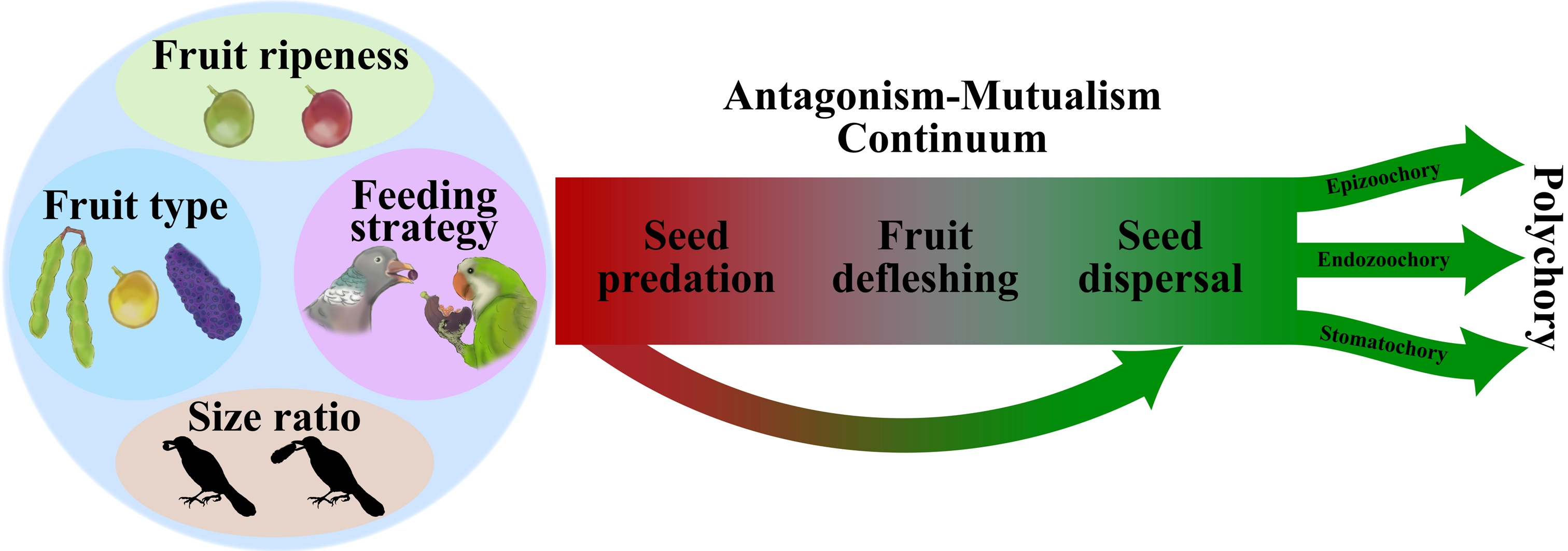
The context-dependent fate of seeds, shaped by birds that can act as both antagonists and mutualists, reveals a hidden variability of functions and seed dispersal mechanisms, underscoring the need for stronger empirical evidence to accurately understand seed dispersal ecology.

ATproto Ecosystem

This is going to turn into an unorganized mess. I can already feel it.
Cobalt: I Put Bluesky on a Wii U - Ewan’s Blog
ParticipatoryEcosystem

Scott Lanoue - CoMail
It's working - Tynan's Leaflets
Call for Participation: AT Protocol Ecosystem Action Research - Ecosystem Action
Roomy joins Modal incubator - Roomy