

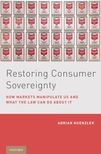
Abstract. For decades, there has been broad consensus within antitrust, intellectual property, and consumer law scholarship that consumers make decisions i
Restoring Consumer Sovereignty
For decades, there has been broad consensus within antitrust, intellectual property, and consumer law scholarship that consumers make decisions in their own best interests by consciously weighting the market’s relative prices, quantities, and qualities against each other. That consensus is unraveling in light of novel findings from cognitive and social psychology that explain how individuals’ concepts of what they prefer drive the global economy. At the same time, producers nowadays no longer merely satisfy consumers’ needs but also communicate their values, identities, and aspirations through the sale and marketing of products. As part of the growing interest in observations such as these, a wealth of psychological studies challenge the fundamental teaching of economics that the interplay of demand and supply of goods in a free market economy provides us with material wealth. This book provides a normative defense of that assumption and a theoretical framework for understanding its contradictions. It argues that the erosion of consumer sovereignty through the ability of product manufacturers and sellers to systematically take advantage of individuals’ psychological weaknesses demands a twenty-first-century reconceptualization of the consumer and a modern account of how the law should regulate the digital economy. Such an account is justified to ensure a diverse marketplace in which consumers can influence how our societies are structured and arranged. By examining the role that market manipulation plays, it offers ingredients for a realistic descriptive and normative market regulatory theory that is aware of its political economy, its behavioral suppositions, and its distributional consequences.
Consumer Rights Wiki - Anti-Consumer Practices Database
The community-built wiki documenting anti-ownership, anti-consumer practices ranging from right-to-repair restrictions, planned obsolescence, subscription traps, & digital rights issues.

A Day in the Life of an Ensh*ttificator
Price and Sovereignty Harvard Law Review
[W]e must not overlook the actual fact that dominion over things is also imperium over our fellow human beings. — Professor Morris R. Cohen,...

Net neutrality
When there is a structural reason consumers don’t have freedom of choice, and the free market can’t work, consumers need minimal protection from the government so that they don’t get abused. We...
Opinion | One Senator’s Plea for Tariff Breaks
How protectionism works in practice: Public support, but seeking exemptions in private.

Consumerism | The Paper Pilot
The Paper Pilot's digital garden of thoughts on philosophy, politics, and sociology
Establishing Trusted Representation | CAA
Labelling of quality and price is an important key for selecting goods or services. False or misleading representations may sway consumers into buying goods or services that are actually poor quality or overvalued. The Act against Unjustifiable Premiums and Misleading Representations prohibits such misleading representations. The Consumer Affairs Agency is addressing to ensure proper environment for shopping according to the Act.
Evolution of Consumption: A Psychological Ownership Framework
Technological innovations are creating new products, services, and markets that satisfy enduring consumer needs. These technological innovations create value for consumers and firms in many ways, but they also disrupt psychological ownership––the feeling that a thing is “MINE.” The authors describe two key dimensions of this technology-driven evolution of consumption pertaining to psychological ownership: (1) replacing legal ownership of private goods with legal access rights to goods and services owned and used by others and (2) replacing “solid” material goods with “liquid” experiential goods. They propose that these consumption changes can have three effects on psychological ownership: they can threaten it, cause it to transfer to other targets, and create new opportunities to preserve it. These changes and their effects are organized in a framework and examined across three macro trends in marketing: (1) growth of the sharing economy, (2) digitization of goods and services, and (3) expansion of personal data. This psychological ownership framework generates future research opportunities and actionable marketing strategies for firms aiming to preserve the positive consequences of psychological ownership and navigate cases for which it is a liability.

Lina Khan on Twitter / X
Law enforcers already have authority to charge companies and their CEOs for creating and releasing dangerous, unvetted, or defective products. We shouldn’t let discussions about new legal regimes distract from the fact that there’s no AI exemption from laws already on the books —…— Lina Khan (@linamkhan) September 13, 2026
Protocols, Not Platforms: A Technological Approach to Free Speech
So I finally finished reading this and while I agree with the recommendation, I’m a little wary of some of the context it’s rooted in ideologically and I’m wondering if others have thoughts on these things. Equality in the marketplace I think the main problem with the text is that it relies heavily on the idea of “marketplace of ideas,” leaning heavily on the idea that protocols are actually good for markets specifically because they make competition more perfect (because there’s better knowled...

Antitrust, the App Store, and Apple
Apple’s case before the Supreme Court is about standing; Apple has a strong case. That, though, doesn’t mean the App Store isn’t a monopoly — and that Apple isn’t increasing…

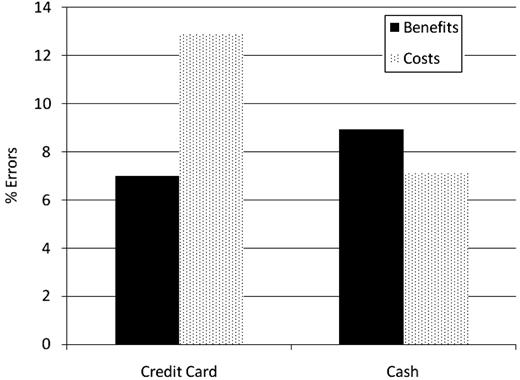
Do Payment Mechanisms Change the Way Consumers Perceive Products?
Abstract. Do payment mechanisms change the way consumers perceive products? We argue that consumers for whom credit cards (cash) have been primed focus mor
From Brussels Template to UK Tailoring: How the DMCCA Is (Re)writing the Rules for Big Tech - The Platform Law Blog
By Dr. Konstantina Bania The UK has built a “rival” to the EU’s Digital Markets Act – and it is now starting to use it. Under the Digital Markets, Competition and Consumers Act (DMCCA), the Competition and Markets Authority (CMA) is moving from abstract principles to concrete, platform‑specific rules for some of the most powerful […]

