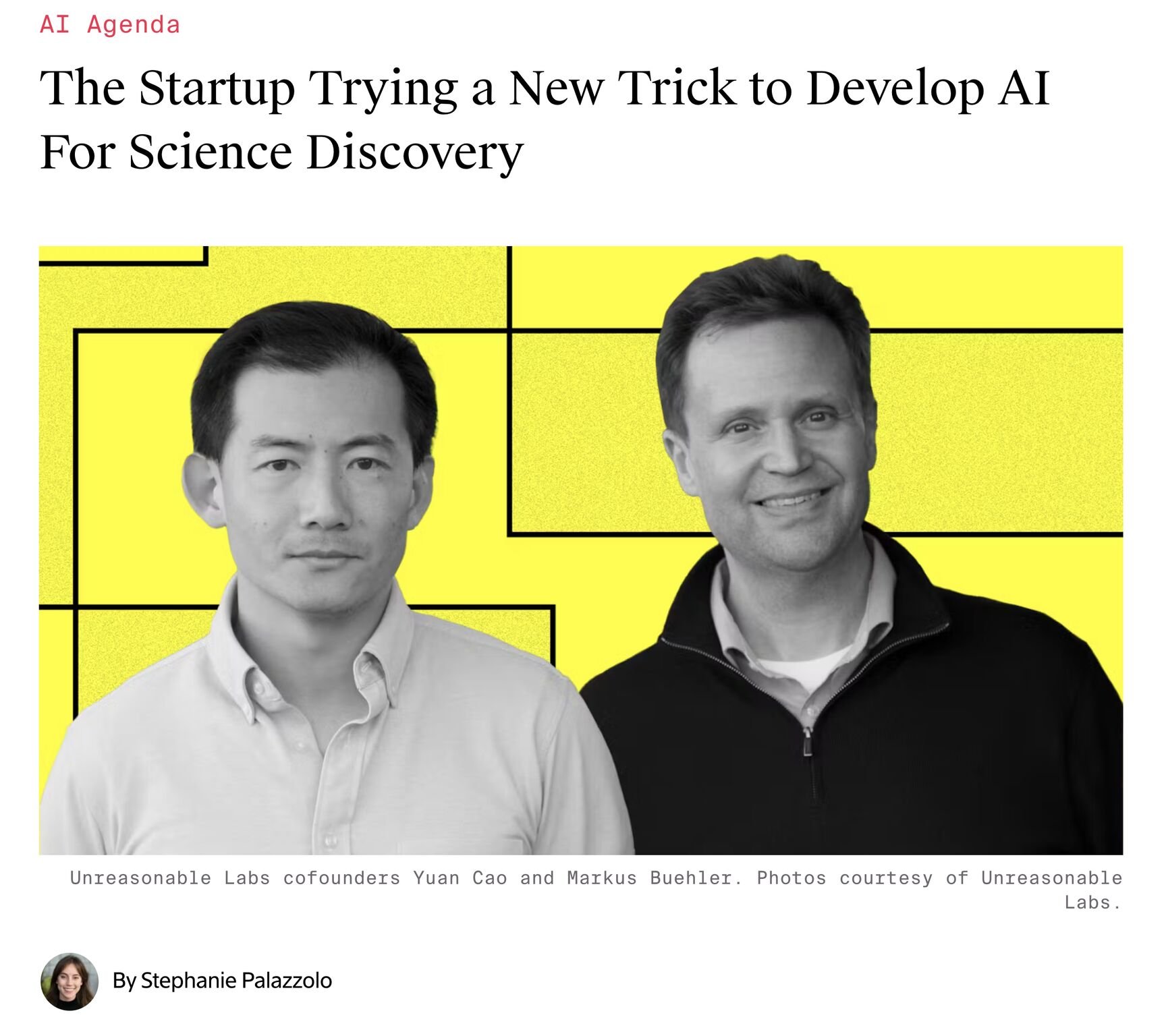
Abstract. How do we spark new scientific discoveries? Why do some breakthroughs seem even accidental? And most importantly, how can we accelerate them and
Reinventing Discovery
How the internet and powerful online tools are democratizing and accelerating scientific discovery

The Scientific Contribution Graph: Automated Literature-based Technological Roadmapping at Scale
Sir Isaac Newton famously wrote, “If I have seen further, it is by standing on the shoulders of giants”. Scientific contributions are rarely developed in isolation, but build upon prior contributions, such as problem framings, experimental methods, and empirical findings. Understanding these prerequisite relationships is important for studying scientific progress, and for automated scientific discovery systems that must reason about which existing capabilities can be used to develop new ones (e.g. Lu et al., 2024; Jansen et al., 2025b; Baek et al., 2025).
The Discovery Engine: A Framework for AI-Driven Synthesis and Navigation of Scientific Knowledge Landscapes
Scientific progress relies on the effective accumulation, synthesis, and critical evaluation of knowledge. Traditionally, the well-documented, peer reviewed publication served as the primary standard for filtering and disseminating credible findings within the scientific community. Recently, however, we are witnessing an unprecedented acceleration in research output, a veritable explosion of scientific publications across all disciplines [1]. Yet, this very abundance creates a paradox: the sheer volume threatens to overwhelm the mechanisms designed for its assimilation and synthesis. Researchers, even within highly specialized subfields, face an almost insurmountable challenge in keeping abreast of relevant developments, integrating disparate findings, and identifying the truly novel signals amidst the noise [2]. This information overload contributes to disciplinary fragmentation, hindering the cross-pollination of ideas essential for disruptive innovation [3]. Furthermore, persistent concerns regarding "reproducibility crisis" [2], predatory journals, inflation of research areas[4], growing retractions and the potential influences of bibliometrics on research direction [5] highlight systemic challenges in validating and prioritizing scientific contributions to fundamental knowledge.
Infinite Researchers | AI-Powered Scientific Discovery
What happens to the speed of discovery if we have infinite researchers? Explore AI experiments accelerating breakthroughs.

Science Must Decentralize
Knowledge production doesn’t happen in a vacuum. Every great scientific breakthrough is built on prior work, and an ongoing exchange with peers in the field. That’s why we need to address the threat
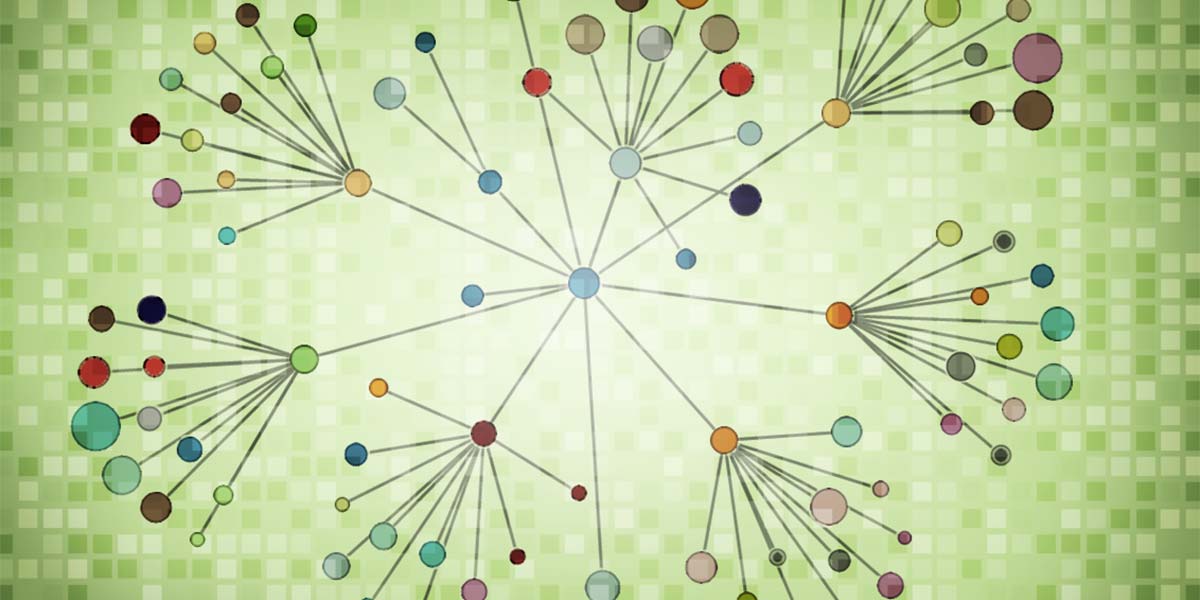
What stories should we tell about scientific progress now?
In search of the mysterious fruits of basic science

Science has been in a “replication crisis” for a decade. Have we learned anything?
Bad papers are still published. But some other things might be getting better.

Reinventing Discovery: The New Era of Networked Science
In Reinventing Discovery, Michael Nielsen argues that w…

Bending the Curve: How AI is Transforming Scientific Discovery
Discover how researchers use LLMs and specialized AI models like AlphaFold as complementary tools to accelerate innovation and expand the scientific frontier.

The Bazaar of Scientific Knowledge | shishyko!
Is the current form of the scientific paper still optimal in 2025? How do we preserve, and efficiently leverage, the uncut gems of the scientific process?
AI has supercharged scientists—but may have shrunk science
Analysis of 41 million papers finds that although AI expands individual impact, it narrows collective scientific exploration
It’s time to get rid of the peer-reviewed paper
The peer-reviewed journal article, perhaps the single most important device behind the expansion of scientific knowledge in the last century, is an extraordinarily expensive way to share novelty: e…

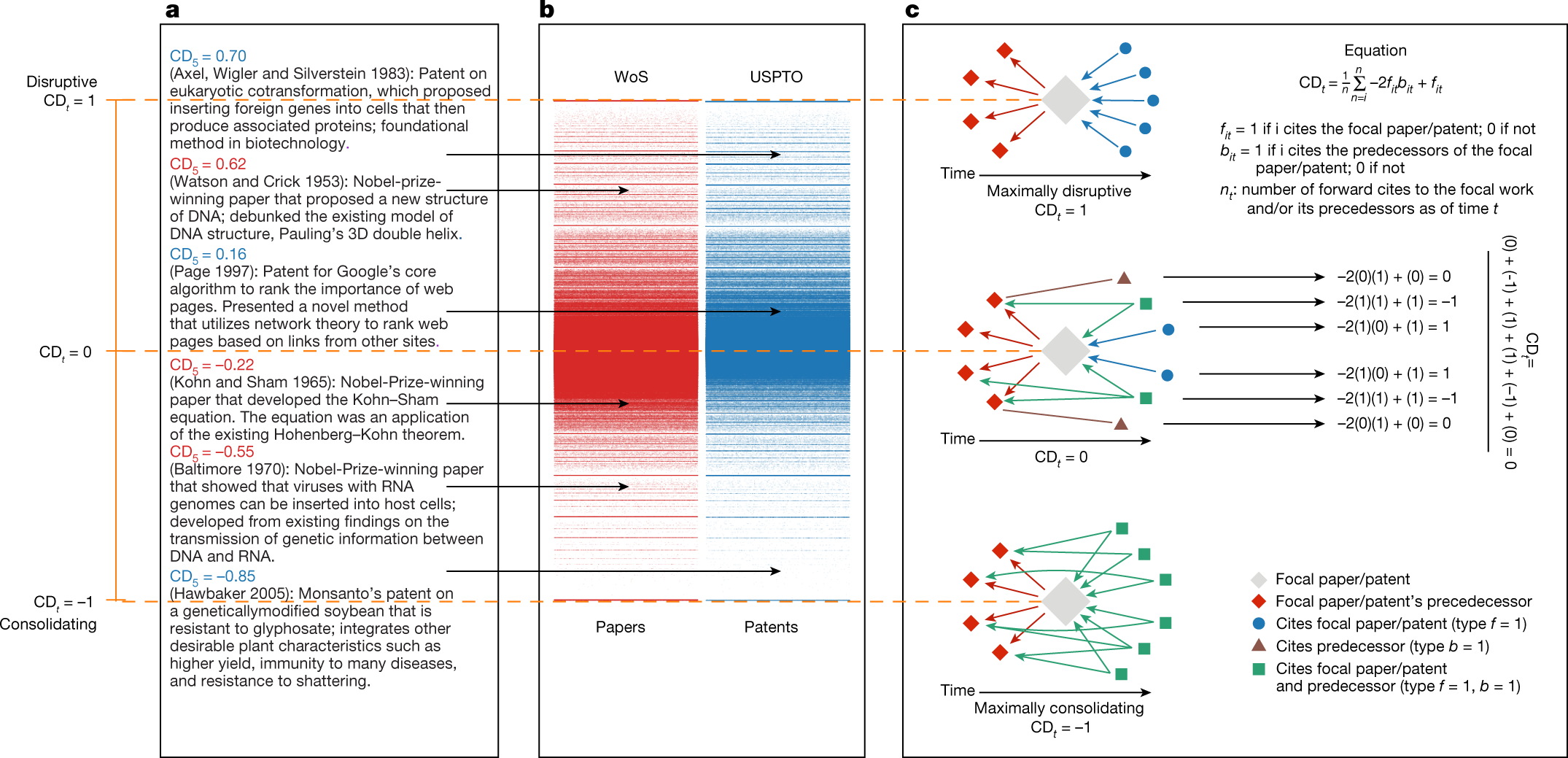
Papers and patents are becoming less disruptive over time
Theories of scientific and technological change view discovery and invention as endogenous processes1,2, wherein previous accumulated knowledge enables future progress by allowing researchers to, in Newton’s words, ‘stand on the shoulders of giants’3–7. Recent decades have witnessed exponential growth in the volume of new scientific and technological knowledge, thereby creating conditions that should be ripe for major advances8,9. Yet contrary to this view, studies suggest that progress is slowing in several major fields10,11. Here, we analyse these claims at scale across six decades, using data on 45 million papers and 3.9 million patents from six large-scale datasets, together with a new quantitative metric—the CD index12—that characterizes how papers and patents change networks of citations in science and technology. We find that papers and patents are increasingly less likely to break with the past in ways that push science and technology in new directions. This pattern holds universally across fields and is robust across multiple different citation- and text-based metrics1,13–17. Subsequently, we link this decline in disruptiveness to a narrowing in the use of previous knowledge, allowing us to reconcile the patterns we observe with the ‘shoulders of giants’ view. We find that the observed declines are unlikely to be driven by changes in the quality of published science, citation practices or field-specific factors. Overall, our results suggest that slowing rates of disruption may reflect a fundamental shift in the nature of science and technology.
Rethinking AI for Science Funding
As science stands at an inflection point, how do we organize capital to shape the future of discovery?
Markus J. Buehler on Twitter / X
After decades at MIT studying how nature builds - from spider silk to bone to nacre - I've become convinced of something: the biggest barrier to scientific progress isn't knowledge, it's connection. The insights we need already exist, scattered across millions of papers and… pic.twitter.com/EHUomaFyPj— Markus J. Buehler (@ProfBuehlerMIT) March 10, 2026