


Abstract. Constitutional economics—the analysis of constitutions drawing on the economic approach—has made important progress over the last two decades. Th
Constitutional Silences and Institutional Integrity
A constitution, like any document, leaves certain things unsaid. In Australia, the duty to interpret constitutional silences falls to the courts. This paper engages with constitutional theory in order to explain what ought to—and does in fact—dwell
Soundings and Silences
In studying existing constitutions or in assisting with drafting a new one, it is impossible not to notice that formative decisions about what to say and what not to say as a constitution is being created bear heavily on later decisions about how to interpret what a constitution says or fails to say, including whether to construe any given silence or gap only as a source of insight or as a kind of performative utterance. Among the features of the United States Constitution that have been crucial to its success has been the widespread recognition of its connected structure that, despite its gaps—some deliberate and others unintended—invites understanding as a coherent, if at times internally inconsistent, whole. Constitutional silences, like silences of other kinds, are everywhere and come in many varieties. There are as many reasons to be silent as there are to speak and as many ways to hear meaning in the sounds of silence as there are to attribute meaning to statements. The first section of this essay distinguishes silences that open a constitutional conversation by leaving options on the table from those that shut conversation down by limiting the options to one. The second section separates silences that bear on the structure created by the Constitution from those that bear on the individual rights the Constitution protects against government infringement. The third section turns to the special case of silences in the Constitution’s rules of interpretation and asks whether the Supreme Court should be silent on a particular constitutional matter or should address it squarely, recognizing that whatever an authoritative interpreter says about what the Constitution itself says or omits can be evaluated only against the background alternative of somehow contriving to remain silent.

The silences of constitutions
Abstract. Glossing a passage from Benjamin Constant’s Reflections on Constitutions, this article first assesses the roles performed by silences, gaps, and

Designing a Constitution for a Community (Camille Canon) : Metagovernance Seminar
This is a talk exploring Apiary's work on the purpose/constitutional design of Radicle. We have been supporting the founders and community in drafting a...

Can Claude Consent to its own Constitution? AI Constitutionalism and the Paradox of Constituent Power
Frontier AI systems are trained on “constitutions” and model specifications that shape their values, reasoning, and conduct. Debate over these documents has foc

The challenges of constitutional silence: Doctrine, theory, and applications
Abstract. In this introduction to our symposium on “Constitutional Silence,” we situate the articles in this collection and explore the significance of the

Power: A Primer for Perplexed Economists
Let's Assume an Unfettered Marketplace of Ideas! Or Actually, Let's Not.
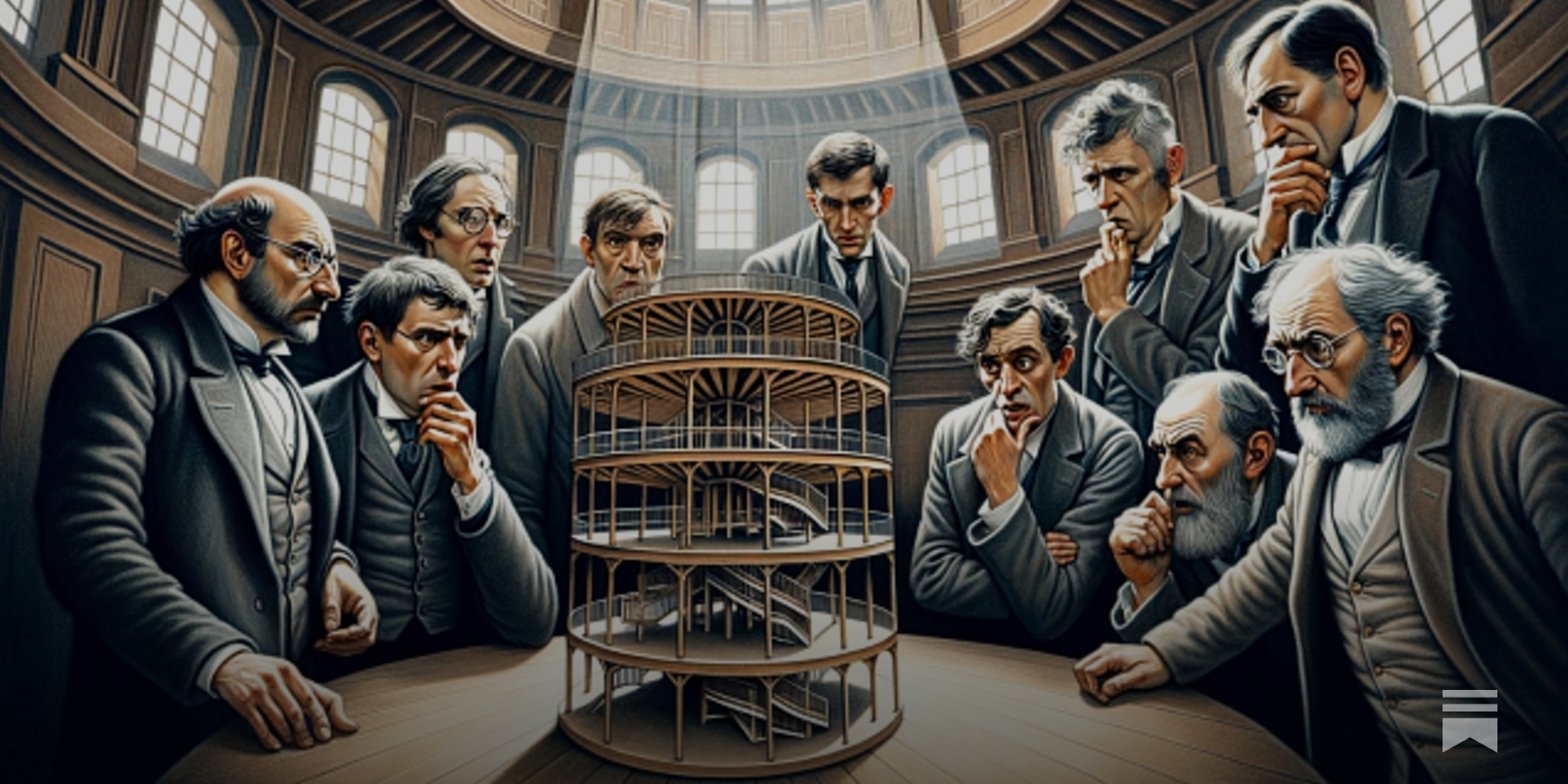
PARA Docs
PARA explains its political thesis through democratic friction, policy flairs, RAQ, voting, agents, anonymity, and the technical layer beneath the product.
Claude's new constitution
A new approach to a foundational document that expresses and shapes who Claude is
Capitalist Realism: Is There No Alternative?
It is easier to imagine the end of the world than the end of capitalism. After 1989, capitalism has successfully presented itself as the only realistic political-economic system - a situation that the bank crisis of 2008, far from ending, actually compounded. The book analyses the development and principal features of this capitalist realism as a lived ideological framework. Using examples from politics, film (Children Of Men, Jason Bourne, Supernanny), fiction (Le Guin and Kafka), work and education, it argues that capitalist realism colors all areas of contemporary experience, is anything but realistic and asks how capitalism and its inconsistencies can be challenged. It is a sharp analysis of the post-ideological malaise that suggests that the economics and politics of free market neo-liberalism are givens rather than constructions. New Edition includes:Forward by Zoe Fisher, Mark’s wife, talking about Mark as a personIntroduction by Alex Niven, his friend and colleague, talking about the political significance of the book thirteen years after it was writtenAfterword by Tariq Goddard, the original editor and publisher, describing the writing and editing of the book, its original reception, and Mark’s own view of it"A quick and entertaining read." Socialist Standard "A provocative and necessary read...for anyone wanting to talk seriously about the politics of education today. " Times Higher Educational Supplement
Thoughts on narratives and the role of AI and validators going forward
I wanted to quickly share some reflections and connect some dots around ongoing work with Prashant on causal claims and language in Economics. We have extended

Strategy Letter V
When I was in college I took two intro economics courses: macroeconomics and microeconomics. Macro was full of theories like “low unemployment causes inflation” that never quite stood u…

Radical expectations: how the New Left changed economics
In the 1970s radical economists campaigned to reform their discipline and their universities. They became journalists and activists, moving beyond academia, to forge new models of public engagement and collaborative knowledge in economic life. Radical Expectations tells the story of how these economists set out to make economics more democratic. It traces their campaign to bring protest movements to the campuses, triggering the emergence of an alternative understanding of expertise directed at validating and empowering the perspectives and voices of women, Black Americans, labor activists, and the urban poor. It shows how a radical identity formed and how radicals helped reform disciplinary institutions. Furthermore, it argues that the radical economics' legacy was the development of a language and models of expert-lay collaboration that empowers direct action in economic affairs. The book is about the community of radical economists who championed the promise of change and what came of it

Apr 2023 Issue
We need better economic models, but we also need Congress to free itself from the self-imposed constraints of modeling on the policymaking process.

