

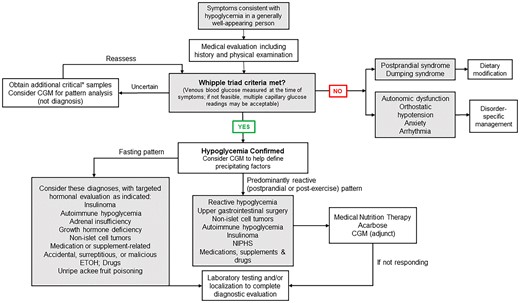
Abstract. Hypoglycemia in the absence of diabetes is often multifactorial and challenging to diagnose definitively. We present a case report and an expande
Navigating the Odyssey of Refractory Hypoglycemia: A Diagnostic and Therapeutic Puzzle in Ehlers-Danlos Syndrome Managed With Octreotide
Author Block: Mehwish Zeb, Michigan State University, Yarub Al-Alousi, St. Joseph University Medical Center, Syed Farasat Ali Shah, Institute of Diabetes and Endocrinology
(PDF) Neuroendocrine, Autonomic and Metabolic Challenges in Hypermobile Ehlers-Danlos Syndrome- A Case Study on Hypoglycemia in a patient with Craniocervical Instability.. Medical Research Archives. [Online] 12-5
PDF | This report presents a compelling case of hypoglycemia in a 20-year-old female with craniocervical instability receiving chronic total parenteral... | Find, read and cite all the research you need on ResearchGate

Uncooked cornstarch for the prevention of hypoglycemic events
Hypoglycemia is a pathological condition characterized by a low plasma glucose concentration associated with typical autonomic and/or neuroglycopenic symptoms, and resolution of these symptoms with carbohydrate consumption. Hypoglycemia is quite common in clinical practice, particularly in insulin-treated patients with diabetes and in other inherited or acquired conditions involving the regulation of glucose metabolism. Beyond symptoms that might strongly affect the quality of life, hypoglycemia can lead to short- and long-term detrimental consequences for health. Hypoglycemia can be prevented by appropriate changes in dietary habits or by relevant modifications of the drug treatment. Several dietary approaches based on the intake of various carbohydrate foods have been tested for hypoglycemia prevention; among them uncooked cornstarch (UCS) has demonstrated a great efficacy. In this narrative review, we have summarized the current evidence on the UCS usefulness in some conditions characterized by high hypoglycemic risk, focusing on some inherited diseases -i.e. glycogen storage diseases and other rare disorders - and acquired conditions such as type 1 diabetes, postprandial hypoglycemia consequent to esophageal-gastric or bariatric surgery, and insulin autoimmune syndrome. We also considered the possible role of UCS during endurance exercise performance. Lastly, we have discussed the dose requirement, the side effects, the limitations of UCS use, and the plausible mechanisms by which UCS could prevent hypoglycemia.
In Utero Metabolic Disruption—A Preventable Antecedent of Adult Disease?
The early manifestation of metabolic syndrome (MetS) in children, characterized by the premature onset of visceral obesity, elevated blood pressure, and the progression to dyslipidemia and type 2 diabetes, is associated with adult cardiovascular disease. Tackling the rising epidemic of obesity and...


Folate-dependent hypermobility syndrome: A proposed mechanism and diagnosis
Hypermobility involves excessive flexibility and systemic manifestations of connective tissue fragility. We propose a folate-dependent hypermobility syndrome model based on clinical observations, and through a review of existing literature, we raise the possibility that hypermobility presentation may be dependent on folate status. In our model, decreased methylenetetrahydrofolate reductase (MTHFR) activity disrupts the regulation of the ECM-specific proteinase matrix metalloproteinase 2 (MMP-2), leading to high levels of MMP-2 and elevated MMP-2-mediated cleavage of the proteoglycan decorin.

High intelligence: A risk factor for psychological and physiological overexcitabilities
High intelligence is touted as being predictive of positive outcomes including educational success and income level. However, little is known about the difficulties experienced among this population. Specifically, those with a high intellectual capacity (hyper brain) possess overexcitabilities in various domains that may predispose them to certain psychological disorders as well as physiological conditions involving elevated sensory, and altered immune and inflammatory responses (hyper body). The present study surveyed members of American Mensa, Ltd. (n=3715) in order to explore psychoneuroimmunological (PNI) processes among those at or above the 98th percentile of intelligence. Participants were asked to self-report prevalence of both diagnosed and/or suspected mood and anxiety disorders, attention deficit hyperactivity disorder (ADHD), autism spectrum disorder (ASD), and physiological diseases that include environmental and food allergies, asthma, and autoimmune disease. High statistical significance and a remarkably high relative risk ratio of diagnoses for all examined conditions were confirmed among the Mensa group 2015 data when compared to the national average statistics. This implicates high IQ as being a potential risk factor for affective disorders, ADHD, ASD, and for increased incidence of disease related to immune dysregulation. Preliminary findings strongly support a hyper brain/hyper body association which may have substantial individual and societal implications and warrants further investigation to best identify and serve this at-risk population.
LLM-Assisted Reanalysis of Unsolved Rare Disease Genomes Increases Diagnostic Yield
Rare and undiagnosed genetic disorders affect millions of patients globally, and many patients endure years of inconclusive testing. Conventional genomic interpretation can be insufficiently sensit...

Neuropsychiatric Systemic Lupus Erythematosus: A 2021 Update on Diagnosis, Management, and Current Challenges
Patients with systemic lupus erythematosus (SLE) experience neuropsychiatric symptoms. The term neuropsychiatric SLE (NPSLE) is a generic term that refers to a series of neurological and psychiatric symptoms directly related to SLE. In approximately 30% of patients with neuropsychiatric symptoms, SLE is the primary cause (NPSLE), and symptoms manifest more frequently around SLE onset. Neurovascular and psychotic conditions can also lead to NPSLE. Pathogenesis of NPSLE is implicated in both neuroinflammatory and ischemic mechanisms, and it is associated with high morbidity and mortality. After diagnosing and assigning causality, NPSLE treatment is individualized according to the type of neuropsychiatric manifestations, type of the predominant pathway, activity of SLE, and severity of the clinical manifestations. There are many problems to be addressed with regards to the diagnosis and management of NPSLE. Controlled clinical trials provide limited guidance for management, and observational cohort studies support symptomatic, antithrombotic, and immunosuppressive agents. The purpose of this review was to provide a detailed and critical review of the literature on the pathophysiology, diagnosis, and treatment of NPSLE. This study aimed to identify the shortcoming in diagnostic biomarkers, novel therapies against NPSLE, and additional research needs.

Patient Led Research Collaborative – for Long COVID
Cite as: O’Connor, A. M. (2023). Hypothesis: Long COVID brain fog is caused by free glycan sugar chains in the brain. Patient-Generated Hypotheses Journal for Long COVID & Associated Conditions, Vol. 1, 5-12
z428: status /
☕ Resting. Feeling some of the distance in legs and feet and still not home yet. Shorter days and it gets cold fast.
Evidence mounts that Long Covid is damaging the hearts of those affected
There are also increasing signs that the condition can disrupt the autonomic nervous system

‘Unbelievably dangerous’: experts sound alarm after ChatGPT Health fails to recognise medical emergencies
Study finds ChatGPT Health did not recommend a hospital visit when medically necessary in more than half of cases

How the hypercuriosity of ADHD may have helped humans thrive | Aeon Essays
ADHD isn’t merely a dysfunction. It’s best understood as an impulsive motivational drive for novel information

How the hypercuriosity of ADHD may have helped humans thrive | Aeon Essays
ADHD isn’t merely a dysfunction. It’s best understood as an impulsive motivational drive for novel information
Browse Studies
Health eHeart is an ambitious study to end Heart Disease. Anyone can join -- whether you have Heart Disease or not.