


Recent legislation in Australia banning social media accounts for children under 16, alongside similar proposals worldwide, has ignited debate about whether age‐based restrictions are an effective way to protect young people's mental health. While the intent of such bans is to reduce exposure to harmful content, their feasibility and effectiveness remain unclear. Enforcement requires robust age verification, often relying on sensitive data such as government‐issued identification or facial scans, which raises privacy concerns and can be circumvented through the use of VPNs. Moreover, social media use is diverse. Although it can intensify harms such as bullying, it also provides vital opportunities for connection and support, particularly for marginalised adolescents. Removing access to accounts may limit risks within platforms, but does not prevent exposure to harmful content elsewhere, nor does it guarantee increased offline engagement. Importantly, blanket bans fail to address unsafe design features embedded within social media or to equip adolescents with the skills needed to navigate online environments. More targeted, evidence‐based regulation that promotes safer platform design and accountability may provide a more effective pathway to protecting young people's well‐being.
Everything You Wanted to Know About a Kids' Social Media Ban (But Were Rightly Afraid to Ask): A FAQ on Age Verification and Mandated ID for Everyone - Michael Geist
The government is expected to table the Digital Safety Act on Wednesday with reports that it will include a ban on social media for those under 16, framed as a “temporary” measure that platforms can exit once a new digital regulator certifies their safety standards. I have been writing about these issues, from the original Online Harms Act to mandated age verification and website blocking and now the kids’ ban, for several years. This FAQ gathers the analysis in one place, with links throughout to the longer pieces for anyone who wants to go deeper. The key takeaway is that a kids' social media ban is an ineffective and harmful policy that raises privacy concerns for tens of millions of Canadians through mandated age verification requirements. The policy fails to address the underlying concerns with social media and the prospect of a "temporary" ban makes little sense since the requirement might be reversible, but the data collection and regulatory infrastructure are permanent.

The Illusion of Protection: Why Canada’s Growing Push to Ban Social Media for Kids Won’t Work - Michael Geist
The momentum behind a social media ban for Canadian minors has been building for months. The federal Liberals voted at their April policy convention to back a minimum age of 16 for social media accounts and AI chatbots, the government’s expert panel on online safety is studying the issue, protesters have now rallied on Parliament Hill calling for it, and on Saturday night, Manitoba Premier Wab Kinew told a Winnipeg fundraiser that his government will be the first in Canada to ban social media and AI chatbots for kids. Kinew did not specify which kids, when it would happen, or how it would be enforced, none of which appeared to matter to the audience. The political appeal of a ban is obvious, since concerns about social media’s effects on young users are widely shared. Yet the policy itself is a terrible idea that will not work. This post examines at least six reasons why an outright age-based ban, particularly one that extends to AI chatbots, is the wrong response to a serious issue.
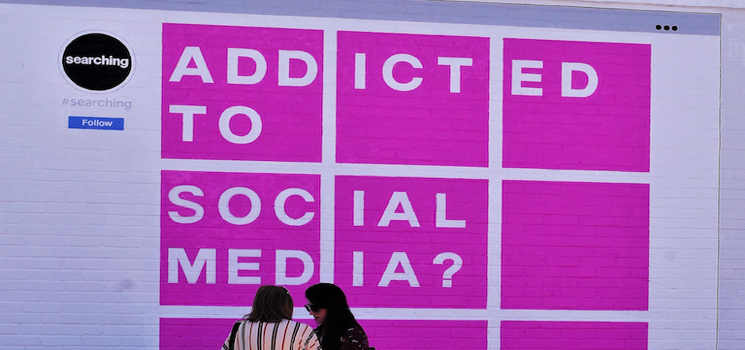
What Would Online Age Verification Mean for Speech, Privacy, and Youth Online Safety?
The Harms of Social Media Restrictions and Bans for Minors
How Age-Based Social Media Bans and Restrictions can Negatively impact Youth. The Benefits of Social Media for Youth - Education, Activism & Creating Community
The Digital Loophole: 11th International Conference on Information Systems Security and Privacy, ICISSP 2025
Social media platforms are an integral part of daily life for nearly five billion people worldwide. However, the growing presence of underage users on these platforms raises significant concerns regarding children’s exposure to harmful content and its impact on their mental health. This paper examines the effectiveness of age verification measures implemented on leading platforms Facebook, YouTube, Instagram, TikTok, Snapchat, and X. We evaluate the age verification processes required for account creation by simulating the registration steps for minors on these platforms. We also compare these methods to best practices in online age assurance in finance, betting and public transportation sectors. IEEE provides a standard for evaluating the age assurance of a platform or service. Our study benchmarks each platform’s approach against the IEEE standard for robustness. Our research identifies gaps that allow underage users to easily bypass existing age restrictions, with particular practices such as allowing disposable emails and basic browser refreshes further weakening self-declared age checks. The findings highlight the need for more robust age verification measures by social media applications to support their stated age limit policies. This work emphasises the urgent need for stronger and more reliable age verification methods to align the digital age of consent across EU member states and beyond with the minimum age requirements on social media.
Social media age verification laws in the United States
In the United States, age verification laws for social media are ostensibly designed to limit young people's access to content deemed problematic such as pornography and to reduce the negative impact of social media on the mental health and well-being of children and adolescents.

Australia’s Teen Social Media Ban Is Just Training A Generation In The Art Of The Workaround
We’ve been covering Australia’s under-16 social media ban since before it went into effect, first noting the confusion and obvious implementation problems as pretty much everyone realiz…

Why Protecting Kids from Social Media May Make Things Worse — Douglas Rushkoff
I’m supposed to give a talk next week about kids and social media and the need for more media literacy education, more regulation of platforms, and more substantive discussion about how to keep our kids from media-induced self-harm. The whole event is well-meaning, but is characterized by a sense of worry and protection. And for some reason, after years of making those sorts of arguments in my articles and documentaries, I have a strong impulse to pivot the other way.
Online Safety Amendment (Social Media Minimum Age) Act 2024
The Online Safety Amendment Act 2024 is an Australian act of parliament that prohibits minors under the age of 16 from holding an account on certain social media platforms. It is an amendment to the Online Safety Act 2021 and was passed by the Parliament of Australia on 29 November 2024. It imposes monetary penalties on social media companies that fail to take reasonable steps to prevent minors under 16 that are located in Australia from having accounts on their services.

#cybersafety #ageverification #privacy #minors #ai | Parry Aftab
Internet Age-Verification Causing More Risks than It’s Worth This is not a new issue. Regulators and policymakers have raised it for the last 28 years as the way the keep kids safer online. They compare it to having to flash an ID to purchase regulated content or items (porn, cigarettes, alcohol, restricted medications, age-restricted movies, amusement rides, etc.) But verification online is very different and vastly riskier than flashing an ID in real life. For one, it’s collecting personally-identifiable information about our kids. For two, it puts that information in the too-often untrustworthy digital hands of tech companies. For three, while porn, alcohol and regulated drugs may be a clear-cut case for restricting access to adults, access to the Internet is very different. Yet, regulations begun in the UK and adopted globally have begun a weighted cybersafety approach that, in my humble opinion, prefers excluding young people from digital technology over teaching the cybersafety and digital life skills. That, in my 32 years of work in the fields of cybersafety and protection of minors online, was and remains a mistake. One of my best known quotes, repeated in Congressional and state legislative testimony and in the media is: “The greatest single risk our children face online is being denied access. We have solutions for everything else.” (my testimony before the FTC) Some proponents of age-verification have opted to denying them access unless they give up confirmable personally-identifiable info, such as selfies, feeding AI with PII, and govt or school credentials. I argue that this gives social networks, game providers and digital app operators a wealth of PII to be used for profiling, marketing and collecting far too much. With their privacy at stake, too often incompetent, malicious and greedy producers and mega-tech industry players, can’t and shouldn’t be trusted with the personal info of our most vulnerable - our kids. And AI will now be tasked with collecting everything it can find about our kids to be able to “age-verify.” (It’s ability to age-verify is less reliable with youth as their data-sets are more limited.) I served on a task force appointed by 49 state attorneys general, charged to research and weigh-in on this issue. We concluded that age-verification wasn’t feasible. While this task force was formed many years ago, with the exception of a fortified AI, not much as changed. Our children’s privacy remains, or should remain, paramount. We have robust filtering and blocking technologies. The adult industry has adopted an age-gated model. And parents can restrict access using device-specific tools. And, many well-intentioned age-verification laws were adopted too quickly for thoughtful discourse. Or by governments more prone to censorship/content restrictions. I fear in our quest to protect our kids we have thrown our babies out with the bath water. #cybersafety #ageverification #privacy #minors #AI

Social media platforms removed 4.7 million accounts after Australia banned them for children younger than 16
The figures, reported to Australia's government by 10 social media platforms, were the first to show the scale of the landmark ban since it was enacted in December over fears about the effects of harmful online environments on young people.
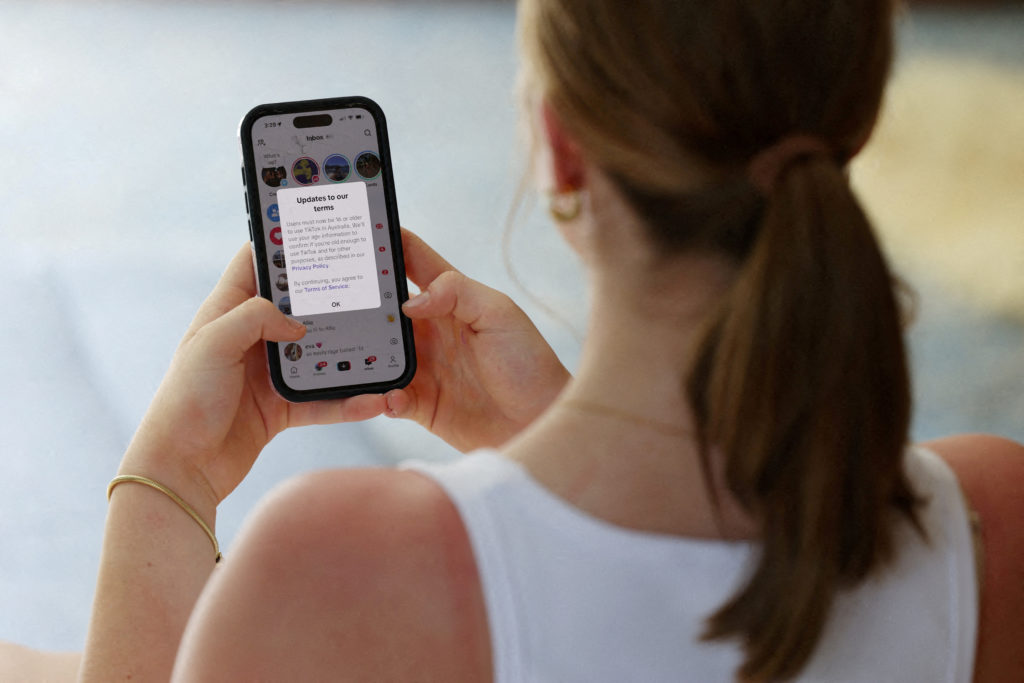
What the World Should Learn from Australia’s Social Media Law
Half a year since Australia restricted social media companies from providing accounts to kids under 16, signs of success are beginning to show.

Online age-verification tools spread across U.S. for child safety, but adults are being surveilled
New age-verification laws and tools are designed for child safety on social media and the internet, but adults are in the crosshairs, say privacy experts.

U.S. Social Media Regulations for Minors
The digital lives of American children and teenagers have become a focal point of intense national debate and legislative action. ContentsThe Federal Foundation: The Children’s Online Privacy Protection Act (COPPA)The State-Level Surge: A Patchwork of New RulesThe Next Generation of Federal Law: Congress Weighs InThe Constitutional Crossroads: Free Speech vs. State RegulationThe Great Debate: Voices […]

Online Age Verification: Government Legislation, Supplier Responsibilization, and Public Perceptions
There are widespread concerns about the online harms to children operating online. As such, governments have enacted laws to require online service providers to deploy age verification to prevent such harms. We investigate the following three research questions regarding this topic: (1) To what extent have different governments legislated age verification controls? (2) Do governments embrace a responsibilization strategy when it comes to online age verification? and (3) How does the UK public feel about online age verification legislation? We find that governments are applying a responsibilization strategy, which has led to widespread deployment of privacy-invasive or ineffective age verification. The former violates the privacy of underage users, with the latter undermining the overarching aims of the legislation. We have also found general disengagement and a lack of trust in the government amongst the public with regards to new online age verification laws within the UK. To conclude, despite governments globally looking to put more robust online age verification mechanisms in place, there remains a general lack of privacy preservation and affordable technological solutions. Moreover, the overarching aims of the online safety and age verification legislative changes may not be satisfied due to the general public stakeholder group's disengagement and lack of trust in their government.

The "Segregate-and-Suppress" Approach to Regulating Child Safety Online
<div> In an effort to protect children online, regulators around the country and the world are enacting laws that compel Internet publishers to age-authenticat
