

If you’re like me and you’re trying to keep an open mind that there may someday be a non-scam application of blockchains, you’ve probably read some articles about “Web3”, which promises to re-decentralize the web by something something Blockchain.
The Web 3.0: The Web Transition Is Coming | HackerNoon
Transitioning from web 2.0 to the 3.0 version is going to likely go unnoticed by most people. The applications are going to look almost exactly like what you are currently using, but the change will be on the back-end. If you are a betting man you will want to consider Siacoin for Cloud, Steemit as a platform for social media, and even Augur as the way to check out future betting events.

Web3 is not decentralization
It's just not. Here's a deep dive into why, exactly, I think that.
01 - Decentralized Web: An Introduction - Resource Guide
This resource guide was created to accompany Session 01 of the Webinar Series Imagining a Better Online World: Exploring the Decentralized Web. This session introduced essential DWeb concepts to library workers through demonstrations, resources, and examples of decentralized technologies in action. A video recording of this session has been archived by the Internet Archive and it can be viewed here.

The Web3 Decentralization Debate Is Focused on the Wrong Question
Fixating on the degree—rather than the type—of decentralization is leading us astray.

Web of the People — Open Indie
Whether you think of web3 as the advent of peer-to-peer protocols, coin-operated blockchains or autocomplete-AI synthesizers, change is c...

Decentralisation: the next big step for the world wide web
The decentralised web, or DWeb, could be a chance to take control of our data back from the big tech firms. So how does it work and when will it be here?


Holochain: Reinventing Applications
Holochain is a framework for writing fully distributed peer-to-peer applications. It is not based on blockchain technology. Nor is…

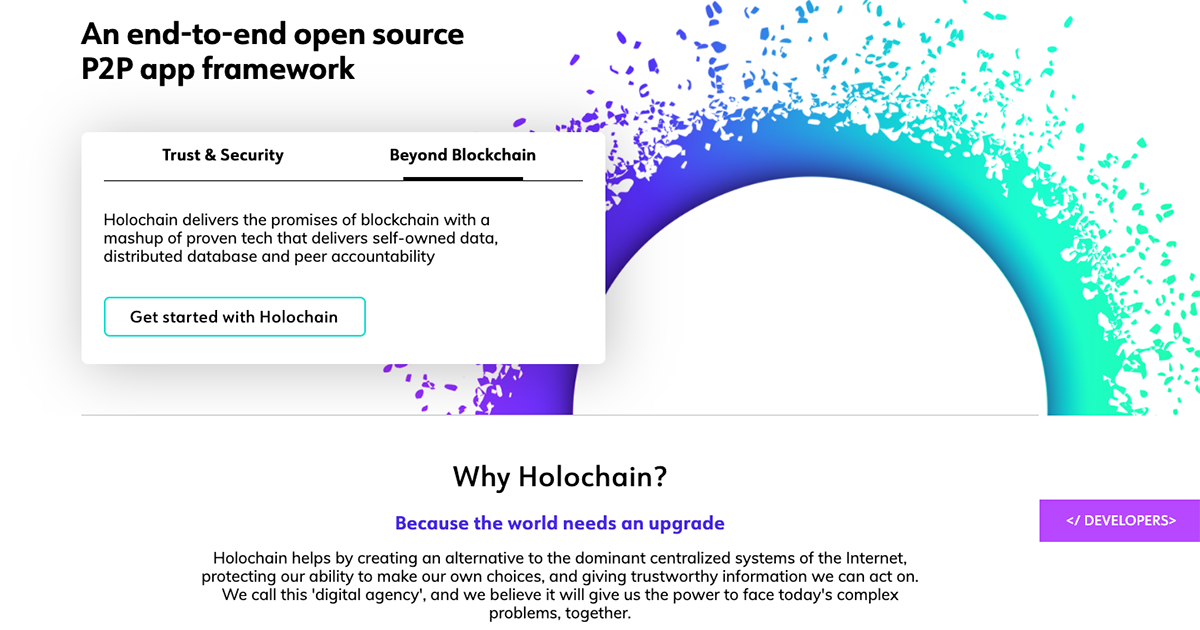
Holochain | Distributed app framework with P2P networking
Holochain delivers beyond the promises of blockchain by providing a lightweight, secure and versatile framework for everyday distributed apps.
Web-based cryptography is always snake oil
Nowadays, there is an epidemic of web applications purporting to offer “end-to-end” encryption. Examples might range from a file upload service, which allows you to upload and share files of arbitrary size and promises “end-to-end encryption”; or a web-based password safe service which claims that it can't see your passwords because they're encrypted; or a web-based cryptocurrency wallet.
Understanding Web 3 — A User Controlled Internet
Coinbase breaks down the motivation and technology behind the development of Web 3
Chris Granger - "Is Web3... anything?"
The term “web3” seems pretty fluid and is being used as a label for a bunch of disparate ideas. Given that it’s a decentralized group describing a decentralized movement, that lack of focus isn’t exactly surprising. Almost by definition it’s going to end up being different things to different people.
I'm very sorry, but you're going to have to learn to love the blockchain | TechCrunch
I apologize. I get it. You hear "blockchain" and you immediately think "shady get-rich-quick schemes" or "bubble of magical fake Internet money" or

Paradigm shifts for the decentralized Web
The answer to these questions varies with different degrees of decentralization:
Why I created @skysquare.app—and why I believe the web needs it. "Decentralized protocols represent more than a technical innovation. They offer the possibility that public conversation might once again become part of the commons rather than the exclusive property of any single platform."

Why Skysquare Exists
skysquare.app