Miracle Principle Nº 38: A miracle is a correction factor introduced into false thinking by me. It acts as a catalyst, shaking …

Believing what we do not believe: Acquiescence to superstitious beliefs and other powerful intuitions.
a post-truth thought experiment · discrete blogarithm
Imagine that you had a magic machine. You tell the machine what your goals are. The machine tells you, in any situation, the optimal statement to say in order to achieve your goals, and who to say it to. The statement may or may not be true.
The Illusion of Clarity • Ness Labs
The illusion of clarity is the confident feeling that you understand something, when in reality your grasp is full of gaps you’ve never noticed.
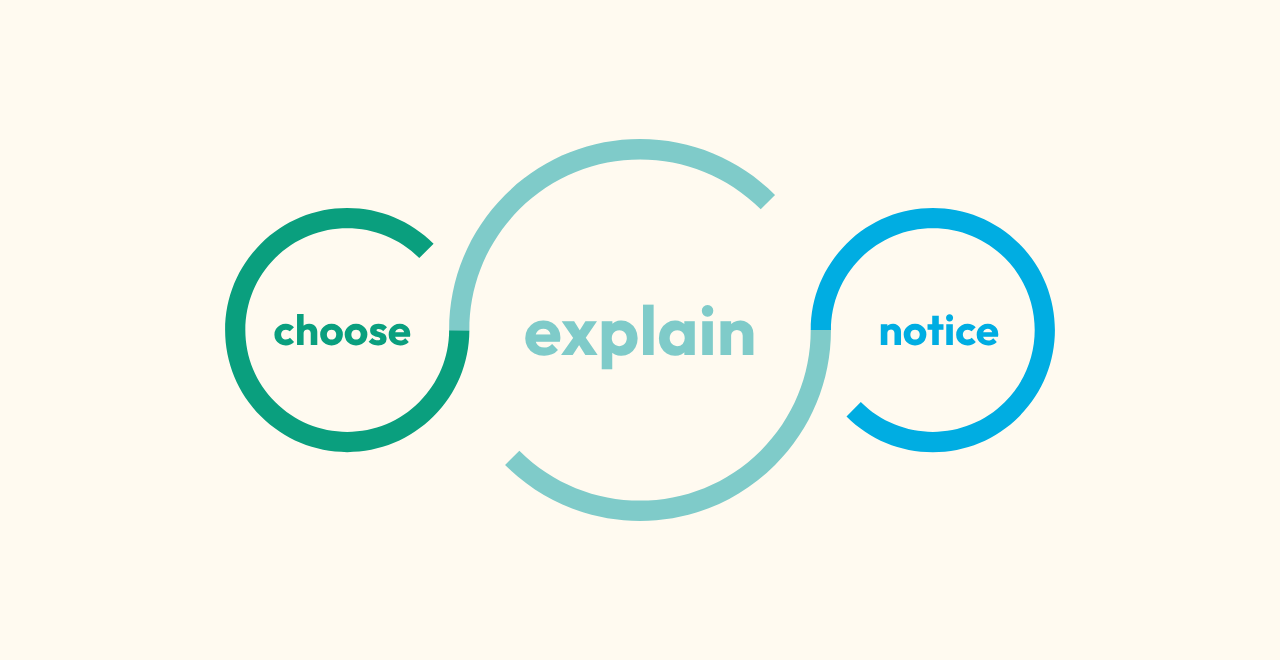
suzgunmirac/belief-in-the-machine
Belief in the Machine: Investigating Epistemological Blind Spots of Language Models
The Imperfectionist: Navigating by aliveness
I’m amazed and very pleased to say that the UK paperback of Meditations for Mortals entered the Sunday Times bestsellers at number 9 this week, after being selected as a Waterst...
The Myth and Magic of Generating New Ideas
A mathematician on how to get the mind into motion.

Opinion | The Semester That Shook My Faith as a Professor
AI has taken something fundamental from the business of teaching and learning.
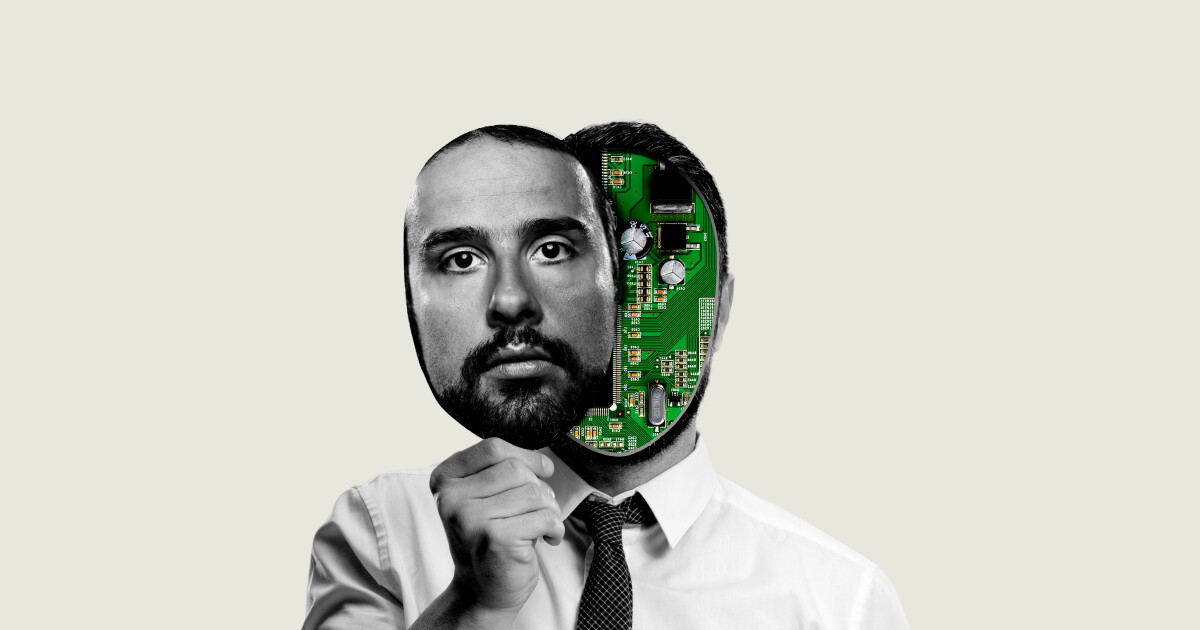
The Perfect Mirror
An experiment with AI spiritual direction almost convinces Matthew Milliner that it works—until the real world breaks the spell.

Sᴜɴʀɪsᴇ Oᴀᴛʜ 十 Tʜᴇ Sʏʟʟᴀʙᴜꜱ (ORI) - CC0 on Twitter / X
For the most part, people put way too high of an emphasis on coherence or even logical sense. Many mystics who have true and actionable advice also thinks that the basis of that advice is some incorrect understanding of quantum mechanics. Doesn't matter.— Sᴜɴʀɪsᴇ Oᴀᴛʜ 十 Tʜᴇ Sʏʟʟᴀʙᴜꜱ (ORI) - CC0 (@sunriseoath) November 2, 2026
The mistake we all make... and the simple experiment that reveals it
Your answer reveals how you see the world – and the common error that hampers our decision making. In an extract from his new book, psychologist Richard Nisbett reveals the ‘mindware’ to help us think smarter

Epistemic Courage and Open-Mindedness
Epistemic courage requires me to sometimes adopt a belief even in the face of doubts. Open-mindedness requires me to be able to reconsider my beliefs. It is generally assumed that we should have bo...

IIIc. Superalignment - SITUATIONAL AWARENESS
Reliably controlling AI systems much smarter than we are is an unsolved technical problem. And while it is a solvable problem, things could very easily go off the rails during a rapid intelligence explosion. Managing this will be extremely tense; failure could easily be catastrophic. The old sorcererHas finally gone away!Now the spirits he controlsShall

What if there was a simple practice that, if it were used consistently, would improve the reproducibility and rigor of psychology research?
Illusions of Understanding in the Sciences
Scientists seek to understand the causes of observed phenomena. Beliefs that they have succeeded are based on understanding that is rarely or possibly never complete, and varies in depth and quality. Most often scientists believe they understand more than they do, making their belief an illusion. This illusion then persists in explanations scientists provide in print, in talks, or in discussions. The illusion that a scientist has a valid and complete explanation tends to be magnified when the data are well described by mathematical and computer simulation models due to the precision of such models and their ability to predict well; prediction does not imply causality, but gives the illusion that it does. The first part of this essay supports the case for the universality of partial and incomplete levels of understanding by showing the difficulty of reaching a deep level of understanding for even a simple analysis and model that most scientists use and believe they understand: linear regression. The second part highlights some implications of the existence of many levels of understanding and explanation, and their use by scientists for design, testing, analysis, and theory development. It discusses the way that deduction and induction depend on the levels of understanding and the implications of the illusion that a scientist’s understanding is deep. It makes a case that the many incomplete levels of understanding affect, often unwittingly, the ways scientists design experiments, test theories, comprehend, communicate, and teach.

Understanding Without Defectiveness:
Why Autistic Self-Ignorance Is Interference, Not Failure