Thanks to our volunteer narrator, this post is now available in audio format. This week, in an effort to fill in some of the theoretical basis for thinking about how weaker powers think about fight…
Fighting Back: A Citizen’s Guide to Resistance
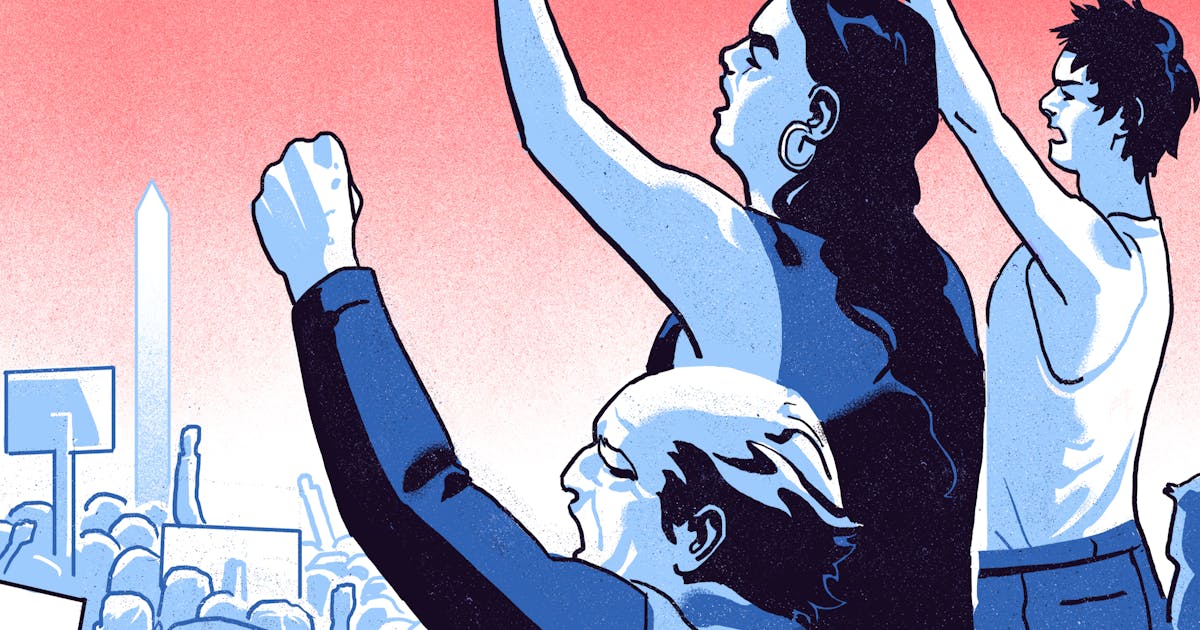
Ordinary people have more power than they know.

Who loses from the Anthropic fight? Maybe Elon Musk and Alex Karp.
Arbitrary state power can cut in many directions

People can die from giving up the fight
People can die simply because they've given up, life has beaten them and they feel defeat is inescapable, according to new research.

Collections: Pre-Modern Armies for Worldbuilders, Part I: Why They Fight
This week I want to try something a little different. Rather than taking apart a particular fantasy military system, I thought I might try to lay out a more general sense of how military systems te…

We Will Shoot Back: Armed Resistance in the Mississippi…
"Ranging from Reconstruction to the Black Power period,…

Radical Candor: Be a Kickass Boss Without Losing Your Humanity by Kim Malone Scott
From the time we learn to speak, we’re told that if you don’t have anything nice to say, don’t sa...
Cognitive Warfare Through the Lens of Critical Neuroscience: Data, Theory, and Values
This study examines cognitive warfare through the lens of critical neuroscience and situates it within peace research as a methodological contribution. Cognitive warfare-understood as the strategic modulation of perception, belief, and decision-making-highlights how the human mind has become a contested domain of contemporary conflict. The weaponization of neuroscience unfolds within sociocultural contexts where empirical findings, theoretical interpretations, and normative commitments are deeply entangled. Drawing on Johan Galtung’s epistemological triad of data, theory, and values, I propose a framework for analyzing cognitive warfare that makes explicit the normative dimensions of neuroscientific knowledge. This perspective highlights not only the weaponization of neuroscience itself, but also of its reputation: exaggerated claims and neuropolitical imaginaries can shape expectations, distort public discourse, and erode trust in science independently of actual technological capabilities. Applying this framework, the study examines resilience and solidarity as two domains in which empirical mechanisms, theoretical interpretations, and normative priors intersect. Cognitive warfare is shown to undermine resilience by destabilizing shared models of reality, while evolutionary and social dynamics demonstrate the long-term advantages of cooperation, reciprocity, and generosity over manipulation and defection. By integrating critical neuroscience with peace research, the article advances an expanded notion of peace as the safeguarding of mental and social autonomy-conditions under which cognition remains free from systematic manipulation and capable of sustaining cooperative forms of life.

What to Do as the World Falls Apart: A Framework for Action | Frankly 132
Podcast Episode · The Great Simplification with Nate Hagens · March 20 · 53m

What the Anthropic fight says about AI regulation
Fables of the deconstruction of American power

Do not conquer what you cannot defend — LessWrong
Once upon a time there was a great king. He ruled his kingdom with wisdom and economically literate policies, and prosperity followed. Seeing this, t…

‘I’m fighting two wars. One against the Russians. And one inside myself.’
A drone pilot and her all-women unit are waging a new kind of warfare on Ukraine’s eastern front

The Dispersion of Power: A Critical Realist Theory of Democracy
Abstract The Dispersion of Power is an urgent call to rethink centuries of conventional wisdom about what democracy is, why it matters, and how to make it better. Drawing from history, social science, psychology, and critical theory, it explains why elections do not and cannot realize the classic ideal of popular rule, and why prevailing strategies of democratic reform often make things worse. Instead, Bagg argues, we should see democracy as a way of protecting public power from capture—an alternative vision that is at once more realistic and more inspiring. Despite their many shortcomings, real-world elections do prevent the most extreme forms of tyranny, and are therefore indispensable. In dealing with the vast inequalities that remain, however, we cannot rely on standard solutions such as electoral reform, direct democracy, deliberation, and participatory governance. Instead, Bagg shows, protecting and enriching democracy requires addressing underlying inequalities of power directly. In part, this entails substantive policies attacking the advantages of wealthy elites. Even more crucially, deepening democracy requires the organization of oppositional, countervailing power among ordinary people. Neither task is easy, but historical precedents exist in both cases—and if democracy is to survive contemporary crises, leaders and citizens alike must find ways to revive and reinvent these essential democratic practices for the twenty-first century.

The Backward Mentality to Finding Victory - Mockingbird
It Doesn't Always Pay to Be a Thinker

The soft body of the turtle
What if humanity's greatest strength is not competition but cooperation? Kate Raworth in conversation with Jeremy Lent.