


In order to get something done, maybe we need to think less.
The Busy Person's Guide to Thinking
Thinking better isn't about learning more; it's about doing a few simple things that really help create unstoppable progress.

Every productivity thought I've ever had, as concisely as possible - …
I combed through several years of my private notes and through everything I published on productivity before and tried to summarize all of it in this post. If you’re unproductive right now Here’s what you should do if you’ve been procrastinating for an entire day: Accept that you won’t do anything today and try not to get angry at yourself Set the alarm for the time you will be preparing to go to bed today No, really. Do it. It will take 20 seconds Procrastinate for the …
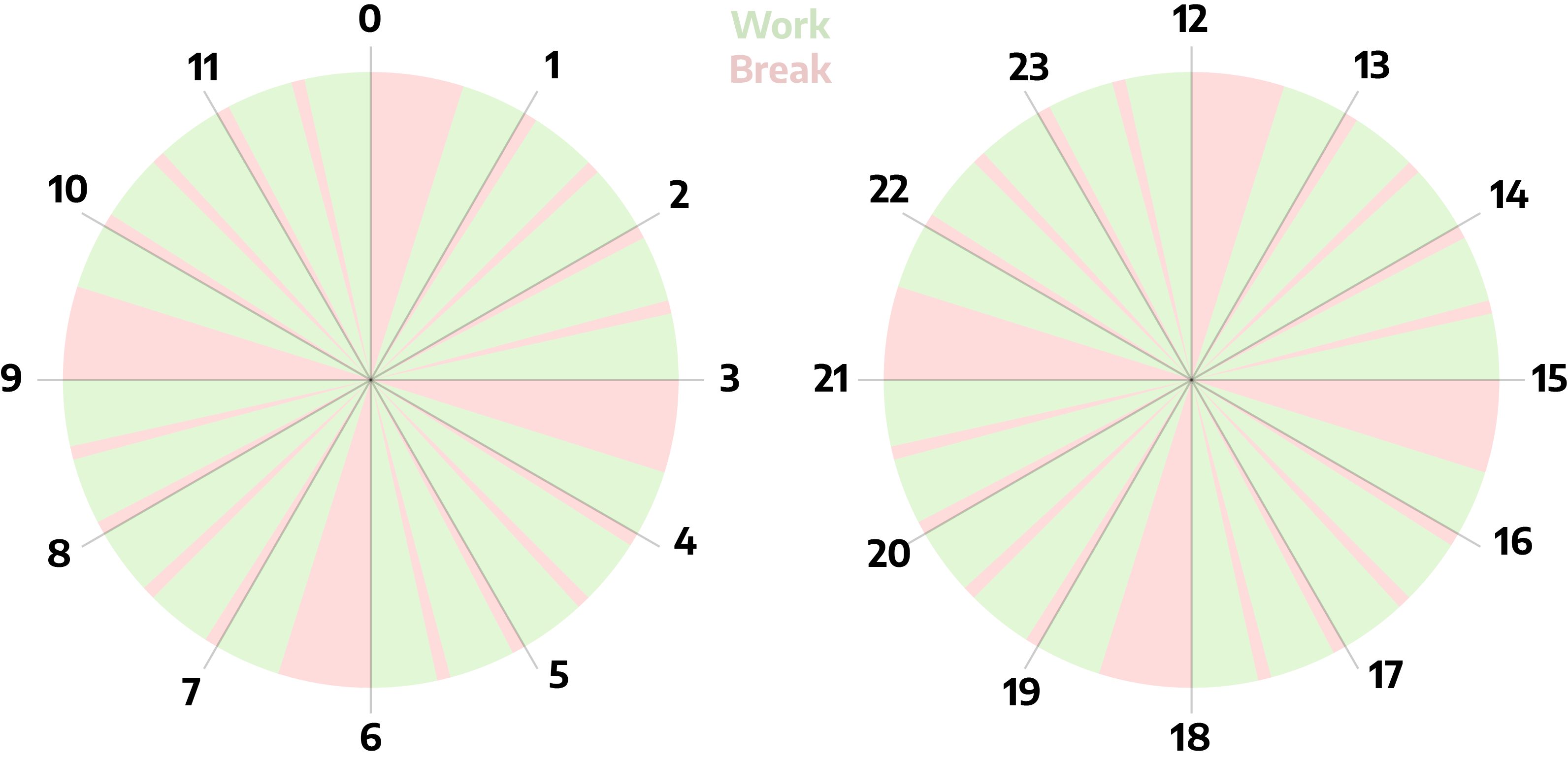
How to be more productive without forcing yourself
Imagine you could work more and be wildly productive. And you wouldn’t need to force yourself to work.
If you don’t finish then you’re just busy, not productive – Jack Simpson
One of the biggest realisations I’ve come to as part of my PhD, is how little people care about how I spend my time, they only care about what I am able to deliver. Yet in order to deliver, you need to finish. I was recently reading an article on this topic, and I think the advice can be best summed up as:

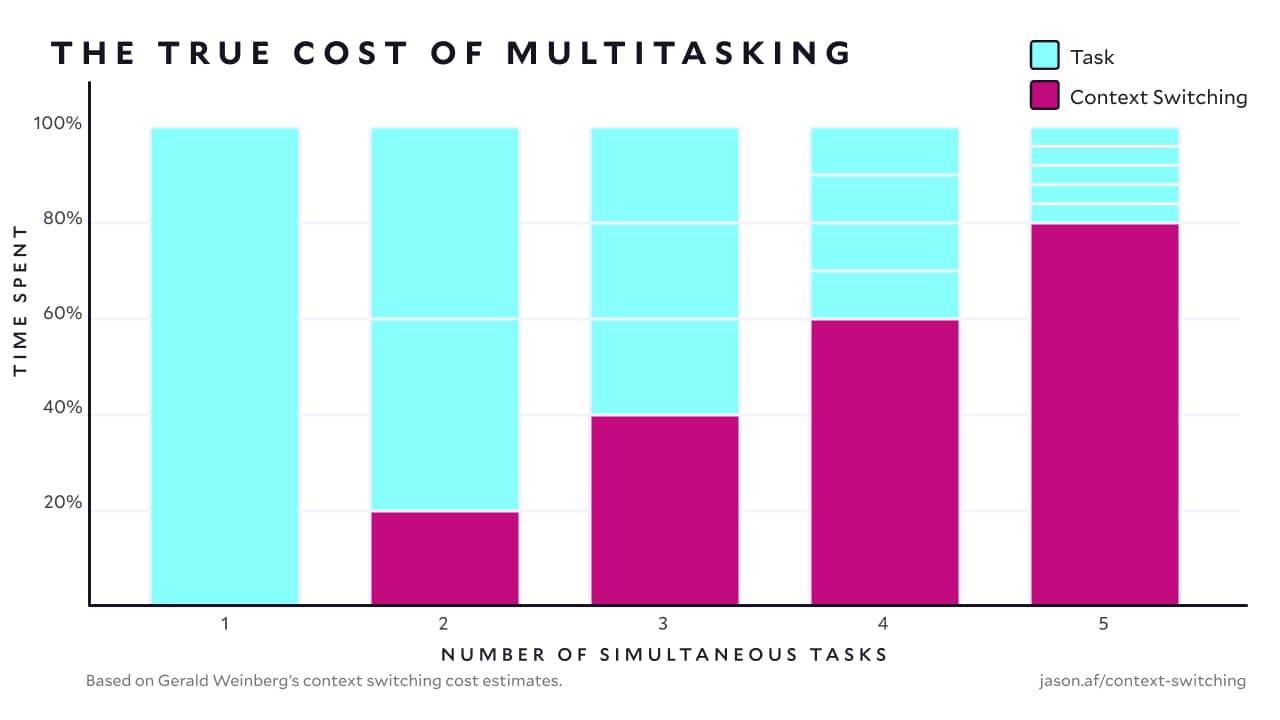
Please stop multitasking. I’m begging you. Please.
The greatest trick we ever pulled on ourselves as knowledge workers was convincing ourselves we could juggle multiple projects with no consequences.
The Top Idea in Your Mind
July 2010I realized recently that what one thinks about in the shower in the morning is more important than I'd thought. I knew it was a good time to have ideas. Now I'd go further: now I'd say it's hard to do a really good job on anything you don't think about in the shower.Everyone who's worked on difficult problems is probably familiar with the phenomenon of working hard to figure something out, failing, and then suddenly seeing the answer a bit later while doing something else. There's a kind of thinking you do without trying to. I'm increasingly convinced this type of thinking is not merely helpful in solving hard problems, but necessary. The tricky part is, you can only control it indirectly. [1]I think most people have one top idea in their mind at any given time. That's the idea their thoughts will drift toward when they're allowed to drift freely. And this idea will thus tend to get all the benefit of that type of thinking, while others are starved of it. Which means it's a disaster to let the wrong idea become the top one in your mind.What made this clear to me was having an idea I didn't want as the top one in my mind for two long stretches.I'd noticed startups got way less done when they started raising money, but it was not till we ourselves raised money that I understood why. The problem is not the actual time it takes to meet with investors. The problem is that once you start raising money, raising money becomes the top idea in your mind. That becomes what you think about when you take a shower in the morning. And that means other questions aren't.I'd hated raising money when I was running Viaweb, but I'd forgotten why I hated it so much. When we raised money for Y Combinator, I remembered. Money matters are particularly likely to become the top idea in your mind. The reason is that they have to be. It's hard to get money. It's not the sort of thing that happens by default. It's not going to happen unless you let it become the thing you think about in the shower. And then you'll make little progress on anything else you'd rather be working on. [2](I hear similar complaints from friends who are professors. Professors nowadays seem to have become professional fundraisers who do a little research on the side. It may be time to fix that.)The reason this struck me so forcibly is that for most of the preceding 10 years I'd been able to think about what I wanted. So the contrast when I couldn't was sharp. But I don't think this problem is unique to me, because just about every startup I've seen grinds to a halt when they start raising money � or talking to acquirers.You can't directly control where your thoughts drift. If you're controlling them, they're not drifting. But you can control them indirectly, by controlling what situations you let yourself get into. That has been the lesson for me: be careful what you let become critical to you. Try to get yourself into situations where the most urgent problems are ones you want to think about.You don't have complete control, of course. An emergency could push other thoughts out of your head. But barring emergencies you have a good deal of indirect control over what becomes the top idea in your mind.I've found there are two types of thoughts especially worth avoiding � thoughts like the Nile Perch in the way they push out more interesting ideas. One I've already mentioned: thoughts about money. Getting money is almost by definition an attention sink. The other is disputes. These too are engaging in the wrong way: they have the same velcro-like shape as genuinely interesting ideas, but without the substance. So avoid disputes if you want to get real work done. [3]Even Newton fell into this trap. After publishing his theory of colors in 1672 he found himself distracted by disputes for years, finally concluding that the only solution was to stop publishing:
It's getting harder to focus every day
I’m feeling it right now. I had to set a timer for 15 minute on my computer and block all distractions to write this. If I didn’t force myself to focus I would easily get distracted by something after few minutes. Even when I’m doing things that I’ve been waiting to do it, I still feel the urge to do something else. I don’t know how and when this happened. During the last few years I was always studying, working, and doing open source. And actually got stuff done. Doing all of those at the same time requires paying attention to what I wanted to do and ignore the noise.
Getting Ahead By Being Inefficient
Inefficient does not mean ineffective, and it is certainly not the same as lazy. You get things done – just not in the most effective way possible. You’re a bit sloppy, and use more energy. But don’t feel bad about it. There is real value in not being the best.

Do not give up your brain
It's tempting to just let tools think for you, but you still need to be able to think for yourself and stay sharp.

To Anyone Who Thinks They're Falling Behind In Life
You don't need more motivation. You don't need to be inspired to action. You don't need to read any more lists and posts about how you're not doing enough. There's a magic beyond us that works in ways we can't understand.

‘Ugh Fields’, or why you can’t even bear to think about that task
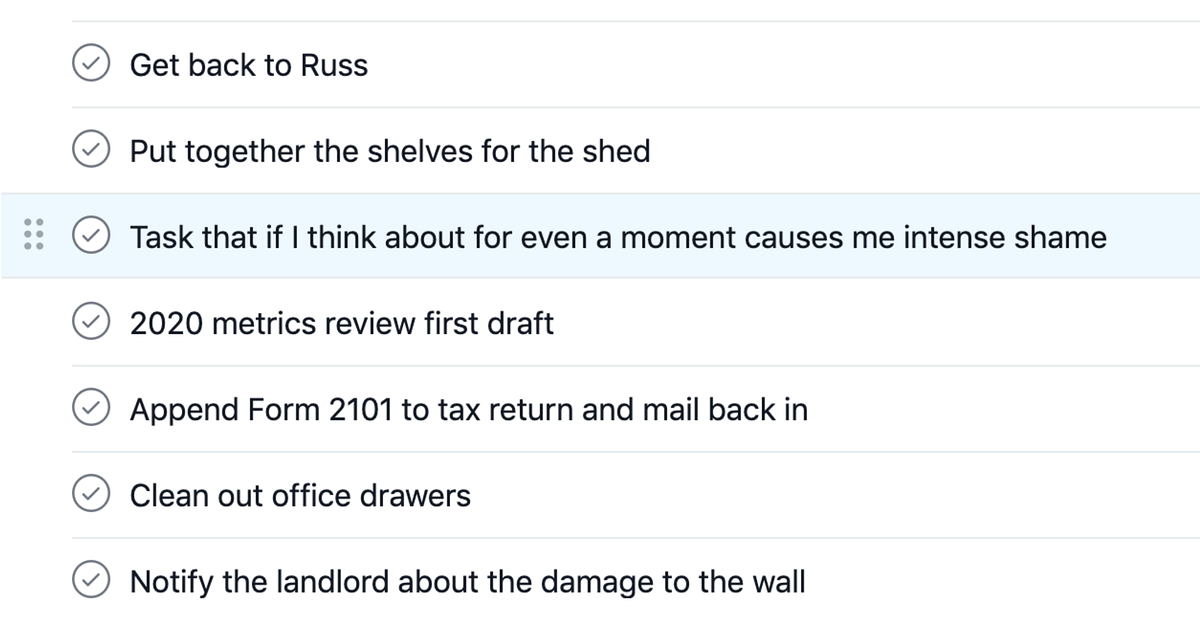
Have you ever had a long-overdue task — a task which isn’t so bad in itself — but which you can’t even bring yourself to think about?
Harnessing Frustration: Using LLMs to Overcome Activation Energy
One of my biggest weaknesses as a software engineer is procrastination when facing a new project. When the scope is unclear, I have a tendency to wait until I feel I’ve “felt out” the problem to start doing anything. I know I’ll feel better and work much faster when I get “stuck in” but I still struggle with that first step, overcoming the “activation energy” required to engage with the details. LLMs have been a game-changer for me in this respect: I can just throw a couple of sentences at them with the shape of the problem. This leads to one of two outcomes: The LLM comes up with a good solution, usually in a slightly different way than what I was thinking. I realize “oh wow the solution is much simpler than I thought”. Straight away I start thinking about the consequences of implementing and improving what the LLM suggested. The LLM comes up with a solution that I intuitively recognize as “wrong”. My immediate reaction is frustration (“How could it get it so wrong”) which leads me to go back and forth with the model, explaining to it why its solution could not possibly work. But in the process of arguing with the model, my brain is churning away and generating variations or different approaches that could work. After a while, even if the AI is still on the wrong track, the debate will trigger a moment of inspiration where suddenly the solution will come to me. I’ll excitedly start up a new conversation and start working through it with the model. The key is the emotional reaction I have immediately to the LLM’s response, either excitement or frustration. By harnessing this immediate feedback loop, I get my brain out of its passive, procrastination mode. It’s almost like a jolt: either I’m thrilled because it’s simpler than I thought, or I’m spurred to action by the urge to correct a perceived ‘wrong’ answer. This forces me to engage with the problem in a meaningful way.
Efficiency is the Enemy
If you ever find yourself stressed, overwhelmed, sinking into stasis despite wanting to change, or frustrated when you can’t respond to new opportunities, you need more slack in your life. Here’s how slack works and why you need more of it.
Good and Bad Procrastination
Thoughts on thinking
I have been stuck. Every time I sit down to write a blog post, code a feature, or start a project, I come to the same realization: in the context of AI, what I’m doing is a waste of time. It’s horrifying. The fun has been sucked out of the process...
