

Unmasking the risky illusion of npm's "trusted publishing" amidst recent cyber attacks.
Building trust in the open
How Protocols for Publishers points to the future of journalism – and the web
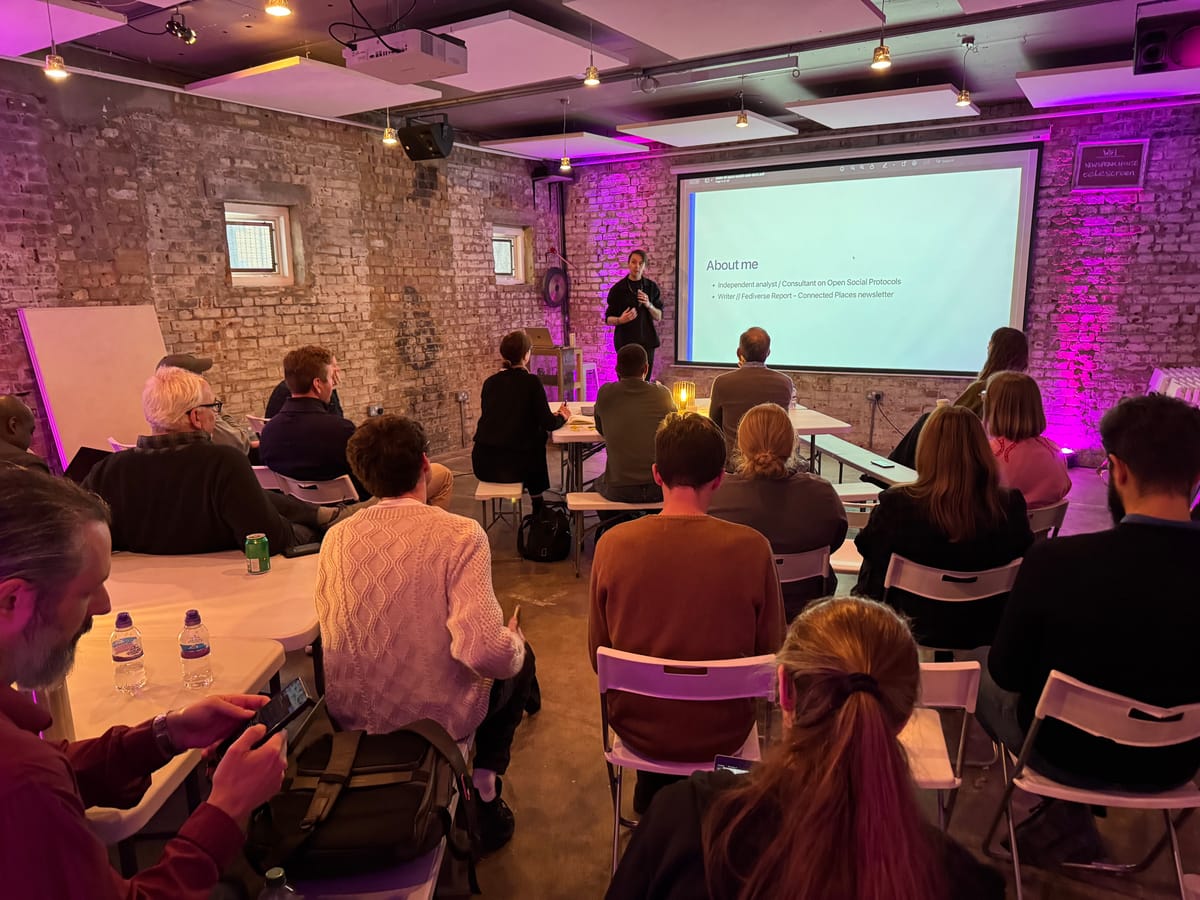
Show your work: The new terms for trust in journalism - PressThink
The transparency movement has finally come of age. Power has shifted to the users. Their trust has to be earned in different ways now.

ĐApps: What Web 3.0 Looks Like
As we move into the future, we find increasing need for a zero-trust interaction system. Even pre-Snowden, we had realised that entrusting our information to arbitrary entities on the internet was fraught with danger. However, post-Snowden the argument plainly falls in the hand of those who believe that large organisations and governments routinely attempt to stretch and overstep their authority. Thus we realise that entrusting our information to organisations in general is a fundamentally broken model. The chance of an organisation not meddling with our data is merely the effort required minus their expected gains. Given they tend to have an income model that requires they know as much about people as possible the realist will realise that the potential for convert misuse is difficult to overestimate.
Trust and Faith in Our Web
I’m not Brennan, but I’m very interested in decentralization and a fan of AtProto specifically, so I’d like to weigh in. First I should mention I’ve personally never been able to get into microblogging, so I haven’t touched bluesky myself, despite having an account for ATProto reasons. But I agree it’s concerning that the company chooses to continue to host the content of harmful individuals and calling that act “neutral”. I’m certainly against the idea of the “marketplace of ideas” as it’s cle...

Identify trusted publishers for your research • Think. Check. Submit.
Tools and practical resources, aiming to educate researchers, promote integrity, and build trust in credible research and publications.

“Paging Dr. Fraud”: The Fake Publishers That Are Ruining Science
For years, spurious journals have proliferated online, promising academic credibility in exchange for cash.

Guest Post — Restoring Trust in Science: What Would Make a Difference? - The Scholarly Kitchen
Today's guest post asserts that trust won’t be restored by "better messaging" alone, but via better incentives, more disciplined public communication, and really listening to the people who have walked away from us.
Why the Stockholm Declaration will never work
Abstract The Stockholm Declaration calls for a moral reformation of scientific publishing—replacing commercial publishers with scholar-led journals, rewarding quality over quantity and instituting independent oversight. While noble in spirit, it fundamentally misdiagnoses the disease. The crisis of science stems not from paper mills or profit motives but from systemic incentives that reward volume, novelty and prestige over validity and reliability. Non-profit ownership will not neutralize the prestige economy, sleuth-led policing cannot scale, and ‘integrity registries’ would merely replace metrics with surveillance. True reform requires rebuilding the publishing infrastructure as a public utility: publicly funded, free to publish and read, and stripped of hierarchy and financial incentives.
Why 83% of organizations reportedly trust open source with their most sensitive assets
There is now an increasing trust in open source alternatives to take organizations where they want to go for their IAM and token requirements.

Reformation of science publishing: the Stockholm Declaration
Science relies on integrity and trustworthiness. But scientists under career pressure are lured to purchase fake publications from ‘paper mills’ that use AI-generated data, text and image fabrication. The number of low-quality or fraudulent publications is rising to hundreds of thousands per year, which—if unchecked—will damage the scientific and economic progress of our societies. The result is editor and reviewer fatigue, irreproducible experiments, misguided experiments, disinformation and escalating costs that devour funding from taxpayers intended for research. It is high time to reevaluate current publishing models and outline a global plan to stop this unhealthy development. A conference was therefore organized by the Royal Swedish Academy of Sciences to draft an action plan with specific recommendations, as follows. (i) Academia should resume control of publishing using non-profit publishing models (e.g. diamond open-access). (ii) Adjust incentive systems to merit quality, not quantity, in a reputation economy where the gaming of publication numbers and citation metrics distorts the perception of academic excellence. (iii) Implement mechanisms to prevent and detect fake publications and fraud which are independent of publishers. (iv) Draft and implement legislations, regulations and policies to increase publishing quality and integrity. This is a call to action for universities, academies, science organizations and funders to unite and join this effort.

New Paradigms in Trust and Safety: Navigating Defederation on Decentralized Social Media Platforms
Defederation on decentralized social media offers new possibilities for online governance. Experts consider how it can be used responsibly, in a way that balances speech and safety.

How not to build trust - Mathew's newsletter
Last Friday I welcomed two "steps in the right direction" from W Social. But timing is everything.
How not to build trust - Mathew's newsletter
Last Friday I welcomed two "steps in the right direction" from W Social. But timing is everything.
Four Functional Quadrants for Trust & Safety Tools: Detection, Investigation, Review & Enforcement (DIRE) <div> <br> </div>
Public discourse and regulatory debates about online trust and safety have long been dominated by a focus on rules, not tools: preoccupied mostly by the questio

Hacker News: Honest Edition
Can we measure trust in scientific publications? - LSE Impact
Jonathon Alexis Coates outlines how a constellation of static and dynamic indicators could provide a means for assessing the trustworthiness of published research
