


A world of violence sustains itself through guns, poverty and other social ills, but also through the minds it creates
La banalité du mal : ce que dit la recherche en psychologie sociale
La violence dans les hiérarchies sociales est exercée par des individus qui se distinguent des autres par leur orientation autoritaire.

Social cognition and interpersonal violence
Why do some people resort to violence while others in similar circumstances do not? Drawing on 99 in-depth interviews with men from high-violence Chicago neighborhoods who participated in a community violence intervention, we examine how past exposure to violence shapes the social cognitions that influence future involvement in violence—through the schemas and scripts people use to interpret social situations and guide behavior. We identify three specific social cognitions that respondents associated with violence: misconstruing ambiguous cues as threats, defaulting to a narrow set of behavioral responses, and attributing violent behavior to fixed personal traits rather than situational factors. Respondents reported that participation in the program’s cognitive behavioral component shifted these social cognitions in ways they associated with reduced violence involvement. The consistency of these self-reports combined with the program’s experimental impacts suggest the hypothesis that these specific social cognitions could play an important role in violence and may be modifiable through intervention.

When is Political Violence Justified
What the Liberal Tradition Says on the Subject

"Violence Has No Place In Politics" OH REALLY?
Experts Warn That AI Slop Is Corrupting Kids’ Brains
A new analysis argues that AI fruit reels depicting violent acts reinforce dangerous extremism among young viewers.

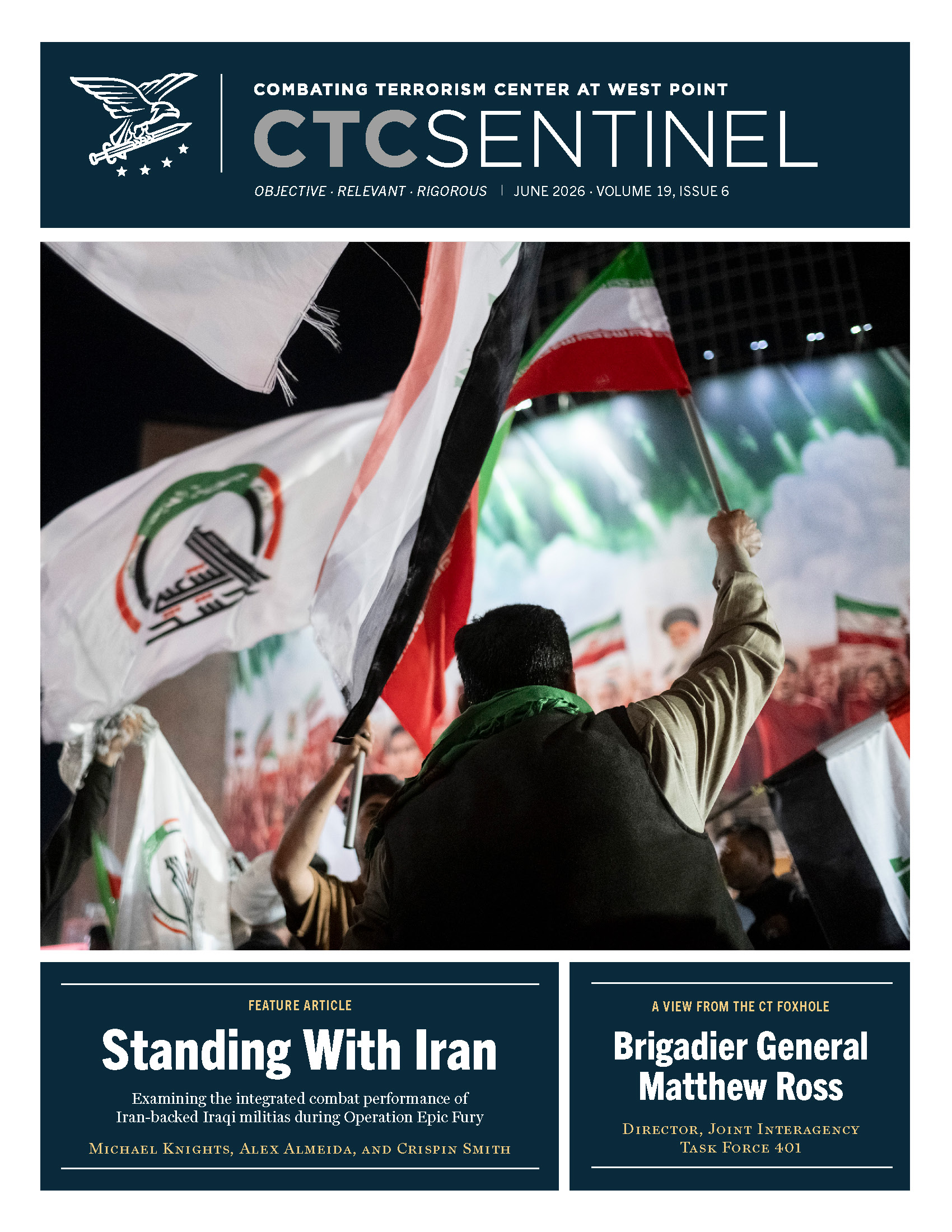
Remotely Coerced Violence: 764, The Com Network, and the Hybridization of Threats - Combating Terrorism Center at West Point
Abstract: This article examines 764 and the wider Com Network as a case study in remotely coerced violence and the hybridization of contemporary terrorist and violent extremist threats. It argues that nihilistic violent extremism is best understood as a victim-driven, youth-centered online ecosystem in which status, belonging, and identity are earned through the production, circulation, … Continued
Sex, AI, and the Apocalypse - Ian Duncan
How a community devoted to thinking clearly incubated salvation stories, abusive experiments, race science, and an affection for autocracy, and why that history matters now that its alumni are asking for the public trust on AI.
Between Threat and Reality: The National Association for the Advancement of Colored People and the Emergence of Armed Self-Defense in Clarksdale and Natchez, Mississippi, 1960-1965
Annelieke Dirks, Between Threat and Reality: The National Association for the Advancement of Colored People and the Emergence of Armed Self-Defense in Clarksdale and Natchez, Mississippi, 1960-1965, Journal for the Study of Radicalism, Vol. 1, No. 1 (Spring 2007), pp. 71-98
A Better Conversation on Guns
For the U.S. to make lasting progress against firearm violence, it must change the way it talks about — and talks to — people who carry.

The Impact of Artificial Intelligence on Violence Against Women and Girls • Stimson Center
Examining the impact of AI on violence against women and girls, particularly concerning disinformation, online abuse, and women’s participation in public life.

Genealogy, Enchantment, and the War for the Mind | The Journal for Cultural and Religious Theory | JCRT
Carl Raschke interviews Jason Ānanda Josephson Storm on genealogy after genealogy, the myth of disenchantment, and the long history behind the militarization of the mind.

The Algorithmic Management of Polarization and Violence on Social Media
Access the PDF version of this essay by clicking the icon to the right.


Black Schoolgirls at the Intersection of Consent and Property: Mapping a Socio-Historical Analysis for Anti-Rape Education Futures in Schooling
This article examines how the concept of consent, persons as property, with its links to the convergence of law, imperial governance and schooling reveal the fragility and possibilities of consent ...

Where to even begin. Anthropic wants to "apply centuries of human moral wisdom to its models, as rapidly as possible," via crash courses with hand-picked religious thinkers. Why was one of the Jewish representatives an Israeli scholar who's defended autonomous weapons for armies and police?
