
Money and brains are both quantum phenomena – so it’s not surprising that economics is overdue for a quantum revolution

More on whether useful quantum computing is “imminent”
These days, the most common question I get goes something like this: A decade ago, you told people that scalable quantum computing wasn’t imminent. Now, though, you claim it plausibly is immi…
Quantum dialectics - MR Online
The quantum revolution in physics played out over a period of 22 years, from 1905 to 1927. When it was done, the new theory of quantum mechanics had completely undermined the basis for our understanding of the material world. The familiar and intuitively appealing description of an atom as a tiny solar system, with electrons orbiting the […]

Scientists Predict Quantum Jumps, Turning Physics on Its Head
We're one major step closer to useful quantum computers.

A Cryptography Engineer’s Perspective on Quantum Computing Timelines
The risk that cryptographically-relevant quantum computers materialize within the next few years is now high enough to be dispositive, unfortunately.

Quotes
I have a theory, which has not let me down so far, that there is an inverse relationship between imagination and money. Because the more money and technology that is available to [create] a work, the less imagination there will be in it.
Quotes
I have a theory, which has not let me down so far, that there is an inverse relationship between imagination and money. Because the more money and technology that is available to [create] a work, the less imagination there will be in it.
Exponential Economist Meets Finite Physicist | Do the Math
[An updated treatment of some of this material appears in Chapter 2 of the Energy and Human Ambitions on a Finite Planet (free) textbook, also mirrors a 2022 article in Nature Physics..]
Why the super rich are inevitable
Why some mathematicians argue the economy is designed to create a few super rich people – unless we stop it.

Power: A Primer for Perplexed Economists
Let's Assume an Unfettered Marketplace of Ideas! Or Actually, Let's Not.
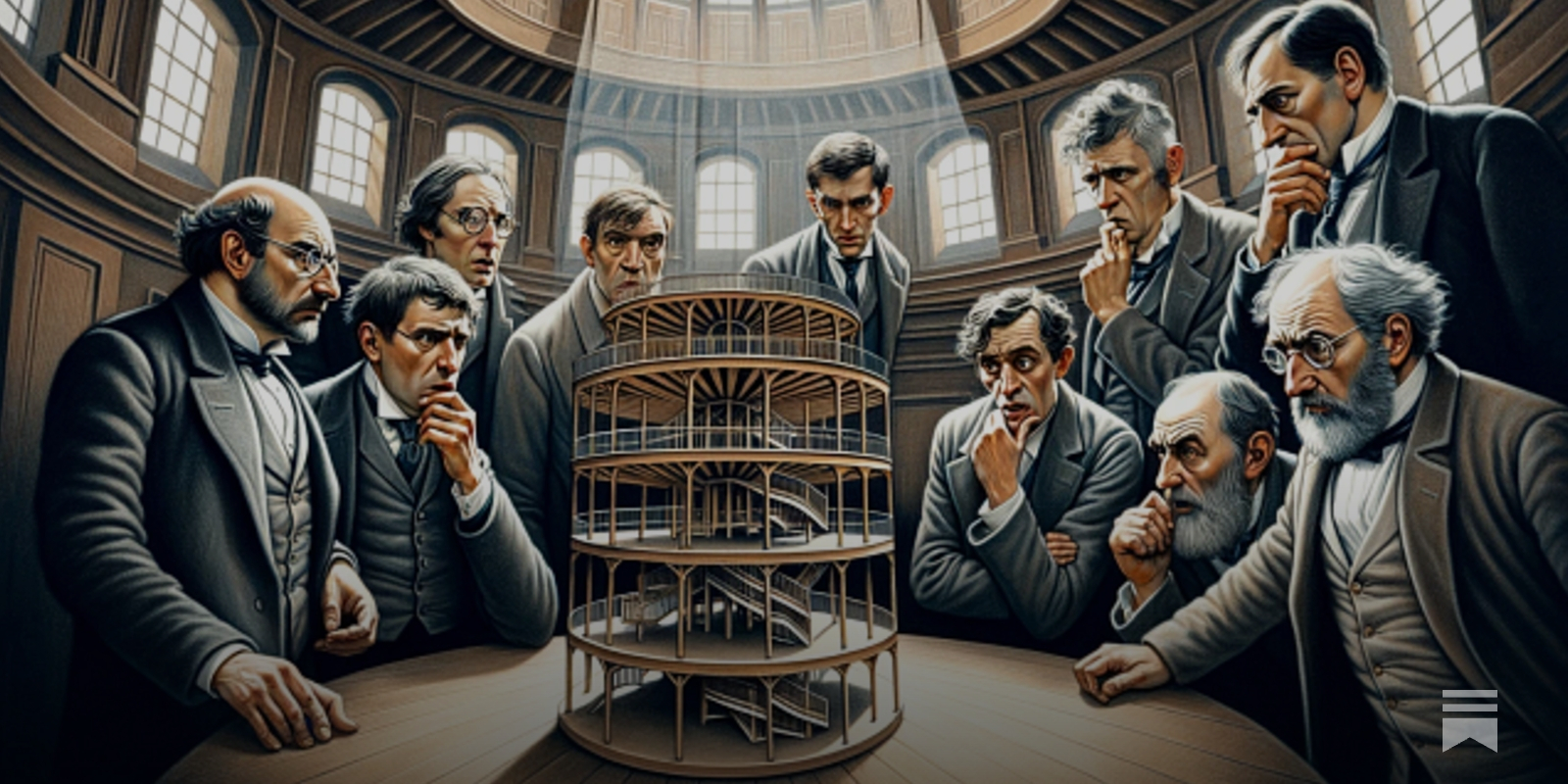
Economics for the future – Beyond the superorganism
Our environment and economy are at a crossroads. This paper attempts a cohesive narrative on how human evolved behavior, money, energy, economy and th…
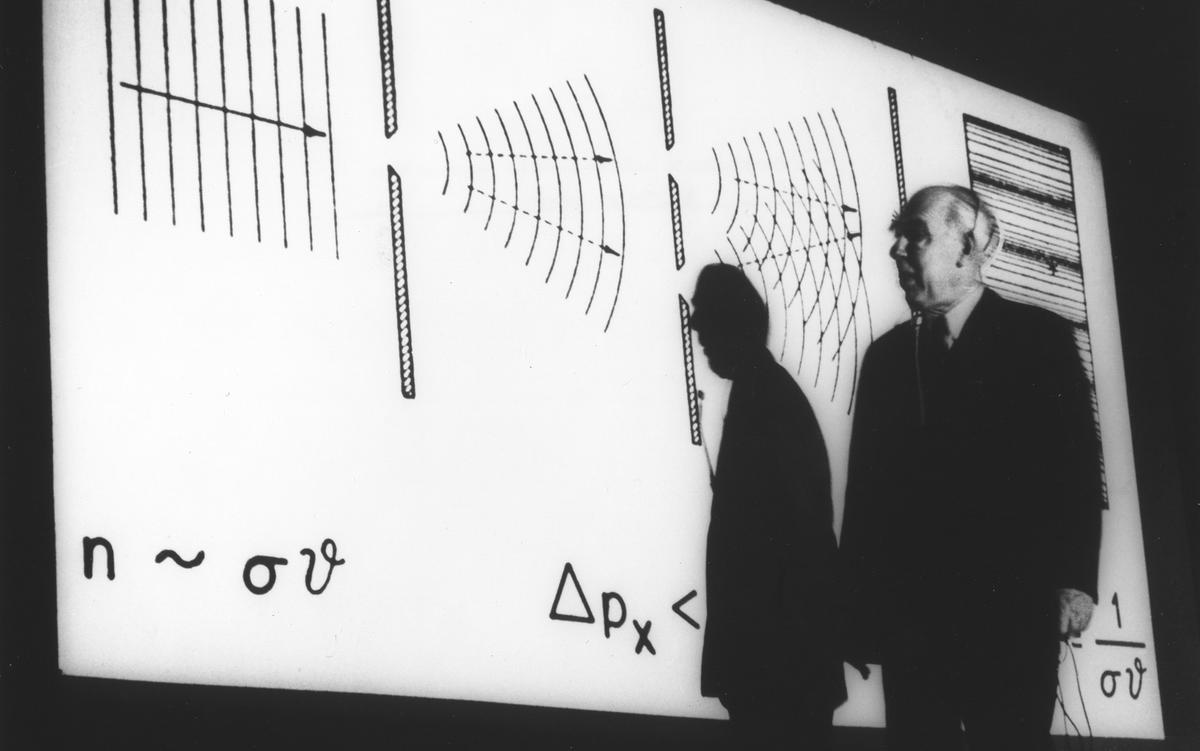
‘Shut up and calculate’ does a disservice to quantum mechanics | Aeon Essays
The cliché has it that the Copenhagen interpretation demands adherence without deep enquiry. That does physics a disservice
Arnaud Bertrand on Twitter / X
This is absolutely brilliant, by legendary Australian investor John Hempton, who explains the core financial paradox at the heart of the AI story (and which also, to some extent, may explain the Jensen Huang story).The numbers say that about $7 trillion in AI compute is set to… pic.twitter.com/5BwbZQ7qHe— Arnaud Bertrand (@RnaudBertrand) November 13, 2026

Against Economics
Mainstream economists nowadays might not be particularly good at predicting financial crashes, facilitating general prosperity, or coming up with models for preventing climate change, but when it comes to establishing themselves in positions of intellectual authority, unaffected by such failings, their success is unparalleled. One would have to look at the history of religions to find anything like it. To this day, economics continues to be taught not as a story of arguments—not, like any other social science, as a welter of often warring theoretical perspectives—but rather as something more like physics, the gradual realization of universal, unimpeachable mathematical truths.

The Future of Money: How the Digital Revolution Is Tran…
A cutting-edge look at how accelerating financial chang…

Meet the quantum blockchain that works like a time machine | TechCrunch
A new -- and theoretical -- system for blockchain-based data storage could ensure that hackers will not be able to crack cryptocurrencies once the quantum