

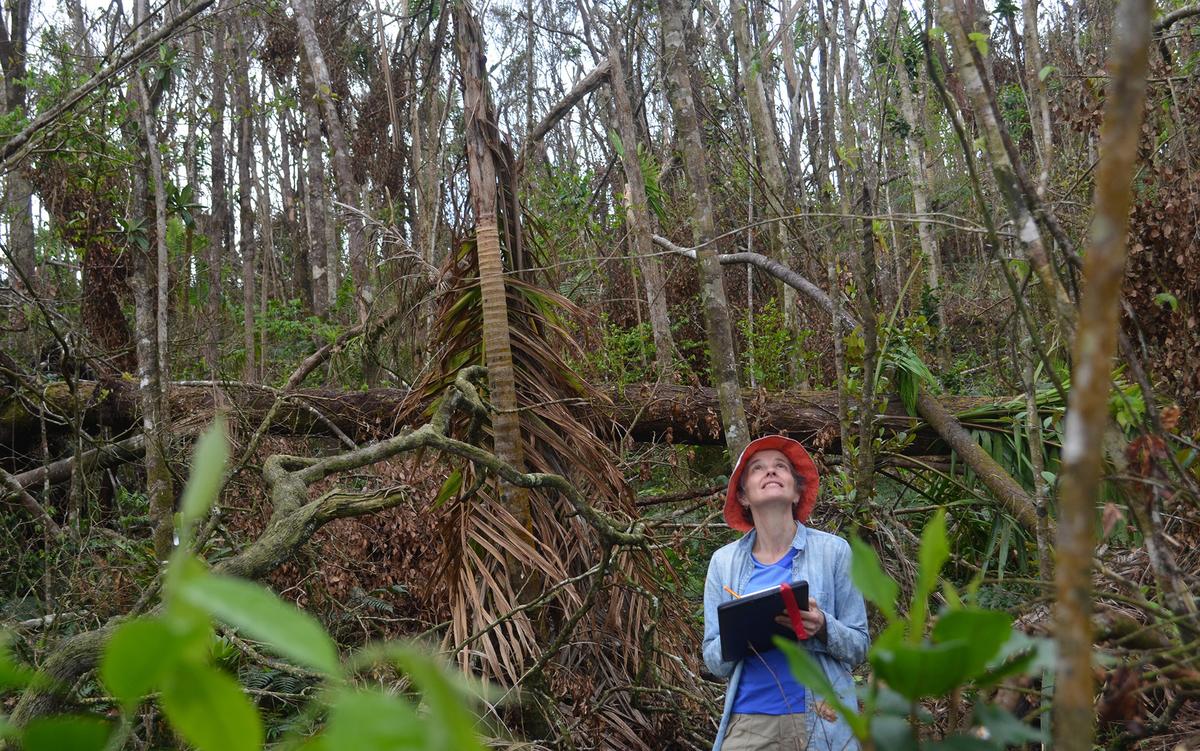
How atomic doomsday experiments, fuelled by Cold War fears, shaped then shook ecologists’ faith in self-healing nature
Think Entangled, Act Spooky
I like the concept of the Anthropocene. It finesses or postpones at least some of the conflict around the idea of climate change, broadens the conversation to…

From risk to flourishing: Seeds for responding to a complex world
Flourishing is the actualization of all beings toward their good -- not only individually but collectively, answering the question of `how do we live well with and for each other?'. In science as in society, the tendency to reduce, segregate, specialize, and settle has precluded embracing the concept of flourishing as a guiding principle. We aim to identify an approach to risk science research that promotes the flourishing of socio-ecological-technological systems (SETS). We discuss the normative role of an orientation toward flourishing for the field of risk science. We explore the possibility that (risk) science could be done in a way that is capable of pointing society toward a different future, one more resilient and more capable of flourishing. Our exploration mirrors the conversational nature of flourishing itself: examine ideologies traditionally believed to be rigidly in opposition and consider what emerges in the space(s) and conversation between them. We call this a dialectical approach. Within this paradigm grounded in conversation, pluralism, and pragmatism, we revisit three longstanding tensions in risk science: physical$|$social, determinism$|$uncertainty, contextuality$|$generality. Although these tensions are not new, revisiting them together through the lens of complexity science, and with explicit attention to the normative commitments that shape risk research, reveals underexplored possibilities for the field. Examining them in conversation with the other allows us to explore the provisional seeds for what might be termed complex risk science: interdependence, responsivity, participation, pluralism, openness, and ongoingness. Enacting the dialectical paradigm towards a risk science for a flourishing world will depend on creating collectives toward complex risk science, supporting them with skillfully governed commons, and centering care in our research.

The “Terrible Engine of Destruction” That Inspired Federal Science Funding
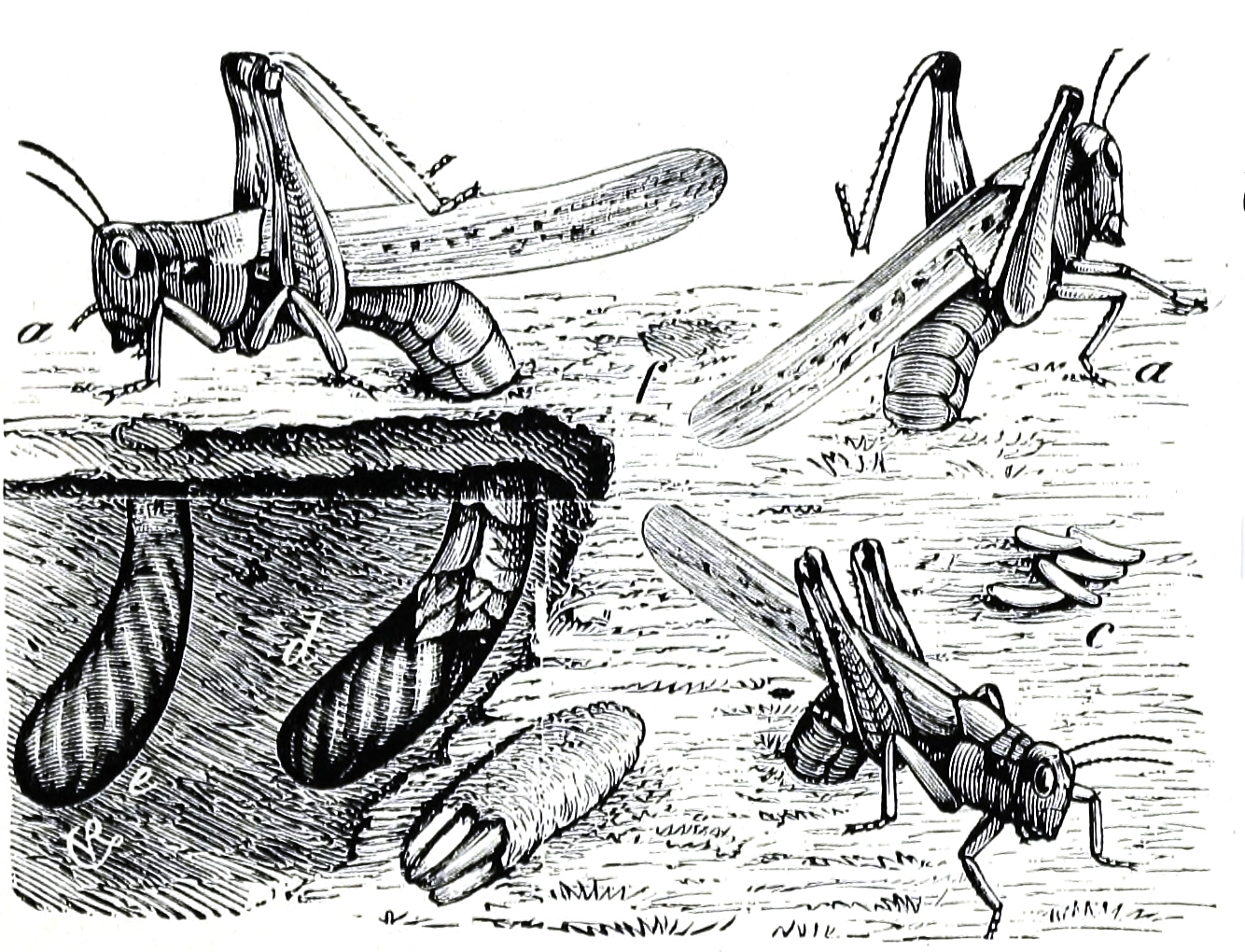
What can we learn about the relationship between science and the American public from the story of plagues of locusts in the 1870s?
The climate crisis: a war on the world
The climate crisis is a self-destructive war, with aggressors and victims

Jason Hickel on Twitter / X
The climate crisis reveals that our civilization has never really been organized around science, contrary to the usual Enlightenment narrative. It is organized around capital. Science is embraced when it serves the interests of capital, and is often ignored when it does not.— Jason Hickel (@jasonhickel) January 6, 2022
Beyond Catastrophe: A New Climate Reality Is Coming Into View (Published 2022)
There's plenty of bad news. But thanks to real progress, we're headed toward a less apocalyptic future.

Radical Futurisms: Ecologies of Collapse, Chronopolitics, and Justice-to-Come
Ecologies of Collapse, Chronopolitics, and Justice-to-Come
"Wandering towards dystopia": CSIRO scientists want open discussion of climate impacts before it's too late
Senior CSIRO scientists discussed how to have an "open conversation" about the rising threats from a warming world before "it's too late".

Serenity and the Myth of "Getting Out the Signal" - Reactor
We want to believe that knowledge will change the world for the better, but it's not always that simple.

Calamity Theory
What are the implications of how we talk about apocalypse? A new philosophical field has emerged. “Existential risk” studies any real or hypothetical hum...
Climate Change: Global Crisis To Local Action By Kevin Anderson
ICPA - ICPA 2026
Welcome to the 2026 International Conference on Perception and Action (ICPA). This year, we meet in Omaha, Nebraska, bringing the international ecological psychology community together in a setting that reflects a growing culture of research and innovation.ICPA brings together scholars from around the world who study perception and action as inseparable, mutually constraining processes grounded in organism–environment relations. The program features work spanning affordances, perceptual learning, coordination and control, development, social interaction, ecological design, and methodological innovation.The conference is designed to support sustained dialogue across theoretical, empirical, and applied perspectives—welcoming diverse viewpoints and participants from across institutions, disciplines, and countries. We invite you to join us for a week of scientific exchange and community building as we continue to advance ecological approaches to understanding behavior in real-world contexts.

On the Extinction Risk from Artificial Intelligence
In this report, RAND researchers examine the threat of human extinction posed by artificial intelligence (AI). Using a scenario-based analysis to evaluate three technologies — nuclear weapons, pathogens, and geoengineering — they found that it would be immensely challenging for AI to create an extinction threat, although they could not rule out the possibility. They identify risk indicators and make recommendations to mitigate future risk.

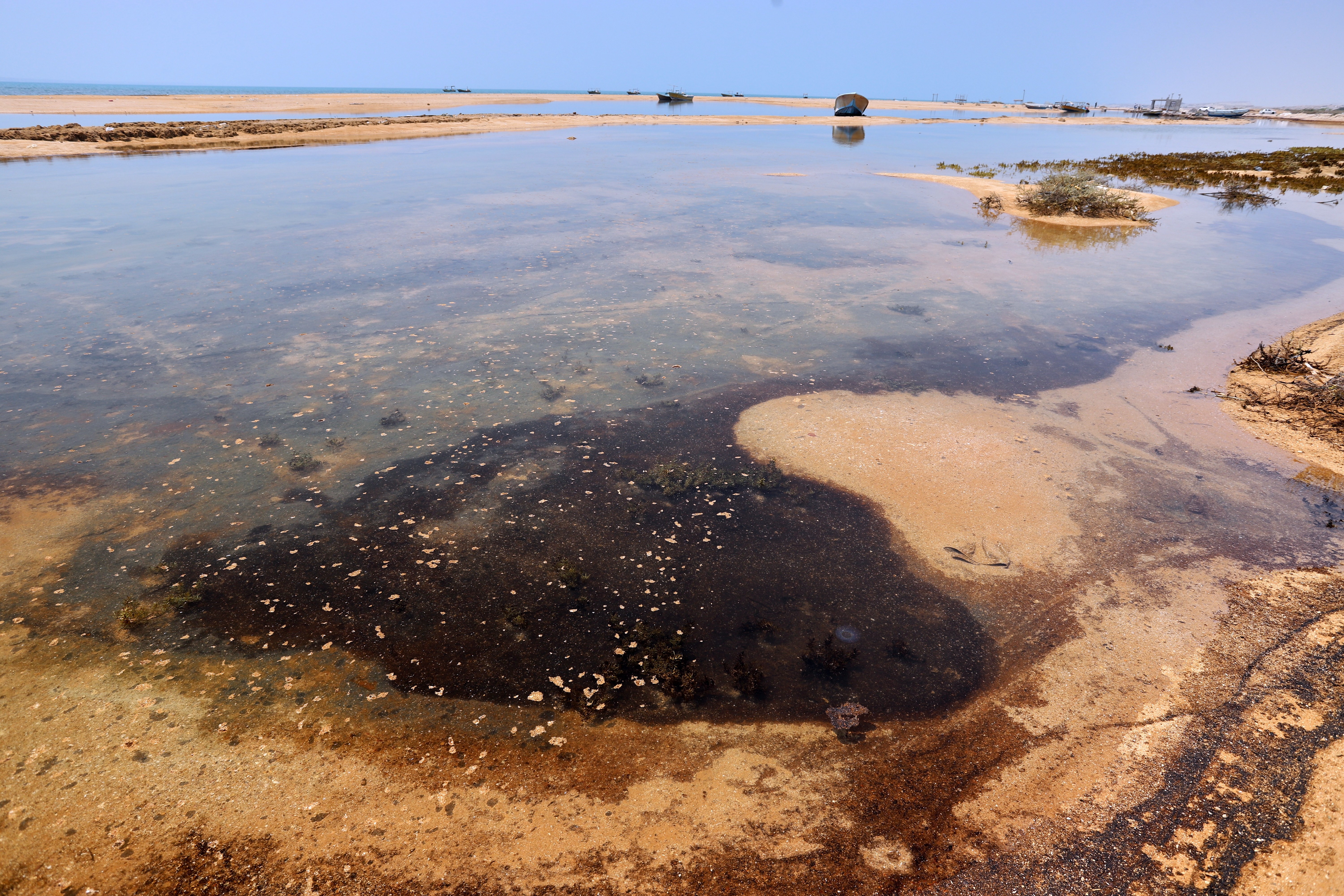
Ecocide in Iran
The U.S.–Israeli war on Iran has caused massive environmental devastation, adding to the long history of American wars with toxic legacies.
Here’s relevant paper on #metascience lit from 2018, 7 years and a pandemic ago. This hasn’t been hypothetical or hard to see. During the pandemic science reform was weaponized by Ioannidis, Prasad, Bhattacharya, etc and lives were lost. pnas.org/doi/10.1073/pnas.1708276114

Crisis or self-correction: Rethinking media narratives about the well-being of science | PNAS
www.pnas.org