


ADHD isn’t merely a dysfunction. It’s best understood as an impulsive motivational drive for novel information
How the hypercuriosity of ADHD may have helped humans thrive | Aeon Essays
ADHD isn’t merely a dysfunction. It’s best understood as an impulsive motivational drive for novel information
Successful People With ADHD Superpowers
Explore stories of successful people who have harnessed their ADHD superpowers to achieve greatness.

Hyperactive–impulsive ADHD traits predict higher curiosity in adults: evidence from a cross-sectional study
Attention-deficit/hyperactivity disorder (ADHD) is typically framed in terms of difficulties with sustained attention, behavioral regulation, and impulse control, yet growing work suggests that some associated traits may also relate to potentially adaptive tendencies. Curiosity has been highlighted in qualitative research as one such trait that can function as both a strength and a challenge for adults with ADHD, but quantitative evidence examining its relationship to ADHD traits remains limited. This study examined whether ADHD traits are associated with individual differences in trait curiosity in adults.

ADHD and the Alexander Technique
Some people with ADHD have reported benefits in applying some of the ideas from my materials. What could be going on here? My interest in Alexander Technique’s potential relevance to ADHD arose because quite a few people with ADHD who have engaged with my materials have reported improvement in


ADHD and Entrepreneurship: Unlocking the Potential of Those Who Break the Mold
Having symptoms related to the hyperactive-impulsive presentation of ADHD can spur innovativeness, proactiveness and risk-taking.

ADHD and giftedness: a neurocognitive consideration of twice exceptionality
Current models of cognition and behavioral diagnosis emphasize categorical classification over continuous considerations of function and promote the "differential diagnosis" of various conditions according to observational criteria. However, an overemphasis on a purely behavioral, categorical approach to understanding human function fails to address the comorbidity of different disorders and does not include a consideration of overlapping levels of function, from "pathological" through "normal," to "gifted" or exceptional. The frequent co-occurrence of "gifted" and "pathological" function is thus difficult to understand from a corticocentric and purely behavioral and observational point of view. This article reviews "giftedness" in relation to the diagnosis of attention-deficit hyperactivity disorder, coexistence of which is termed "twice exceptional." It additionally considers problems in assessing these functions using current neuropsychological tests and methodologies that are presumably based upon a corticocentric model of cognition.
Entrepreneurship and ADHD: Fast Brain, Fast Company?
Entrepreneurship and ADHD are connected in research — and the anecdotal success of businesses ranging from JetBlue to Kinko’s and beyond. Here, entreprene…

Nobody Has a Personality Anymore
My generation is obsessed with treating every trait as a symptom of a disorder: You’re not shy, you’re autistic; you’re not forgetful, you’ve got ADHD, writes Freya India.

Attention Deficit/Hyperactivity Disorder (ADHD) and Entrepreneurship
Several empirical papers have reported an association between attention deficit/hyperactivity disorder (ADHD) and facets of entrepreneurship. While much research has documented that adults with ADHD often are impaired in the occupational domain and have difficulties maintaining full-time employment, these recent papers intimate that entrepreneurship may represent an attractive occupational option for adults with ADHD. Indeed, adults with ADHD who are entrepreneurs anecdotally report benefiting in their entrepreneurial endeavors from their ADHD. From this perspective, symptoms and traits associated with ADHD might be beneficial, not impairing. This paper discusses ADHD theory and clinical characteristics of adults with ADHD and how both may translate to entrepreneurship, then reviews the existing data that have been published on the association between ADHD and entrepreneurial intention and entrepreneurial orientation. These data suggest that hyperactivity symptoms (and not inattentive symptoms) may be more responsible for the reported associations between ADHD and aspects of entrepreneurship. At this point, the research on ADHD and entrepreneurship is too nascent to propose practical implications, but this paper suggests potential directions for future research and policy.
ADHD symptoms, entrepreneurial passion, and entrepreneurial performance
Recent studies have substantially enhanced our understanding of attention deficit and hyperactivity disorder (ADHD) in entrepreneurship—articulating the theoretical relevance of ADHD-type traits in entrepreneurship and confirming the positive linkages between ADHD symptoms/diagnosis and entrepreneurial intentions and behavior. However, how and why some people with ADHD symptoms run successful ventures, while other entrepreneurs fail to perform well, is still not well established. Our study builds on a Gestalt perspective that integrates person–environment fit and broaden-and-build theorizing, and proposes that strong positive emotions enable entrepreneurs with ADHD symptoms (at the subclinical level) to mitigate/reinforce the effect of ADHD’s trait-specific weaknesses/strengths to achieve entrepreneurial performance. Relying on fuzzy-set methodology, our findings indicate that for entrepreneurs with ADHD symptoms, entrepreneurial performance occurs when they simultaneously experience passion for founding and developing. This passion configuration is unique to successful ADHD-type entrepreneurs. As such, this study offers novel theoretical and empirical insights as well as implications for practitioners.
Entrepreneurship and attention deficit/hyperactivity disorder: a large-scale study involving the clinical condition of ADHD
A growing conversation has emerged linking ostensibly dark or pathological individual-level characteristics to entrepreneurship. Attention deficit/hyperactivity disorder (ADHD) is among the most central and emblematic. Recent studies have made great strides—articulating the theoretical relevance of ADHD-type behavior in entrepreneurship and suggesting a positive link consistent with narratives in the popular press. However, quantitative studies have yet to empirically examine ADHD in line with its theoretical roots and definition—as a clinical disorder. The present paper contributes by providing a theoretically–empirically aligned test of the connection between the condition of ADHD and entrepreneurial intention and action. Based on a large-scale data collection effort (N = 9869) and cross-sectional methodology, the results find a positive connection between clinical ADHD and entrepreneurial intentions as well as entrepreneurial action. This grounds prior research on ADHD and entrepreneurship, indicating that individuals with ADHD are indeed more likely to not just espouse entrepreneurial intentions, but also to initiate business venturing. Considering the design, it suggests a self-selection toward entrepreneurship in individuals with ADHD (before potentially being a choice of last resort).
What the Studies Say About How AI Affects Your Brain: A (Very Big) Compilation
The entire literature clearly points to a single surprising finding
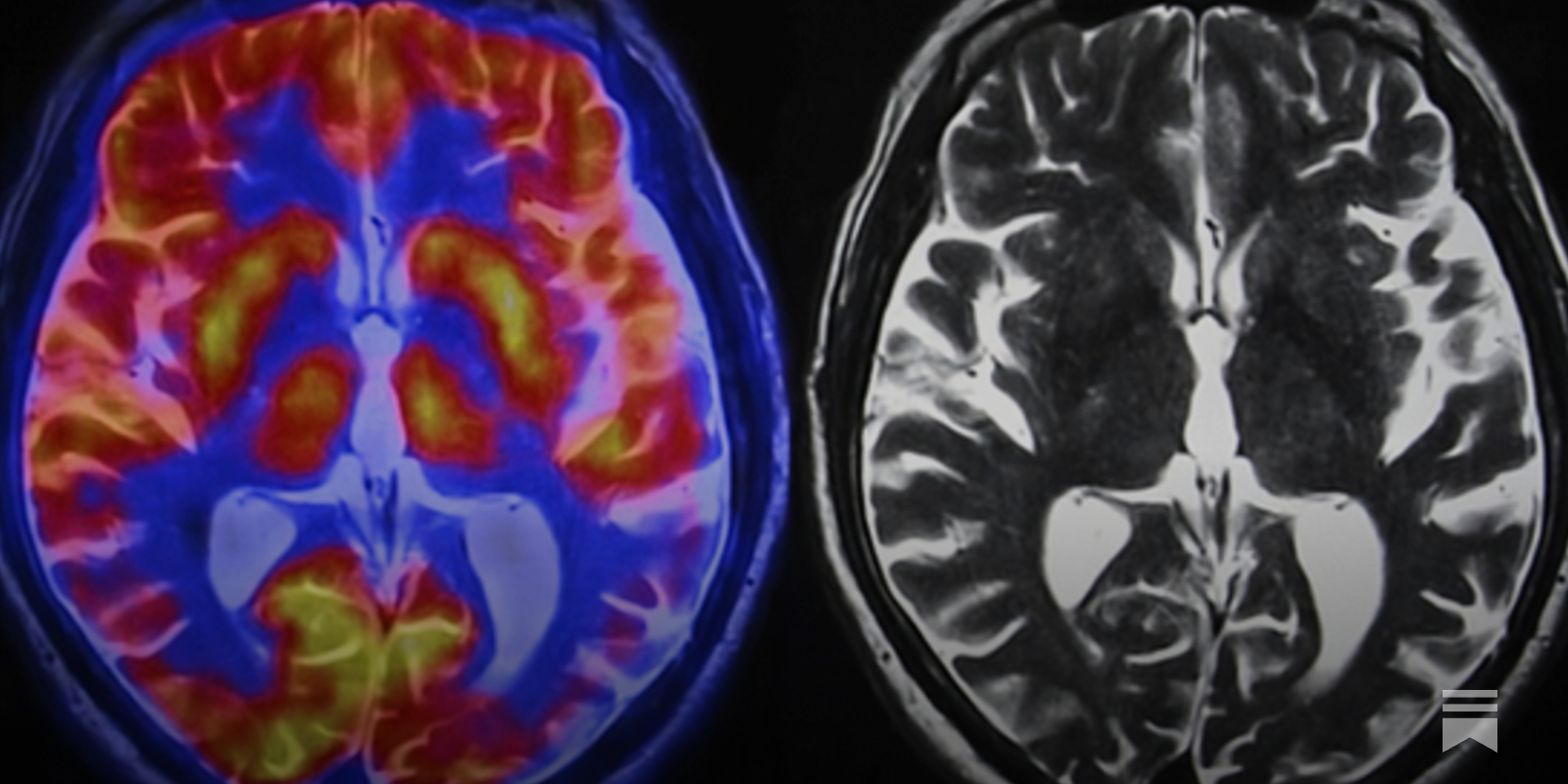
For those who’s taking ritalin / stimulants, does it drain you towards the end of the day?
80 votes, 56 comments. Im not sure if I used the right flair… Hello Reddit! I was recently diagnosed with adhd and its been a week since taking…
Why I Procrastinate
A look into me, my awful procrastination habit, and how I fixed it. (spoiler alert: it was ADHD)

1. New preprint resolving a conundrum in systems neuroscience with an AI scientist, and humans Reilly Tilbury, Dabin Kwon, @haydari.bsky.social, @jacobmratliff.bsky.social, @bio-emergent.bsky.social, @carandinilab.net, @kevinjmiller.bsky.social, @neurokim.bsky.social biorxiv.org/content/10.1101/2025.11.12.68…

Characterizing neuronal population geometry with AI equation discovery
www.biorxiv.org