


Subjecting the problems of ethics to the cool quantifications of logic and probability can help us to be better people
AI Ethics Class
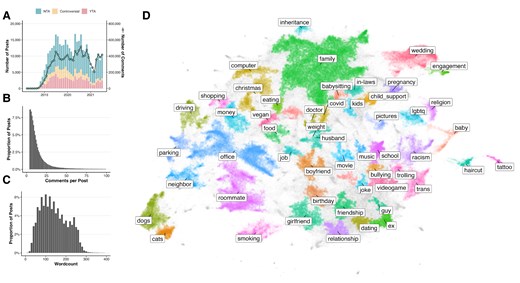
A large-scale investigation of everyday moral dilemmas
Abstract. Questions of right and wrong are central to daily life, yet scientific understanding of everyday moral dilemmas is limited. We conducted a data-d
Philosophy Experiments — Interactive Thought Experiments
Explore 27 interactive philosophy experiments that challenge your moral intuitions, test your logical reasoning, and probe the boundaries of belief.
Digest Issue 92: The AI Ethics Brief #202 | What Happens When You Have a Choice? | Reading the Label on AI | Pangram is not an oracle | A Fresh Look at The World Map of Encryption Laws and Policies
Discover insights at the intersection of technology and society

Introduction to Higher-Order Categorical Logic (Cambridge Studies in Advanced Mathematics)
Introduction to higher order catagorical logic by J. Lambek, March 25, 1988, Cambridge University Press edition, Paperback in English

From Impoverished Intelligence to Abundant Intelligences
The artificial intelligence (AI) industry-academic complex does not have an ethics problem. It has an epistemology problem.

(PDF) Why is dialogical solving of a logical problem more effective than individual solving?: A formal and experimental study of an abstract version of Wason’s task
PDF | We study the accomplishment of the abstract version of Wason’s selection task in a cooperative dialogue context that has been neglected in the... | Find, read and cite all the research you need on ResearchGate

Exploring the interplay between AI and human logic in mathematical problem-solving
This paper investigates the dynamic interplay between Artificial Intelligence (AI) and human logic in the domain of mathematical problem-solving. By critically examining a series of case studies, we compare the efficacy of AI-generated solutions, particularly those offered by ChatGPT, against traditional human problem-solving methods. The study employs various mathematical challenges, ranging from abstract logical puzzles to applied numerical problems, to evaluate AI's problem-solving approach and alignment with human cognitive processes. Our analysis highlights instances where AI's computational strategies complement or diverge from human reasoning, shedding light on AI's potential and limitations in deciphering mathematical problems. Furthermore, we explore the implications of integrating AI tools in educational contexts, specifically their role in enhancing students' mathematical problem-solving skills. The paper aims to contribute to the ongoing discourse on the optimal utilization of AI in education, proposing a balanced approach that leverages AI's computational power while fostering the depth and creativity of human logic. Through this comparative study, we advocate for a collaborative model where AI and human reasoning merge to enrich the educational landscape, particularly in the teaching and learning of mathematics.


AI, Ethics, and Society — Home
Mathematical Beauty, Truth and Proof in the Age of AI | Quanta Magazine
Mathematicians have started to prepare for a profound shift in what it means to do mathematics.

Reconciling truthfulness and relevance as epistemic and decision-theoretic utility.

Moral Imaginations - But how could it work? Like this? moralimaginations.com/watchet-imagines-1 foodrise.org.uk/wp-content/uploads/2025/07/MT…
General 3 — Moral Imaginations
www.moralimaginations.com