


Nobody quite recovers from being a child: the asymmetry of power between parents and children always leaves a trace
The Physics and Metaphysics of Social Powers: Bridging Cognitive Processing and Social Dynamics, a New Perspective on Power through Active Inference
Children’s Sense of Fairness as Equal Respect
One influential view holds that children’s sense of fairness emerges at age 8 and is rooted in the development of an aversion to unequal resource distributions. Here, we suggest two amendments to this view. First, we argue and present evidence that children’s sense of fairness emerges already at age 3 in (and only in) the context of collaborative activities. This is because, in our theoretical view, collaboration creates a sense of equal respect among partners. Second, we argue and present evidence that children’s judgments about what is fair are essentially judgments about the social meaning of the distributive act; for example, children accept unequal distributions if the procedure gave everyone an equal chance (so-called distributive justice). Children thus respond to unequal (and other) distributions not based on material concerns, but rather based on interpersonal concerns: they want equal respect.
Growing Independence
Note: this is based on my experience with my two kids, currently four and six. It may not generalize as much as I think it does. People start out dependent on their parents for food, changing, contact, motion, and even sleep timing. Typically they end up as adults, no longer dependent on their parents at all. Part of my approach to parenting has been that I want to let my kids be as independent a

A quote from 1984
In the long run, a hierarchical society was only possible on a basis of poverty and ignorance.

Parenting | The Paper Pilot
The Paper Pilot's digital garden of thoughts on philosophy, politics, and sociology

Children's Acquisition and Application of Norms
All human societies are permeated by collectively shared entities that govern daily social interactions and promote coordination and cooperation: norms. While the study of norm development is not new to developmental psychology, it has only recently been the target of an interdisciplinary wave of research using new methodologies and (often) complementary theoretical accounts to describe and explain the origins and potentially species-unique aspects of human norm psychology. Here we review recent developmental research showing that young children swiftly acquire and infer norms in a variety of social contexts. Moreover, children actively enforce these norms, even as unaffected bystanders, when third parties do things the wrong way. This research suggests that the foundations of human norm psychology can be found in early childhood. Deeper insights into the ontogenetic roots of norm psychology may contribute to understanding the evolutionary emergence of human cooperation and its maintenance in the contemporary world.
(PDF) Power concentrations in the ATmosphere: Balancing between feudalism and conflict exhaustion
PDF | On Apr 24, 2025, Nathalie Van Raemdonck published Power concentrations in the ATmosphere: Balancing between feudalism and conflict exhaustion | Find, read and cite all the research you need on ResearchGate

Social Reproduction Theory: Remapping Class, Recentering Oppression
This groundbreaking collection explores the profound power of Social Reproduction Theory to deepen our understanding of everyday life under capitalism. While many Marxists tend to focus on the productive economy, this book focuses on issues such as child care, health care, education, family life and the roles of gender, race and sexuality, all of which are central to understanding the relationship between economic exploitation and social oppression. In this book, leading writers such as Lise Vogel, Nancy Fraser, David McNally and Susan Ferguson reveal the ways in which daily and generational reproductive labour, found in households, schools, hospitals and prisons, also sustains the drive for accumulation. Presenting a more sophisticated alternative to intersectionality, these essays provide ideas which have important strategic implications for anti-capitalists, anti-racists and feminists attempting to find a path through the seemingly ever more complex world we live in.
Children today are suffering a severe deficit of play | Aeon Essays
Children today are cossetted and pressured in equal measure. Without the freedom to play they will never grow up

How to parent more predictably
(As with anything else I write about parenting, this is mostly just my observations with my own two kids and may not generalize as well as I think it does.) A few weeks ago I wrote about why I think it's valuable for parents to be predictable. I was mostly describing an end state, though, and reasons why it's a good place to be, but what should you do if you're interested in being more consistent
🧵New preprint: Adults often agree with their ingroup even when evidence says otherwise. Why? To find out, we studied kids, who show the same tendency but *before* political identities take hold. With developmental data, we can see the basic psychological ingredients. doi.org/10.31234/osf.io/gf38p_v1 1/11
OSF
doi.orgRelationship Anarchy

The principles of Anarchism, applied to our relationships. Will also discuss amatonormativity, which tends to also pull in acespec.

A love story

Be jealous. Make demands. Want more.
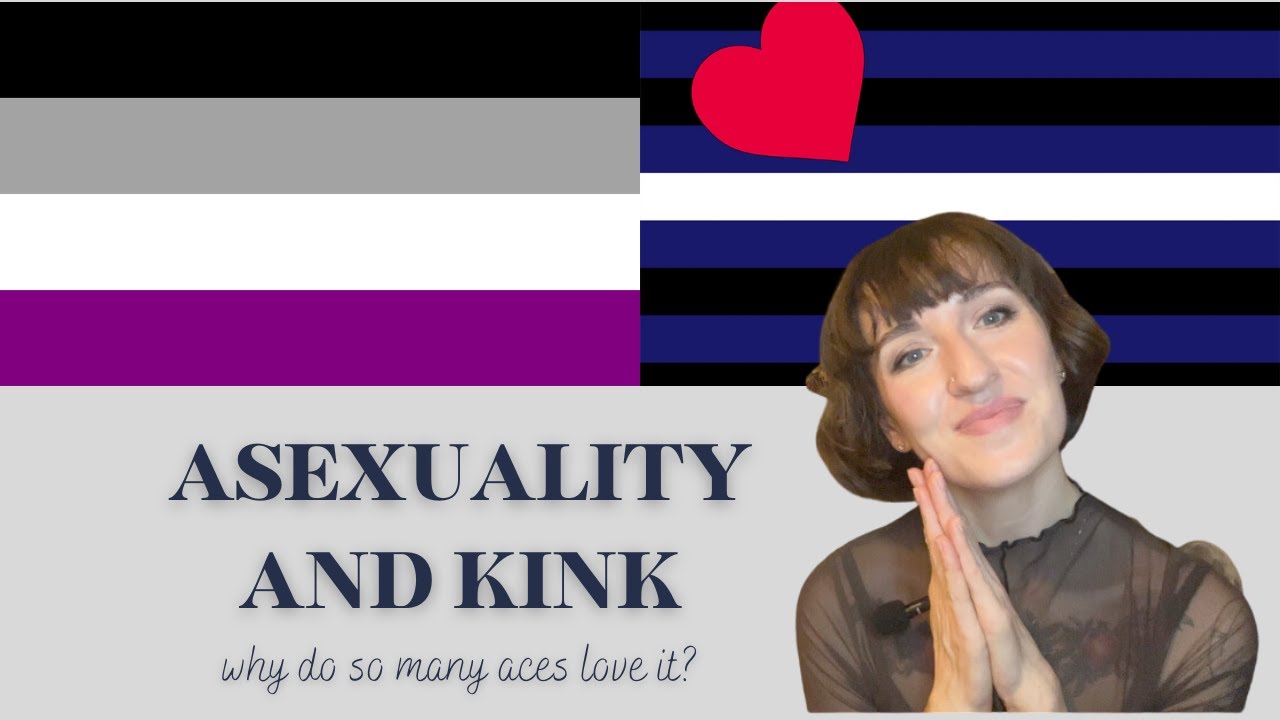
Asexuality and Kink: Why Do So Many Aces Love It?

A Theory of Messaging Styles & Ghosting.

Relationship Design

A Typology of Insecurities in Non-monogamy


