


Stripped of easy moralising, literature makes us relish the search for truth in an age when many believe truth to be dead
The Freedom to Write
PEN America stands at the intersection of literature and human rights to protect free expression in the United States and worldwide.
Reading Wars
Read online or download for free Reading Wars explores heated, even murderous, political struggles over who gets to read and what they get to read. Those conflicts, once again in the news, stretch back centuries. In this book, Don Herzog examines the history and politics of anxieties about readers and reading, spanning both the United States and Britain, from the 1500s right up to contemporary battles over banning library books and freedom of speech. In these pages, Herzog deftly interweaves episodes from Reformation England, when first Catholics and then Protestants cracked down on unsupervised Bible-reading, with the deadly campaigns in pre-Civil War America to keep black people – both free and enslaved – illiterate. Drawing on a wealth of primary sources, he reconstructs arguments insisting that ordinary men and women could not be trusted to read what they liked – indeed, that some of them ought not read at all. And he charts struggles to promote literacy. Herzog argues that at stake in these battles is whether some people – those banned from reading – are perceived as not fully human, or lesser persons than others. The radical campaign to let more or less everyone read more or less everything is ultimately, therefore, a campaign for equality. Click here to read praise for Reading Wars "In characteristically engaging and straight-forward language Don Herzog explores the debates past and present, largely in Britain and America, about whether or not to suppress reading. By taking seriously the arguments for suppressing or restricting books and their readers, Herzog suggests that those arguments turn on the claim that for some people reading is dangerous. This assumption, Herzog compellingly argues, ignores the fact that literacy is largely a social activity. In Reading Wars, Herzog develops a powerful liberal argument for literacy and reading. An argument, Herzog shows, that has incompletely triumphed." — Steve Pincus, Thomas Donnelly Professor of History, University of Chicago "Knowledge is power - which is why efforts to acquire knowledge through reading have been outlawed, suppressed through violence, and remain targets today. Don Herzog's Reading Wars tells the astonishing history behind the wars on reading in a readable, clever style, underscoring the stakes of many of the current fights over censorship and book bans." — Leah Litman, cohost of the podcast Strict Scrutiny and New York Times bestselling author of Lawless "A rich yet accessible introduction to the many ways in which society has attempted to restrict reading materials throughout British and United States history. Equal parts illuminating and horrifying, it lays the groundwork for the 21st century’s own shameful dabbles with censorship through its careful consideration of the key concerns and prejudices that structure each generation’s literacy battles." — Alison Hicks, Associate Professor in Library and Information Studies, UCL "Political theory, historical sense, worrisome texts, unheralded documents, and great storytelling join forces in Herzog’s virtuoso investigation of the brutal fighting over who gets to learn to read (and what) in early and late modern America and Britain. The bloodshed may have lessened, but we are still fighting, and Herzog shows the deeper stakes involved in reading’s relation to equality and personhood." — Mary G Dietz, John Evans Professor Emerita of Political Theory, Northwestern University , Reading Wars explores heated, even murderous, political struggles over who gets to read and what they get to read. Don Herzog examines the history and politics of anxieties about readers and reading, spanning the United States and Britain, from the 1500s right up to contemporary battles over banning library books and freedom of speech.

Literature fans should welcome AI as a fellow wordsmith | Aeon Essays
Strong resistance to AI among writers is understandable. But it obscures what we share with the machines: language itself

Culture & truth : the remaking of social analysis
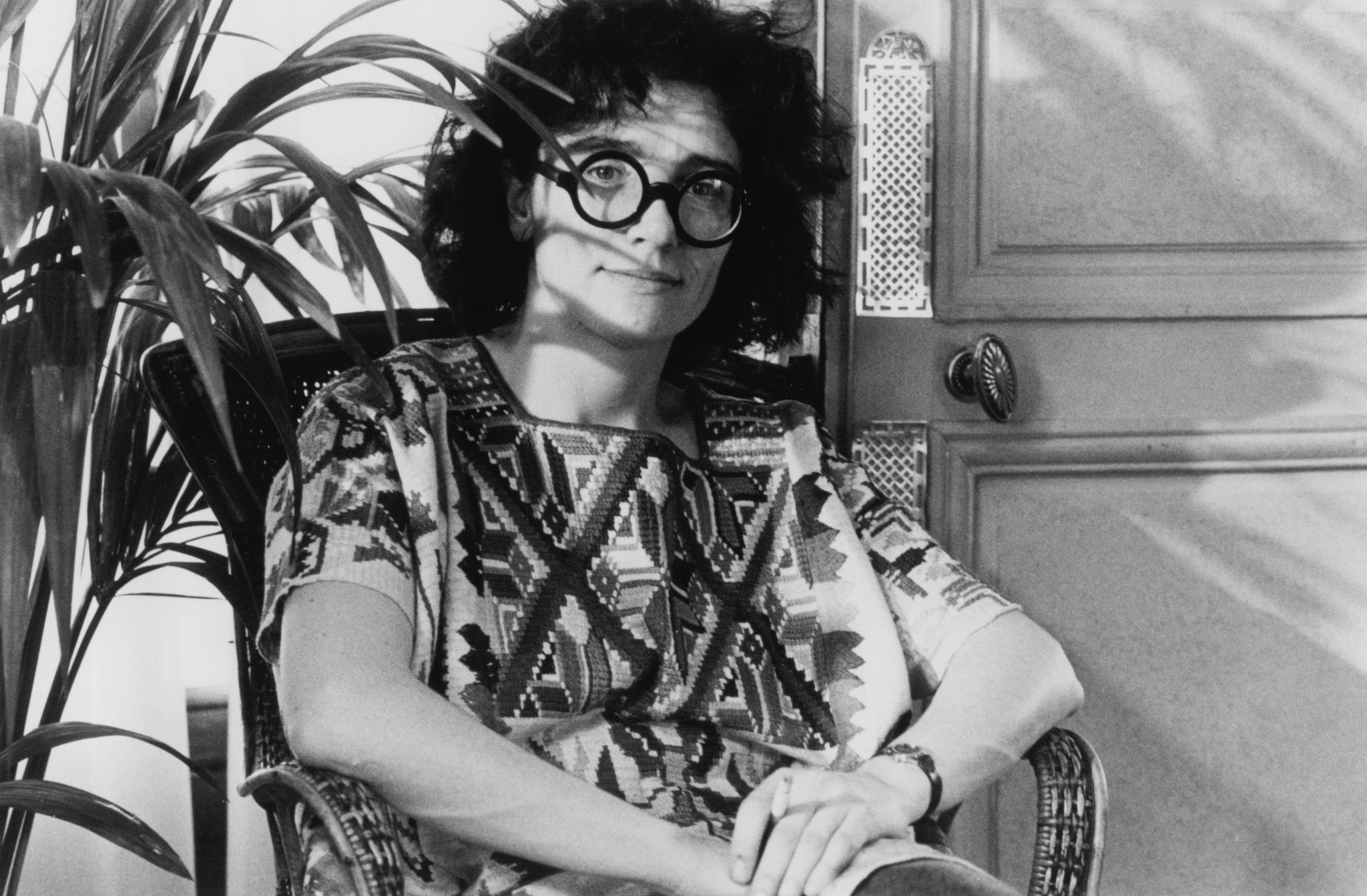
xii, 253 pages ; 22 cm; Argues for a new approach to thinking and writing about culture. Exposing old conceptions, the book argues that new ethnographic writing must come to terms with the dynamic nature of social reality - with history, spontaneity, and human emotions; Originally published: Boston: Beacon, 1989; Includes index; Self-Renewing 2017; Includes index

The social contract of writing | jola.dev
About the value of genuine writing in a world being drowned in slop.
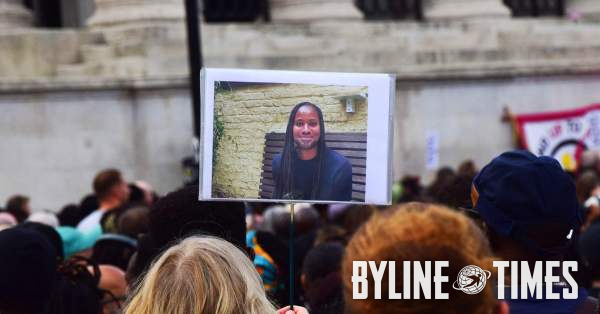
Jason Arday: We Must Rage – Rage Against the Journalism of Cruelty
The death of the academic shows the casual conversion of humiliation into entertainment by a media running on monetised hate and cruelty
The revolt of the reader | The Observation Deck
Reading is important to me. While I’m not a quick reader nor an especially voracious one, I have found that long-form reading has had a profound influence on me over my life. And because reading is important to me, writing is too: writing not only allows us to convey our ideas, but the very act forces us to test and distill them — at once making our ideas more robust while providing the vehicle by which to share them.
Gender Trouble: Feminism and the Subversion of Identity
One of the most talked-about scholarly works of the past fifty years, Judith Butler’s Gender Trouble is as celebrated as it is controversial.Arguing that traditional feminism is wrong to look to a natural, 'essential' notion of the female, or indeed of sex or gender, Butler starts by questioning the category 'woman' and continues in this vein with examinations of 'the masculine' and 'the feminine'. Best known however, but also most often misinterpreted, is Butler's concept of gender as a reiterated social performance rather than the expression of a prior reality.Thrilling and provocative, few other academic works have roused passions to the same extent.



The 'Paperwork Flood': How I Drowned a Bureaucrat before dinner., Sightless Scribbles
A fabulously gay blind author.
Alasdair MacIntyre’s Philosophy in Practice
It is a curious thing when an artist, thinker, or writer gains influence outside the audience he intends or is comfortable with. When a thinker associated with the right becomes popular on the left, or a novelist associated with the progressive left becomes popular among conservative readers, there can be a sort of strain felt between the audience in fact and the “true” audience, or between those who feel themselves to be the authentic recipients of a work’s message and meaning and those who, to the true believers, come across as opportunistic in their enjoyment of works in tension with their own views. The same is true when a writer working within an academic discipline gets picked up by those outside it: Those working within that discipline may find the co-opting of these thinkers misplaced at best or malicious at worst.


The Colonization of Confidence., Sightless Scribbles
A fabulously gay blind author.
StoryScope: Investigating idiosyncrasies in AI fiction
As AI-generated fiction becomes increasingly prevalent, questions of authorship and originality are becoming central to how written work is evaluated. While most existing work in this space...
