

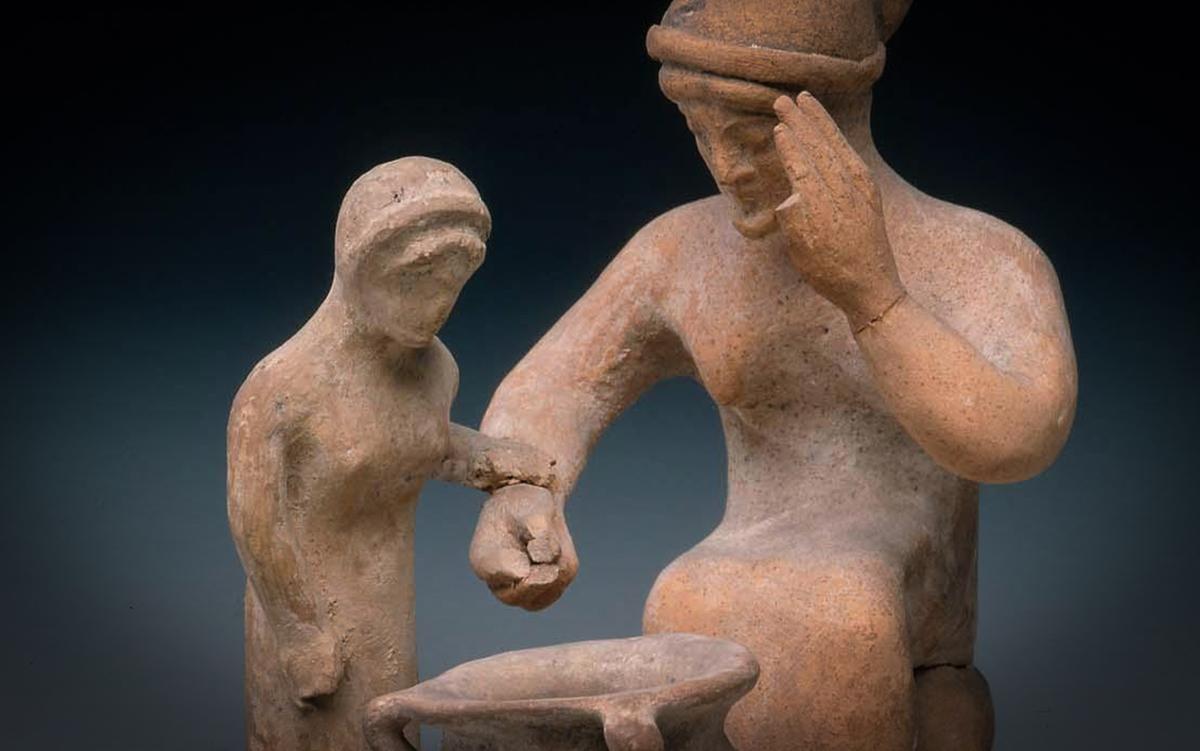
The household is a community, as much as the state, and ancient philosophy had much more to say about it than we think
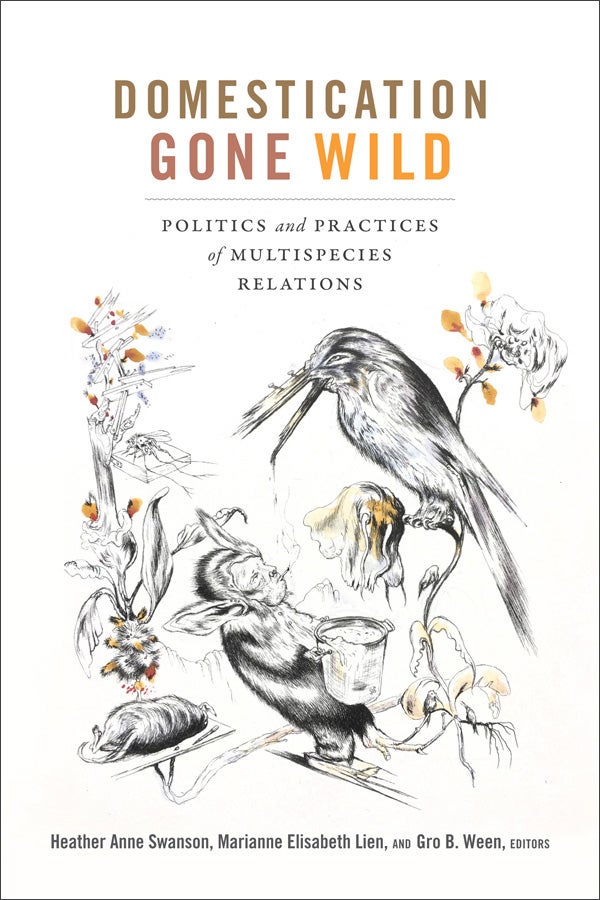
Domestication Gone Wild: Politics and Practices of Multispecies Relations
“What do Pacific salmon, British falcons, pine trees everywhere, Ifugao pigs and spirits, and Norwegian apples have in common? They perform ‘domestication’ in ways certain to change the narratives and politics of domestication for scholars of whatever discipline and for critter people all over the earth. Read this book for up-to-the-minute, deeply researched, very smart, contentious takes on the shapes of conjoined humans and nonhumans living and dying together in diverse histories of civilization, colonialism, capitalism, times-past, and times-yet-to-come. Perhaps what opens up in this book are real possibilities for caring more materially in urgent times.” - Donna J. Haraway, author of Staying with the Trouble: Making Kin in the Chthulucene
Home
Intergen.Family is where true stewardship is cultivated. Within our high-trust community, leaders can transform private wealth into a source of public trust, aligning their family legacy with planetary and human flourishing. This is the foundation upon which our offerings for individuals, organizations, and patrons are built.
Parmenides: Pre-Socratic Philosophy
W Social and the ancient art of neighbourliness - We Can Just Do Things
Good behaviour matters more than good code
W Social and the ancient art of neighbourliness - We Can Just Do Things
Good behaviour matters more than good code
Ordinary Abundance
A walk through a modern apartment, through the eyes of the people for whom everything in it was new.

Ordinary Abundance
A walk through a modern apartment, through the eyes of the people for whom everything in it was new.
Sapiens [Tenth Anniversary Edition]: A Brief History of Humankind
New York Times Readers’ Pick: Top 100 Books of the 21st CenturyThe tenth anniversary edition of the internationally bestselling phenomenon that cemented Yuval Noah Harari as one of the most prominent historians of our time—featuring a new afterword from the author.One hundred thousand years ago, at least six human species inhabited the earth. Today there is just one. Us. Homo sapiens. How did our species succeed in the battle for dominance? Why did our foraging ancestors come together to create cities and kingdoms? How did we come to believe in gods, nations, and human rights; to trust money, books, and laws; and to be enslaved by bureaucracy, timetables, and consumerism? And what will our world be like in the millennia to come?In Sapiens, Professor Yuval Noah Harari spans the whole of human history, from the very first humans to walk the earth to the radical—and sometimes devastating—breakthroughs of the Cognitive, Agricultural, and Scientific Revolutions. Drawing on insights from biology, anthropology, paleontology, and economics, and incorporating full-color illustrations throughout the text, he explores how the currents of history have shaped our human societies, the animals and plants around us, and even our personalities. Can we ever free our behavior from the legacy of our ancestors? And what, if anything, can we do to influence the course of the centuries to come?Bold, wide-ranging, and provocative, Sapiens integrates history and science to challenge everything we thought we knew about being human: our thoughts, our actions, our heritage...and our future.
Why read old philosophy?
I’m going to try to explain a mystery that puzzled me for years. This answer finally dawned on me in the middle of one of those occasional conversations in which non-perplexed friends patiently try…

Anarchism
Geoffrey Ostergaard Anarchism 1993 Published in The Blackwell Dictionary of Modern Social and Political Thought, pp. 12–14.

Reimagining Ourselves at the End of Our World: Kinship, Interconnection, and Spirituality in the Metacrisis - The Great Simplification
Over the past decade, the world has become increasingly chaotic and uncertain – and so, too, has our cultural vision for the future. While the events we face now may feel unprecedented, they are rooted in much deeper patterns, which humanity has been playing out for millennia. If we take the time to understand past trends, we can also employ practices and philosophies that might counteract them – such as focusing on kinship, intimacy, and resilience – to help pave the way for a better future. How might we nurture the foundations of a different kind of society, even while the end of our current civilization plays out around us?
What is Communalism?
Murray Bookchin What is Communalism? The Democratic Dimension of Anarchism
People, Land, and Community
Berry delivered this lecture as one of the three inaugural E. F. Schumacher Lectures in 1981. A farmer, poet, essayist, he speaks about what links us to a home place and how that connection results in a "husbandry" that benefits people, land, and community.
Archaeologists uncover ancient Byzantine city in Egypt’s western desert
Well-preserved fourth-century quarters reveal details of daily life, urban development and economic activities

Learning to Love Humans
A trip to Athens, five weeks before “the most human gathering for the more-than-human world”

Social Norms and Cultural Evolution

A collection of ideas to do with social norms, cultural evolution, and how we learn from others

AI as Social Technology: Astor Lecture by Professor Henry Farrell

Bayesian Inference of Social Norms as Shared Constraints on Behavior

What people learn from punishment: A cognitive model

Spurious normativity enhances learning of compliance and enforcement behavior in artificial agents

Deference, Dissent, and Dispute Resolution: An Experimental Intervention Using Mass Media to Change Norms and Behavior in Rwanda
How Does Media Influence Social Norms? Experimental Evidence on the Role of Common Knowledge