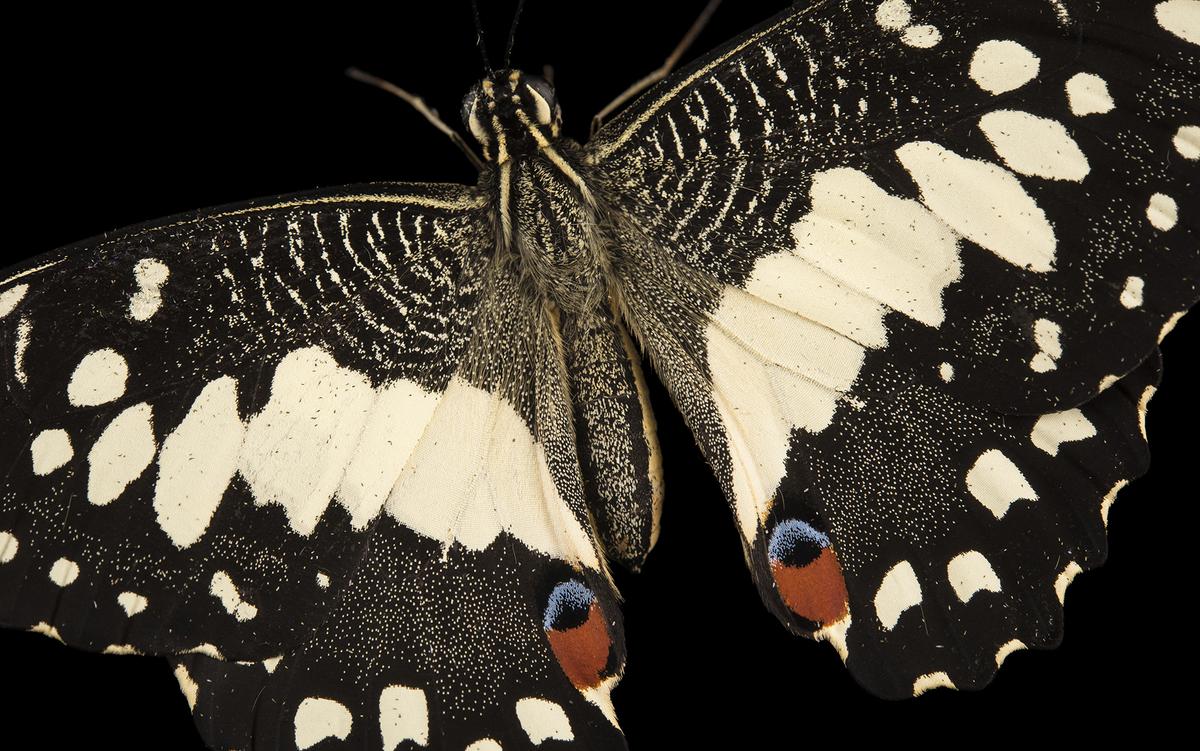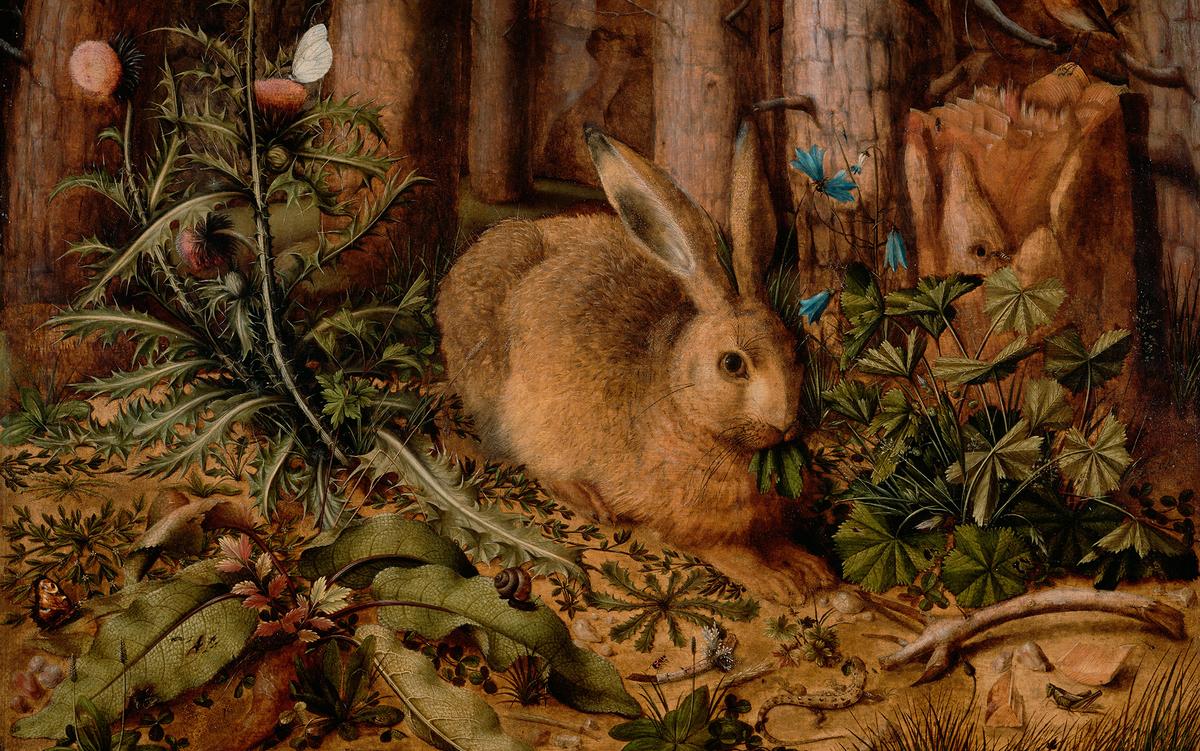
Working out where one hare ends and another begins is easy; a siphonophore, not so much. What is an individual in nature?
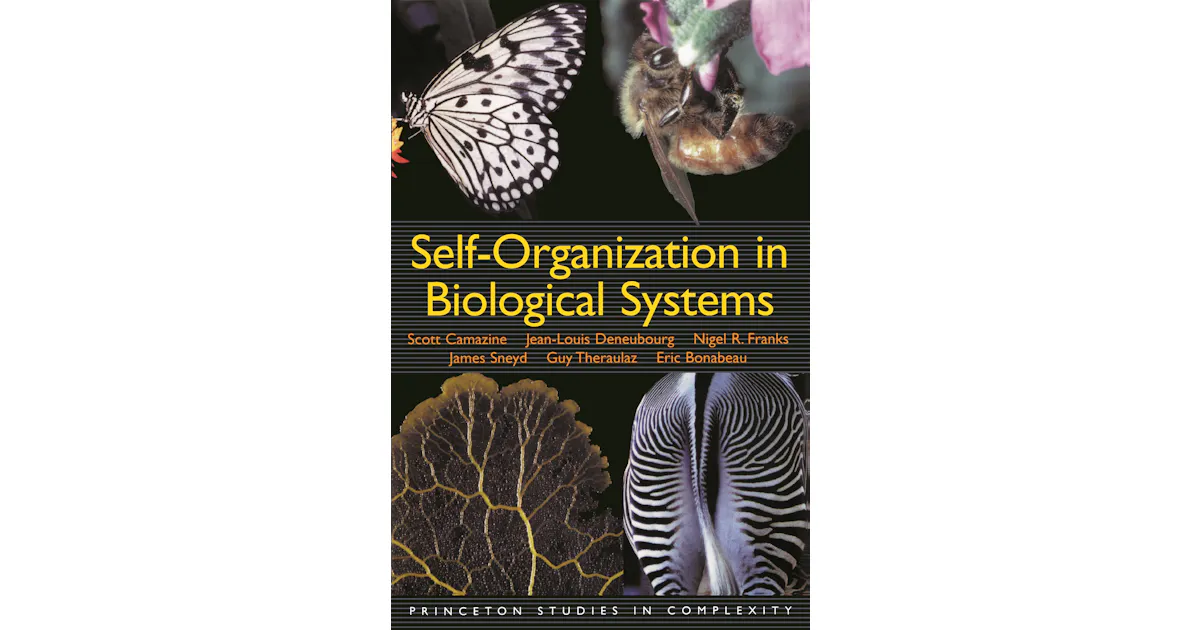
Self-Organization in Biological Systems
The synchronized flashing of fireflies at night. The spiraling patterns of an aggregating slime mold. The anastomosing network of army-ant trails. The coordinated movements of a school of fish. Researchers are finding in such patterns—phenomena that have fascinated naturalists for centuries—a fertile new approach to understanding biological systems: the study of self-organization. This book, a primer on self-organization in biological systems for students and other enthusiasts, introduces readers to the basic concepts and tools for studying self-organization and then examines numerous examples of self-organization in the natural world. Self-organization refers to diverse pattern formation processes in the physical and biological world, from sand grains assembling into rippled dunes to cells combining to create highly structured tissues to individual insects working to create sophisticated societies. What these diverse systems hold in common is the proximate means by which they acquire order and structure. In self-organizing systems, pattern at the global level emerges solely from interactions among lower-level components. Remarkably, even very complex structures result from the iteration of surprisingly simple behaviors performed by individuals relying on only local information. This striking conclusion suggests important lines of inquiry: To what degree is environmental rather than individual complexity responsible for group complexity? To what extent have widely differing organisms adopted similar, convergent strategies of pattern formation? How, specifically, has natural selection determined the rules governing interactions within biological systems? Broad in scope, thorough yet accessible, this book is a self-contained introduction to self-organization and complexity in biology—a field of study at the forefront of life sciences research.
A Cell So Minimal That It Challenges Definitions of Life | Quanta Magazine
The newly described microbe represents a world of parasitic, intercellular biodiversity only beginning to be revealed by genome sequencing.
Holobiont
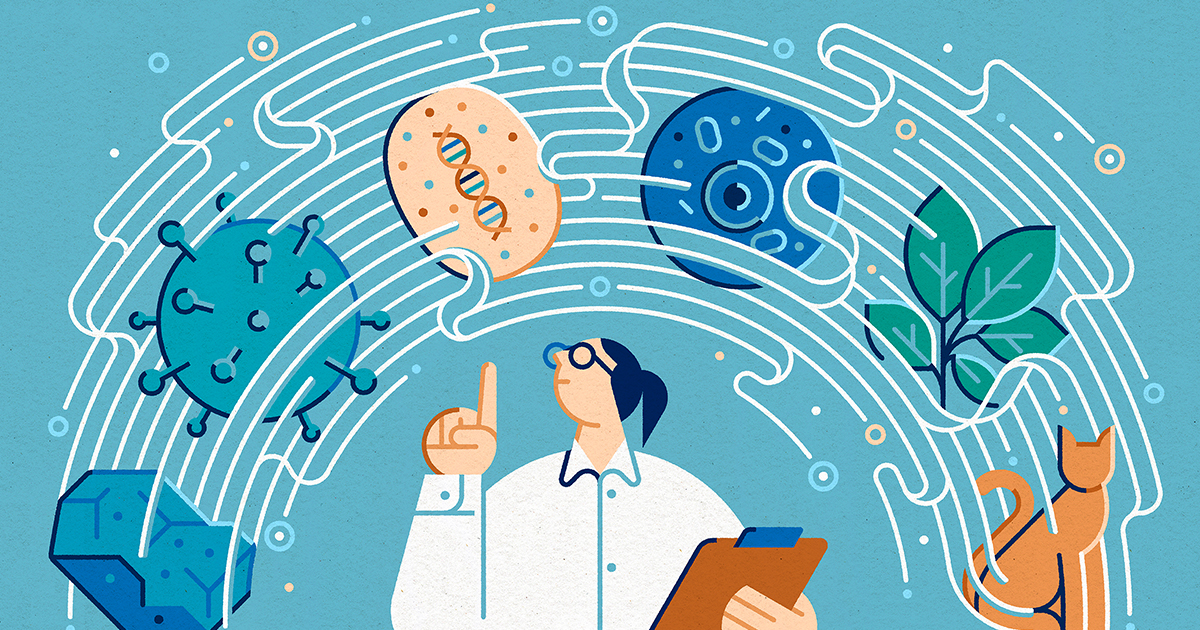
A holobiont is an assemblage of a host and the many other species living in or around it, which together form a discrete ecological unit through symbiosis, though there is controversy over this discreteness. The components of a holobiont are individual species or bionts, while the combined genome of all bionts is the hologenome. The holobiont concept was initially introduced by the German theoretical biologist Adolf Meyer-Abich in 1943, and then apparently independently by Dr. Lynn Margulis in her 1991 book Symbiosis as a Source of Evolutionary Innovation. The concept has evolved since the original formulations. Holobionts include the host, virome, microbiome, and any other organisms which contribute in some way to the functioning of the whole. Well-studied holobionts include reef-building corals and humans.

Pluralistic: Every complex ecosystem has parasites (24 Apr 2025) – Pluralistic: Daily links from Cory Doctorow
Patrick "patio11" McKenzie is a fantastic explainer, the kind of person who breaks topics down in ways that stay with you, and creep into your understanding of other subjects, too. Take his 2022 essay, "The optimal amount of fraud is non-zero":
A Biology and Business Worthy of Life – The Paradigm Shift of Organisms and Organisations
I would like in this article to first bring your attention to a project from Stephen L. Talbott who is a Senior Researcher and Publications Editor at The Nature Institute. The project is titled Bio…

Lectures on Perception: An Ecological Perspective
Lectures on Perception: An Ecological Perspective addresses the generic principles by which each and every kind of life form—from single celled organisms (e.g., difflugia) to multi-celled organisms (e.g., primates)—perceives the circumstances of their living so that they can behave adaptively. It focuses on the fundamental ability that relates each and every organism to its surroundings, namely, the ability to perceive things in the sense of how to get about among them and what to do, or not

Symbiotic organs in insects: diversity, functional implications, and terminology
Abstract With over a million described species, insects represent the most successful group of animals on Earth. One of the drivers of insect diversity is their ability to engage in multifold beneficial symbioses with microorganisms, often involving specialized host organs to accommodate intra- or extracellular symbionts. The existence of such organs and their importance for sustaining and transmitting beneficial symbionts has been known for over a century, and specific terms have been established for categorizing organs harbouring intracellular bacteria (bacteriomes) or fungi (mycetomes), or cuticular crypts containing extracellular fungi (mycetangia). For others, however, general terms are lacking, e.g. organs containing extracellular bacteria associated with the cuticle or with the digestive tract. Furthermore, previously established terms have been misused in other contexts. Notably, ‘bacteriome’ has been increasingly employed in the microbiome field to refer to bacterial communities, instead of the term’s original meaning of specialized organs housing intracellular bacterial symbionts. Here, we review and categorize the diversity of symbiotic organs in insects and propose a unified terminology. Our hope is that this common language will facilitate communication and thereby support the field of symbiosis research in unravelling commonalities and differences in the evolution, ecology, development, physiology and molecular basis across symbiotic interactions. This article is part of the theme issue ‘Life in natural microcosms’.

A microscopic organism that eats DNA instead of having sex
For the past 80 million years, a tiny water-borne organism called the bdelloid rotifer has lived and thrived without the benefits of sexual reproduction.

Siphonophore
Siphonophores are cnidarian animals of the hydrozoan order Siphonophorae. According to the World Register of Marine Species, the order contains 194 species described thus far.

EPISTEMIC STIGMERGY: NATURAL VS. ARTIFICIAL INTELLIGENCE
The article\(^{1}\) defends the thesis that intelligent behavior might require not internal complexity but complex interaction. This is demonstrated by the various forms of stigmergy that can be observed both in social insects and in humans. The exposition is structured as follows: (§0) explains how the term “intelligence” is interpreted in the following text; (§1) clarifies the relation between intelligence and complexity; (§2) shows that intelligent behavior does not require internal complexity; (§3) introduces the concept of stigmergy; (§4) presents the mechanisms that give rise to this phenomenon; (§5) distinguishes several types of stigmergic interaction; (§6) briefly discusses the evolutionary mechanisms that could have produced them; (§7) sketches the possible ways in which the concept of stigmergy is used outside biology; (§8) examines collaborative stigmergy in humans; (§9) points to its epistemic projections; (§10) outlines some conclusions concerning the role of artificial intelligence systems and their place in human society.
A living agent · NODECODE
A living agent organism in Lisp. It becomes yours and evolves over time.
Why Biology Is Not Destiny
You must know the parable about the frog that sits in a pot of water being gradually heated, allowing itself to be boiled alive: because the change
The Second Body
Check out The Second Body - Every living thing has two bodies. To be an animal is to be in possession of a physical body, a body which can eat, drink and sleep; it is also to be embedded in a worldwide network of ecosystems. When every human body has an uncanny global presence, how do we live with ourselves? In this timely and elegant essay, Daisy Hildyard captures the second body by exploring how the human is a part of animal life. She meets Richard, a butcher in Yorkshire, and sees pigs turned into boiled ham; and Gina, an environmental criminologist, who tells her about leopards and silver foxes kept as pets in luxury apartments. She speaks to Luis, a biologist, about the origins of life; and talks to Nadezhda about fungi in an effort to understand how we define animal life. Eventually, her second body comes to visit her first body when the river flooded her home last year. <i>The Second Body</i> is a brilliantly lucid account of the dissolving boundaries between all life on earth. by Daisy Hildyard on Bookshop.org UK!

jsomers.net | I should have loved biology
In biology class, biology wasn't presented as a quest for the secrets of life. The textbooks wrung out the questing.

How to understand cells, tissues and organisms as agents with agendas | Aeon Essays
Biology’s next great horizon is to understand cells, tissues and organisms as agents with agendas (even if unthinking ones)