

Your brain does not process information, retrieve knowledge or store memories. In short: your brain is not a computer
ABILITY | Restoring Communication Through Brain-Computer Interfaces
ABILITY Neuro - Restoring communication through next-generation brain-computer interfaces
Conscious or Not
For as long as I remember, people have been arguing about whether machines could be intelligent or not.

The Second Brain That Grows Smarter and Lives on your Computer
How a spark from Andrej Karpathy, app called Obsidian, and “The Curator”, the app I built are changing the way I think.
On working machines
In part one, on thinking machines, I explored two facets of the philosophy of artificial intelligence: “intelligence”, and consciousness. That left an important topic to consider for this post: the...
The brain in the machine: How AI could help explain how we think | IBM
Scientists are using large AI models to predict patterns of brain activity at scale, a development that researchers say is pushing neuroscience toward a new kind of digital imaging.

AGIHound on Twitter / X
"Demis Hassabis says our brains are likely to be approximate Turing machines."Dear Lord. This Alan Turing worship never ends. It's a cult. 🤦♂️I research the visual system of the brain. I've come to understand that the most important principle of intelligence is the precise… https://t.co/isLnLqjFkw— AGIHound (@TrueAIHound) May 5, 2026
Learning Outside the Brain: Integrating Cognitive Science and Systems Biology
Learning is commonplace in organisms such as ourselves and even in organisms as far distant as the bee and the octopus. Such learning is implemented by brains, or neuronal networks, and has been extensively studied within ethology, psychology, cognitive science, and neuroscience. Whether learning also takes place in nonneuronal settings has remained a matter of sustained controversy, too often dominated by ideological views. In this survey, I will explain how learning can be rigorously interpreted as a form of information processing and then explore the evidence for whether learning also takes place in organismal contexts outside the brain, such as physiology, development, and individual cells. I will try to explain why it is important to build bridges in this way between cognitive science and systems biology, why concepts and methods from various branches of engineering may be helpful in this task, and what the eventual impact may be on how we think about the organism.
You Don’t Need Words to Think
Brain studies show that language is not essential for the cognitive processes that underlie thought

A City Is Not a Computer
This seems an obvious truth, but we need to say it loud and clear. Urban intelligence is more than information processing.

Synchron — Still you.
We build implantable Brain-Computer Interfaces to protect what makes you human.

Are We Thinking Correctly About AI Intelligence? | Quanta Magazine
Computer scientist Melanie Mitchell discusses why artificial intelligence doesn’t “think” or “reason” like humans, and how we can create better methods for measuring machine cognition.
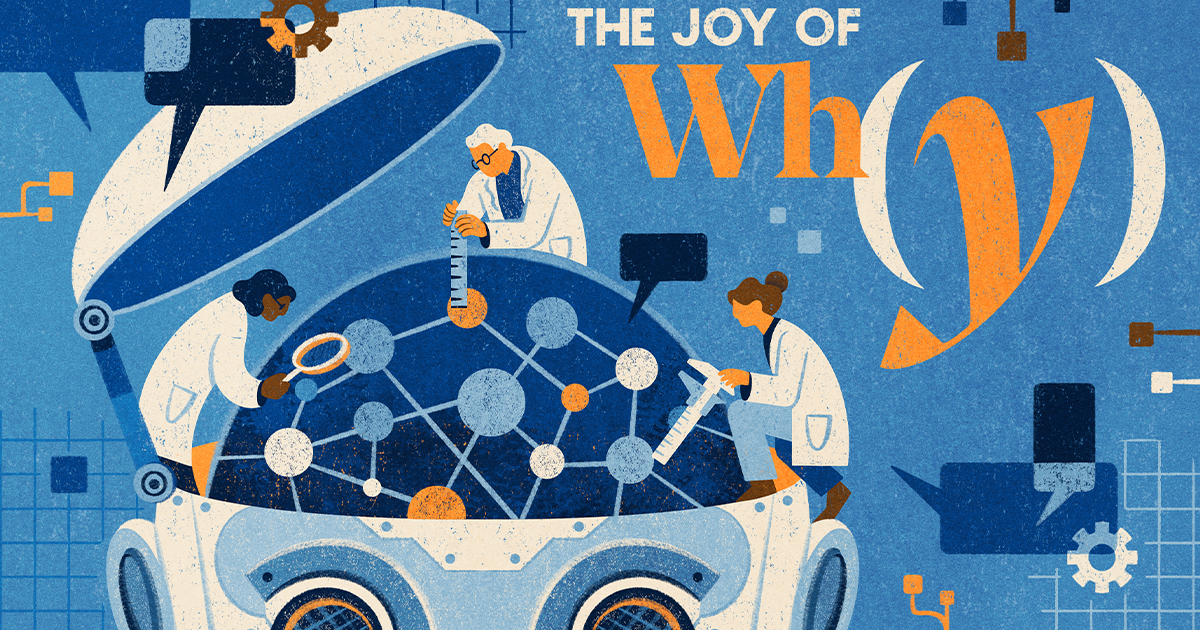
Chinese room
The Chinese room argument holds that a computer executing a program cannot have a mind, understanding, or consciousness, regardless of how intelligently or human-like the program may make the computer behave. The argument was presented in a 1980 paper by the American philosopher John Searle, entitled "Minds, Brains, and Programs" and published in the journal Behavioral and Brain Sciences.[1] Similar arguments had been made previously by others, including Gottfried Wilhelm Leibniz, Peter Winch, and Anatoly Dneprov. Searle's version has been widely discussed in the years since.[2] The centerpiece of Searle's argument is a thought experiment known as the "Chinese room".[3]
A Collectivist, Economic Perspective on AI
Information technology is in the midst of a revolution in which omnipresent data collection and machine learning are impacting the human world as never before. The word ``intelligence'' is being...

“‘Information’ is a relational concept that assumes meaning only when related to the cognitive structure of the observer.” -- Heinz von Foerster
Control Information Theory: The “Missing Link” In the Science Of Cybernetics | Institute for the Study of Complex Systems
complexsystems.orgOne thing I've been dwelling on is how computing engineering and discourse rely thoroughly on a substance ontology of information, with dumb consequences. I've just found out that @romainbrette.bsky.social, looking at the same in neuroscience, calls it "epistemic phlogiston." I'm so stealing that.

Dog Steals Pizza
static.klipy.com


