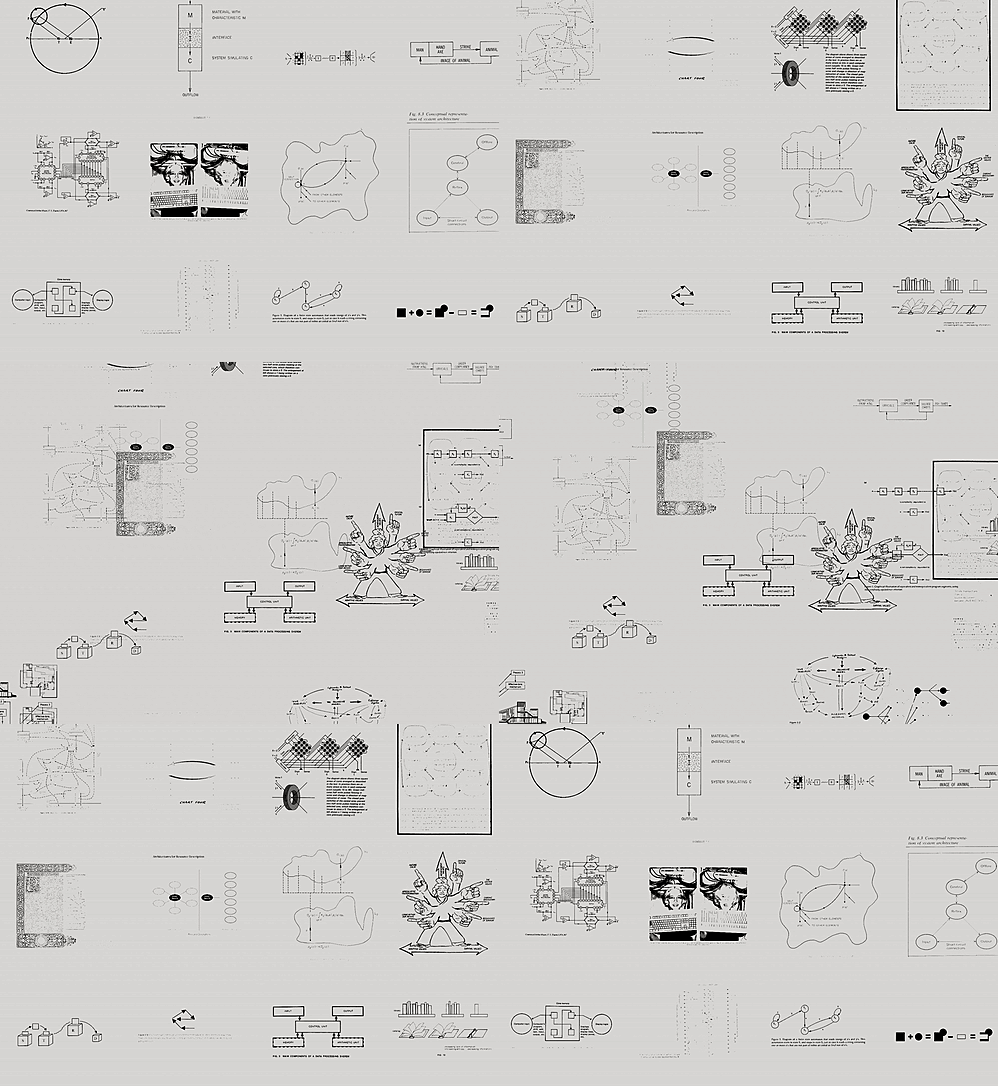
Since 2014, Zaha Hadid Virtual Reality Group, part of Hadid Partners Architecture Firm, has had a focus on cybernetic architecture. This architecture involves what they label the ‘metaverse’. The metaverse integrates physical with digital worlds seamlessly. In industry parlance it is a world populated by what are euphemistically titled ‘cyber-physical’ assets.
Cybernetics for the Twenty-First Century: An Interview with Philosopher Yuk Hui - Journal #102
…

Architecture and the Internet: Designing places in cyberspace
Cyberspace, as the information space is called, has become accessible in the past decade through the World Wide Web. And although it can only be experienced through the mediation of computers, it is quickly becoming an alternative stage for everyday economic, cultural, and other human activities. As such, there is a potential and a need to design it according to place–like principles. Making places for human inhabitation is, of course, what architects, landscape architects, and town planners have been doing in physical space for thousands of years. It is curious, therefore, that Cyberspace designers have not capitalized on the theories, experiences, and practices that have been guiding physical place–making. While most 3D environments closely mimic physical spaces, they are, by and large, devoid of the essential characteristics that differentiate a ‘place’ from mere ‘space.’ And only rarely are they sensitive to, and take advantage of, the peculiarities of Cyberspace. We believe that this state of affairs is temporary, characteristic of early adoption stages of new technologies. As the Web matures, and as it assumes more fully its role as a destination rather than as means of communication, there will be a growing need to design it according to place–making principles. By looking at physical architecture as a case study and metaphor for organizing space into meaningful places, this paper explores the possibility of organizing Cyberspace into spatial settings that not only afford social interaction, but, like physical places, also embody and express cultural values. At the same time, because Cyberspace lacks materiality, is free from physical constraints, and because it can only be ‘inhabited’ by proxy, these ‘places’ may not necessarily resemble their physical counterparts.
Beyond Digital Exhaust: Reclaiming Agency in the Context Economy - A MozFest Discussion on Personal Context Infrastructure and the Future of AI
At this year's MozFest in Barcelona, we convened an urgent conversation about what may be the defining struggle of our digital future: who will control the vast

Design Cybernetics
This book offers practical guidance for cybernetic processes of design and innovation. It also develops theoretical principles. The authors use accessible, non-technical language, which will help a wide range of readers gain knowledge of this important field.

Unity Technologies Aims to Bring Video Game Tools Into the Real World
The video game software leader is pushing to sell tools for making virtual worlds to marketers, architects and car makers

Thoughts on Cyberpositionality: The Construction of Digital Communities in Digital Spaces, Damien Patrick Williams
I found Rebecca Monteleone, Martin Perez Comisso, and Elma Hajric’s “Cyberpositionality: Sociotechnical Location in the Digital Age” (2024) to be an extremely timely and important article which can…

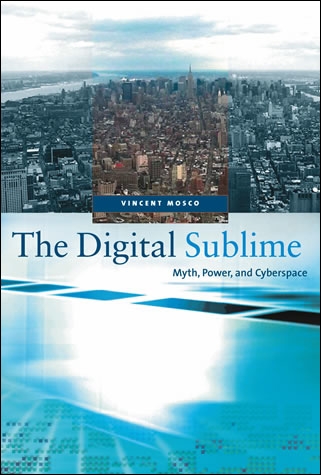
The Digital Sublime: Myth, Power, and Cyberspace
Interpreting the myths of the digital age: why we believed in the power of cyberspace to open up a new world.The digital era promises, as did many other te

Digital Degrowth: Radically Rethinking our Digital Futures
We are fast approaching the point of “peak digital”, with the continued mass production and excessive consumption of digital technologies set to become a key driver of climate crisis, ecological breakdown and ongoing societal instability.<br /> <br /><i>Digital Degrowth</i> is a call to completely rethink our digital futures in these fast-changing times. It explores how degrowth thinking and alternate forms of “radically sustainable computing” might support ambitions of sustainable, scaled-down and equitable ways of living with digital technologies. Neil Selwyn proposes a rebalancing of digital technology use: digital degrowth is not a call for simply making reduced use of the digital technologies that we already have – rather it is an argument to reimagine digital practices that maximise societal benefits with minimal environmental and social impact. Drawing on illustrative examples from across computer science, hacker and environmental activist communities, this book examines how core degrowth principles of conviviality, autonomy and care are already being used to reimagine alternate forms of digital technology.<br /> <br />Original and stimulating, this is essential reading for students and scholars of media and communication, sustainability studies, political ecology, computer/data sciences, and across the social sciences.

The Critical Legacy of Chinese Cybernetics
In Post-War America, cybernetics inspired countercultural visions of wild complexity. Its Chinese legacy, in contrast, is as an applied science of technocratic nation-building. As the world tilts towards new geopolitical priorities, it is this latter legacy that may prove more prophetic.
Digital Dualism versus Augmented Reality - Cyborgology
The Society Pages (TSP) is an open-access social science project headquartered in the Department of Sociology at the University of Minnesota
Home - Industrialised Construction
Industrialised Construction explores both the physical and digital dimensions of construction, covering innovations in platform-based design, kits of parts, design for manufacture and assembly (DfMA) and offsite production, as well as emerging digital capabilities including robotics, augmented and virtual reality, automation, data-driven tools, connectivity and the Internet of Things.

The Virtual Reality of John Carmack
The Dallas video game genius behind “Doom” and “Quake” is back, this time in the nascent VR space. In this exclusive interview, he tells why.

Anarchist Cybernetics
The Paper Pilot's digital garden of thoughts on philosophy, politics, and sociology. Reading time: ~14 minute read | Published: Aug 12, 2026 | Updated: Sep 6, 2026

Metagov Short Talks (June 14, 2023) : Metagovernance Seminar
Nick Kaufmann and Matt Crittenden present Spectra: the virtual city that builds real cities, a talk discussing how to combine multi-scale cooperative...

Cybernetics Image Library
A living visual archive on cybernetics in the expanded field.