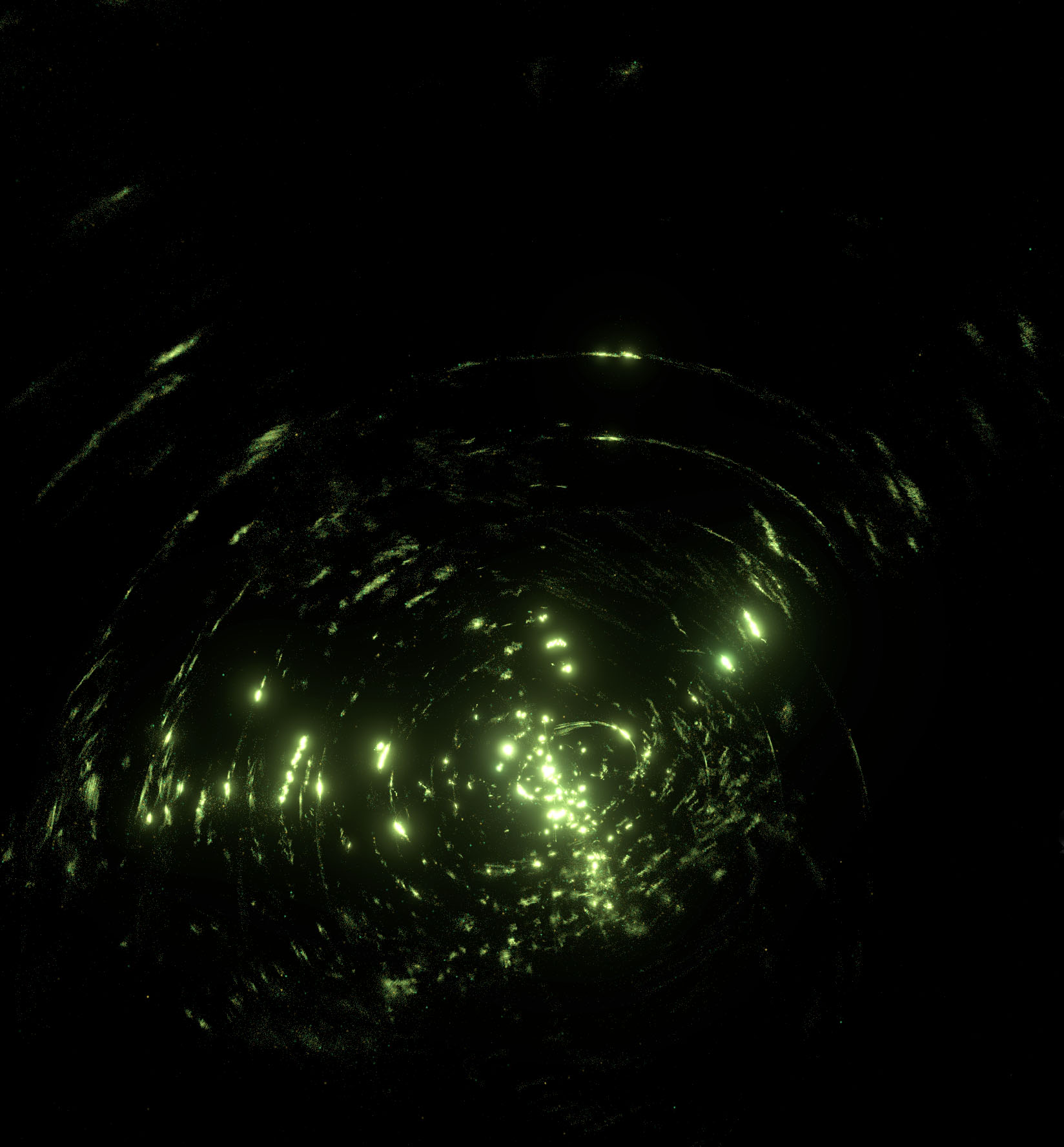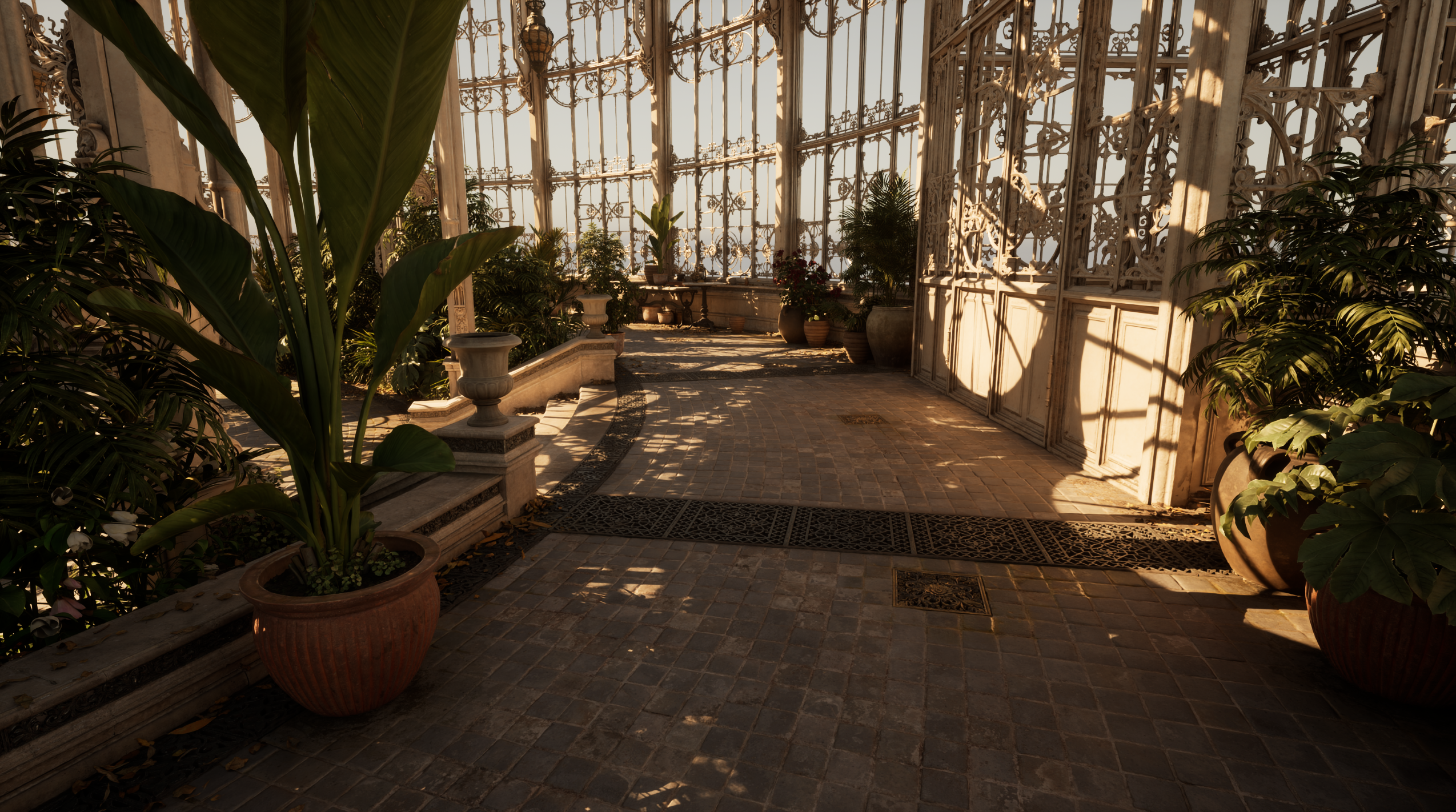
Recently, I had the pleasure of contributing to Nvidia’s Zorah project, the flagship demo for the RTX 50 Series GPUs. My primary role was to provide technical support for light transport in Zorah, which included collaborating with my colleague Daqi Lin to implement a brand new ReSTIR-based global illumination solution, specifically, ReSTIR PT[1], within the NvRTX branch of Unreal Engine. A GDC presentation video on Zorah was released a few weeks ago.
EEVEE Realistic Lighting and Rendering
Master realistic lighting in EEVEE - rendered in fractions of a second. Introducing: a complete course unlocking the true power of EEVEE in Blender 5.0 with Vulkan.

Sparse Virtual Shadow Maps
Devlogs and tutorials about GPGPU and graphics programming
GPU Support [Open Beta] - Polars user guide
Polars provides an in-memory, GPU-accelerated execution engine for Python users of the Lazy API on NVIDIA GPUs using RAPIDS cuDF. This functionality is available in Open Beta and is undergoing rapid development.
Vulkan Ray Tracing Tutorial KHR
A comprehensive tutorial for learning Vulkan ray tracing with practical examples.
Surfel-based global illumination on the web
Can we use WebGPU to compute real-time global illumination with surface patches called surfels? Does it look good enough? Is it fast enough? And can we finally construct viable compute-heavy rendering pipelines right here on the open web? Join me on this journey and let's find out!
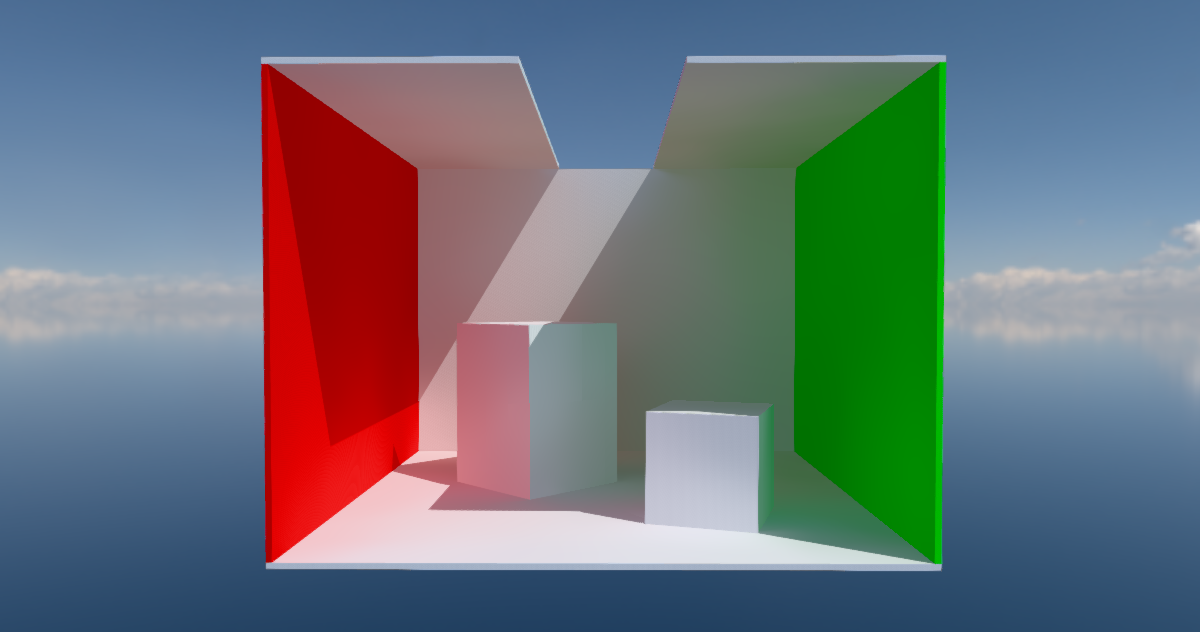
Visualizing GL_NV_shader_sm_builtins
Using GL_NV_shader_sm_builtins to visualize Streaming Multiprocessors and Warps
nber_hf_2026/slides.pdf at main · paulgp/nber_hf_2026
Contribute to paulgp/nber_hf_2026 development by creating an account on GitHub.
Hash Functions for GPU Rendering – Nathan Reed’s coding blog
Pixels and polygons and shaders, oh my!
Introducing CUDA Rust: Two Tracks for Writing GPU Kernels | NVIDIA Technical Blog
In September 2026, NVIDIA announced it is leaning into native GPU programming in Rust. CUDA C++ and CUDA Python are mature, enterprise-grade toolchains, and NVIDIA will be growing and maturing CUDA…

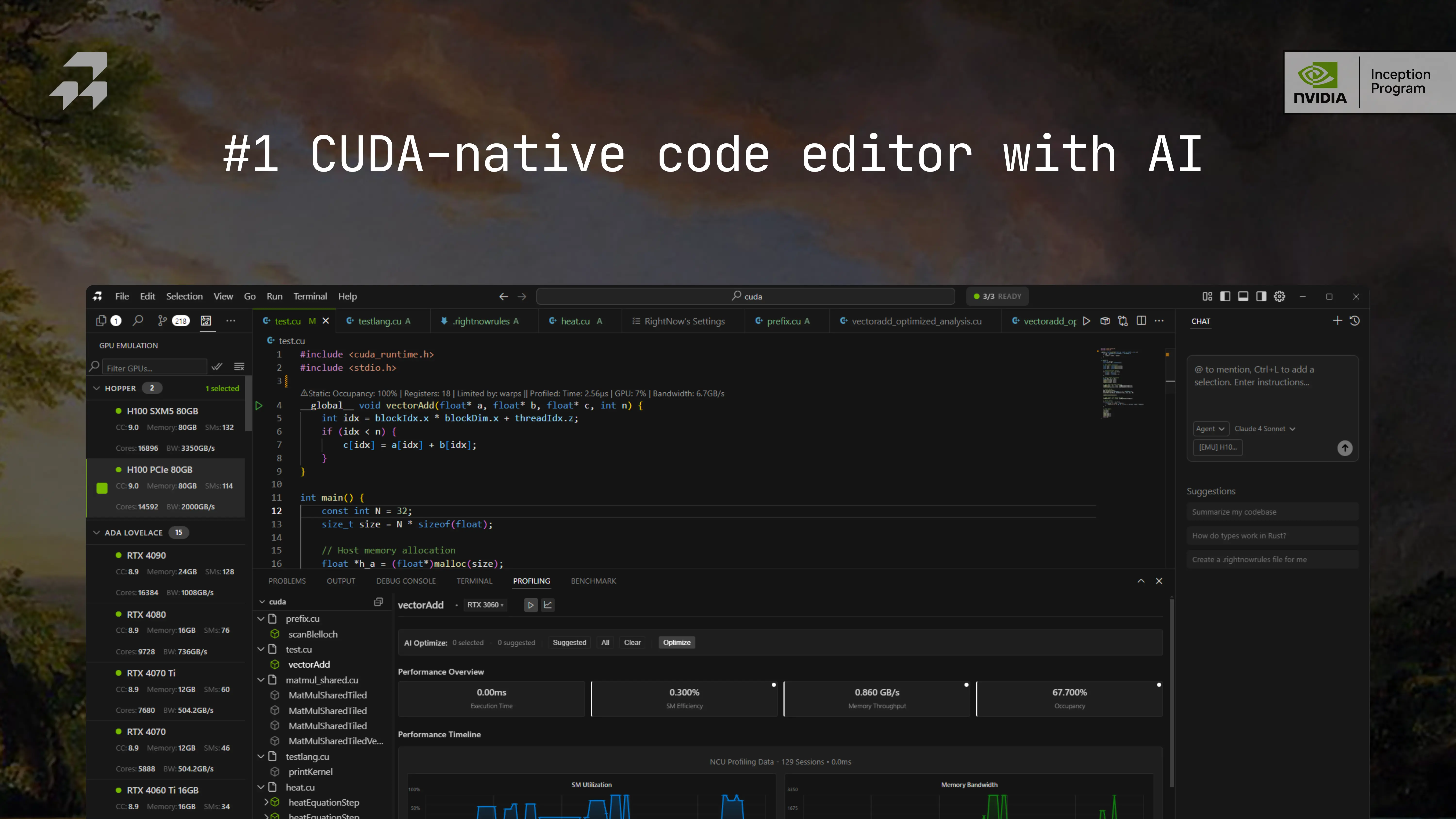
RightNow AI - YC-Backed GPU Research Lab
YC-backed GPU research lab building the RightNow CUDA editor, RunInfra inference infra, Forge kernels, and publishing AutoMegaKernel and related papers on arXiv.
NVIDIA CEO Jensen Huang GTC 2026 Full Keynote
Rendering Particles with Compute Shaders
Overview I developed a technique to render single-pixel particles (using additive blending) with compute shaders rather than the usual fixed-function rasterization with vertex and fragment shaders. My approach runs 31–350% faster than rasterization on the cases I tested and is particularly faster for some “pathological” cases (which for my application are not actually that uncommon). I observed these speedups on both NVIDIA and AMD GPUs. Using this technique allowed me to ship an app that runs on minimum-spec hardware without sacrificing visual fidelity.