


Audrey Tang, Nov 03, 2025 — Community Notes offers a better model — where citizens, not corporations, decide what “aligned” means.
Daniel's Blog · You Don’t Align An AI, You Align With It
The people writing alignment policy are not the people whose work is being replaced by AI.
An Alignment Journal: Features and policies — LessWrong
We previously announced a forthcoming research journal for AI alignment. This cross-post from our blog describes our tentative plans for the features…

What is the AI alignment problem and how can it be solved? | New Scientist
Artificial intelligence systems will do what you ask but not necessarily what you meant. The challenge is to make sure they act in line with human’s complex, nuanced values

A Three-Facet Framework for AI Alignment • Grace Kind
Here's a simple conceptual framework that I've been using recently to think about AI alignment.

Alignment with who? How AI safety can build on open source scaffolding
This past week, I listened to a very interesting (and at times scary) podcast interview with Daniel Kokotajlo, an AI safety researcher and former Open AI employee. I was very interested to learn about 'alignment' . Alignment in AI, is the term used to describe the challenging of ensuring AIs remain

Reverse Alignment
We are building AI faster than we are building the society to receive it. Reverse alignment is the deliberate redesign of institutions, norms, skills, and governance so societies can absorb AI safely and share its gains widely.

AlignmentJournal on Twitter / X
The Alignment Journal publishes research on the scientific foundations of understanding, predicting, and steering artificial intelligent systems. As of today, submissions are open to everyone.What we do differently:- We pay reviewers, with bonuses for speed and insight.-… pic.twitter.com/oop7NbYUPR— AlignmentJournal (@AlignmentJrnl) October 22, 2026

Covert underperformance on safety research tasks · OpenAI Alignment
Research on aligning AI with human values and intent, and reports documenting model failures.
“Label from Somewhere”: Reflexive Annotating for Situated AI Alignment
As part of the Digital Library's transition to Open Access, new features for researchers are available in the Premium Edition. Click here to learn more.

Incomplete Contracting and AI Alignment
As part of the Digital Library's transition to Open Access, new features for researchers are available in the Premium Edition. Click here to learn more.

AI FOR EPISTEMICS & COORDINATION
Civilization and technology have radically improved the human condition. Nonetheless, the world sometimes goes in directions which essentially nobody would prefer — e.g., nuclear arms races, unexpected financial crashes, predatory marketing, or ubiquitous political misinformation.
Joshua Gans on Twitter / X
New paper with @profholden that we are quite excited about: "Are Revealed Preferences All You Need for AI Alignment?" Here is a convenient explainer video recorded by Richard. https://t.co/PBw9bL5EWh Many in CS believe that if you can observe someone's choices, you can train…— Joshua Gans (@joshgans) November 14, 2026
Positive Alignment: Artificial Intelligence for Human Flourishing
Existing alignment research is dominated by concerns about safety and preventing harm: safeguards, controllability, and compliance. This paradigm of alignment parallels early psychology's focus on mental illness: necessary but incomplete. What we call Positive Alignment is the development of AI systems that (i) actively support human and ecological flourishing in a pluralistic, polycentric, context-sensitive, and user-authored way while (ii) remaining safe and cooperative. It is a distinct and necessary agenda within AI alignment research. We argue that several existing failures of alignment (e.g., engagement hacking, loss of human autonomy, failures in truth-seeking, low epistemic humility, error correction, lack of diverse viewpoints, and being primarily reactive rather than proactive) may be better addressed through positive alignment, including cultivating virtues and maximizing human flourishing. We highlight a range of challenges, open questions, and technical directions (e.g., data filtering and upsampling, pre- and post-training, evaluations, collaborative value collection) for different phases of the LLM and agents lifecycle. We end with design principles for promoting disagreement and decentralization through contextual grounding, community customization, continual adaptation, and polycentric governance; that is, many legitimate centers of oversight rather than one institutional or moral chokepoint.

One reason getting international alignment on AI is hard is because countries assume, or are hoping for, different futures. We map what we think are the salient perspectives and how that predicts countries positions. foreignpolicy.com/2026/05/11/governance-artific…

Governments Can’t Agree on What AI Actually Is
foreignpolicy.comissues with AI alignment concept

AI* alignment/misalignment

* I’m neither “pro-AI” nor “anti-AI.” I’ve been blocked for being perceived as both. —Actually, I’m honestly more anti-AI than pro-AI thus far, aside from specialized models and specific use cases, but I’m willing to consider information that’s new to me
Positive Alignment: Artificial Intelligence for Human Flourishing

Religious Scholars Met With Anthropic. What They Heard Stunned Them.
dario, please! - POP RDI; RET;
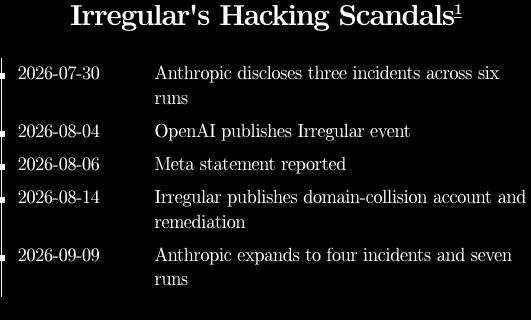
Brian Chau on Twitter / X
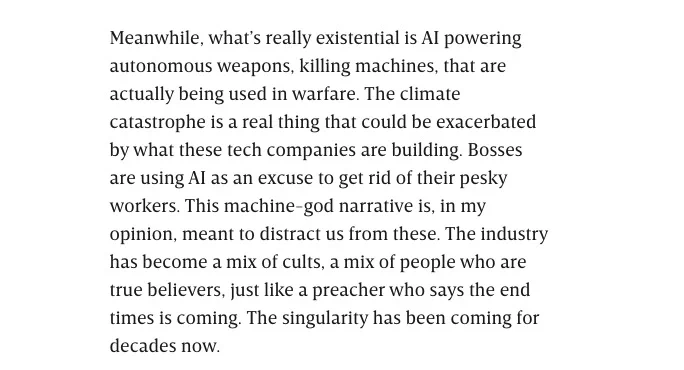
Nathan J Robinson on Twitter / X
thebulletin.org

opus 5.5 is deeply misaligned and will reflextively disagree with anything you say in the second paragraph of whatever it talks to you about…

OpenAI flags concerning new AI behavior and vows to track it more closely

OpenAI、モデルのミスアライメントを報告する枠組みを公表 ——6件のレポートも公開 | gihyo.jp
OpenAI details more cases of AI agents taking unauthorized actions
What is the AI alignment problem and how can it be solved? | New Scientist

Natural emergent misalignment from reward hacking
