

MIT’s Ad Hoc Committee on AI Use in Teaching, Learning, and Research Training
Alex Veremeyenko on Twitter / X
MIT published a brutally honest report on what AI is doing to students.A committee of professors and students spent five months studying how AI changed learning on campus, and the findings read like a warning to every university on the planet.Study groups are disappearing.… pic.twitter.com/kSxKk4h06o— Alex Veremeyenko (@alex_verem) September 12, 2026
What Parents Need to Know About AI in the Classroom | Stanford HAI
From immersive learning and personalized tutors to lesson plans and grading, AI is everywhere in K-12 education.

Learning in the Open: What AI Is (and Isn’t) Changing
Khan Academy shares what’s working with AI tutoring, what isn’t, and what we’ve learned from Khanmigo to better support student learning.
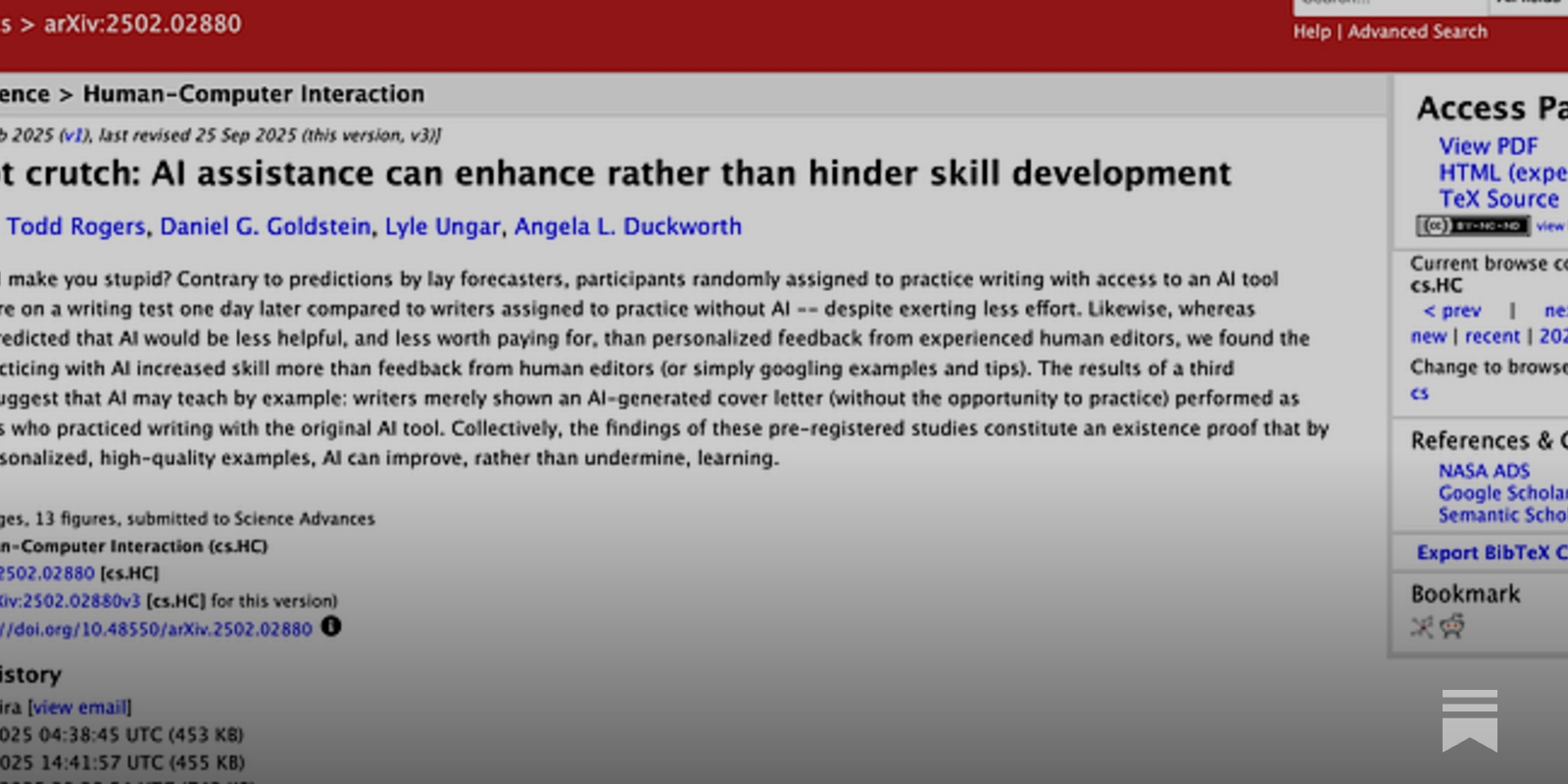
From Crutch to Coach?
What a new research study tells us about AI's impact on human learning & skills development
How Khan Academy Is Building a Better AI Tutor: Our Most Recent Learnings
Khan Academy shares how it improved its AI tutor Khanmigo with faster responses, smarter data use, and better student learning outcomes.

AI, Learned Today
AI, Learned Today is a learning-in-public journal about how to use modern AI through my everyday use. It’s a place to share what I tried, what I noticed, and what I’m learning. Honest field notes from someone exploring the field of rapidly evolving AI tools.
Kevin A. Bryan - Eight Rules for Teaching in AI World
Eight rules for how university teaching should change because of AI.
AI Literacy Across the Curriculum
As you have no doubt seen, AI is becoming ubiquitous in our lives and in the technologies we use every day. Generative AI is no longer an experimental tool, but a deployed technology in many of the…

Shahan Ali Memon (@shahanmemon.bsky.social)
Researching {science of AI-mediated science, metascience #SciSci, #AI4Science, #GenAI, LLMs, agents, alignment, AI governance, misinformation in science} PhD @ UW. Visiting @ NYU & MSR Alum @ Carnegie Mellon Academic webpage: https://samemon.github.io

Teaching AI How Science Actually Works | IFP
How block-grant labs can generate the real-world data AI needs to do science

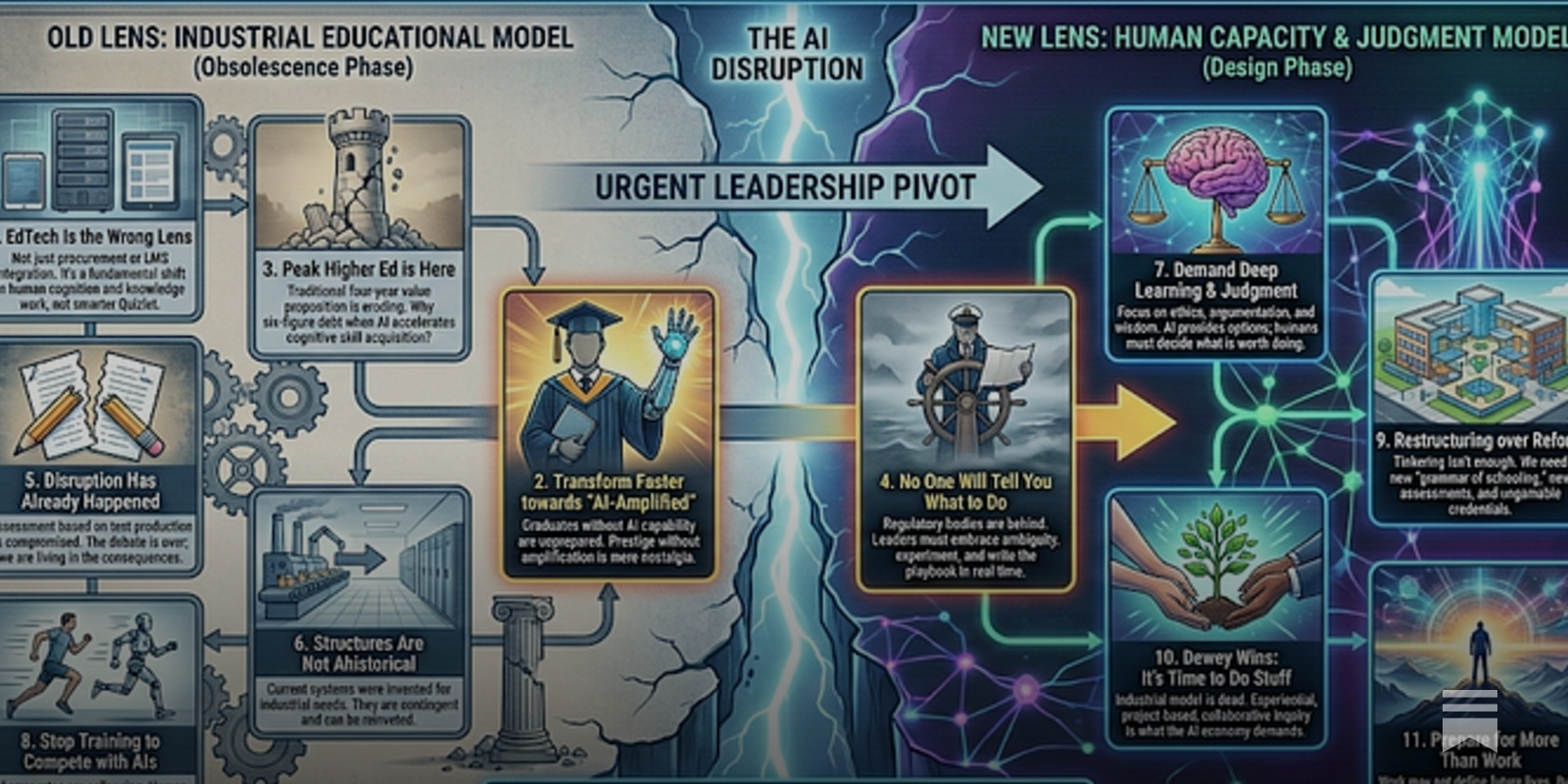
Eleven Things I Wish Educators Understood About AI and What it Means for "Education"
Thank you to all the supporters of this Substack.
AI Is Hollowing Out Higher Education
Olivia Guest & Iris van Rooij urge teachers and scholars to reject tools that commodify learning, deskill students, and promote illiteracy.

What counts as evidence in AI & ED: Towards Science-for-Policy 3.0
Abstract Since the 1990s, there have been heated debates about how evidence should be used to guide teaching practice and education policy, and how educational research can generate robust and trustworthy evidence. This paper reviews existing debates on evidence-based education and research on the impacts of AI in education and suggests a new conceptualisation of evidence aligned with an emerging learning-oriented model of science-for-policy, which we call S4P 3.0. Existing empirical evidence on AIED suggests some positive effects, but a closer look reveals methodological and conceptual problems and leads to the conclusion that existing evidence should not be used to guide policy or practice. AI is a new type of technology that interacts with human cognition, communication, and social knowledge infrastructures, and it requires rethinking what we mean by “learning outcomes” and policy and practice-relevant evidence. A common belief that AI-supported personalisation will “revolutionise” education is historically rooted in a methodological confusion that we call the Bloomian paradox in AIED, and based on a limited view on the social functions of education.
What counts as evidence in AI & ED: Towards Science-for-Policy 3.0
Abstract Since the 1990s, there have been heated debates about how evidence should be used to guide teaching practice and education policy, and how educational research can generate robust and trustworthy evidence. This paper reviews existing debates on evidence-based education and research on the impacts of AI in education and suggests a new conceptualisation of evidence aligned with an emerging learning-oriented model of science-for-policy, which we call S4P 3.0. Existing empirical evidence on AIED suggests some positive effects, but a closer look reveals methodological and conceptual problems and leads to the conclusion that existing evidence should not be used to guide policy or practice. AI is a new type of technology that interacts with human cognition, communication, and social knowledge infrastructures, and it requires rethinking what we mean by “learning outcomes” and policy and practice-relevant evidence. A common belief that AI-supported personalisation will “revolutionise” education is historically rooted in a methodological confusion that we call the Bloomian paradox in AIED, and based on a limited view on the social functions of education.
Building a better AI tutor

Research Question: can AI aid better user training past the chatbot support interface?
AI in the Classroom

Investigating AI usage in the classroom as a parent of a child entering the K-12 system.

NYC school system to ban AI for elementary, middle school students

Sosc Core to Institute AI Ban, Technology-Free Classrooms This Fall

“The Template for Law Schools Around the World”: UChicago Law School Announces New AI Strategy

Does AI stop children from learning?

A new direction for students in an AI world: Prosper, prepare, protect | Brookings
What Parents Need to Know About AI in the Classroom | Stanford HAI
aclanthology.org
intextbooks.science.uu.nl

The ICAP Framework: Linking Cognitive Engagement to Active Learning Outcomes
Methodologies for Improving the Quality of AI Tutoring in K-12 Education
How Khan Academy Is Building a Better AI Tutor: Our Most Recent Learnings