


I built a Chrome extension that brings NotebookLM-style source collection and AI querying directly into the browser
Browser AI API for Utilizing On-Device Models · Issue #178 · WICG/proposals
Introduction The Browser AI API is a proposal for a new browser feature that makes AI models accessible directly on users' devices through the browser. By offering a simple API available on the...
Built-in AI | AI on Chrome | Chrome for Developers
AI browsing now available for early testing in Brave | Brave
Today, we're announcing the availability of Brave's new AI browsing feature for early testing. This agentic experience aims to turn the browser into a truly smart partner, automating tasks and helping people accomplish more.

BrowserOS - Open-Source AI Browser
The open-source browser with AI superpowers. Privacy-first Chrome alternative backed by Y Combinator.
browser-use/browser-use
🌐 Make websites accessible for AI agents. Automate tasks online with ease.
Introducing the OpenMemory Chrome Extension
AI memory Chrome extension for LLM memory and retrieval augmented generation. OpenMemory enables persistent AI agent memory across web browsing sessions.

AgregoreWeb/electron-extended-WebExtensions
Extend the built-in functionality of Electron Web Extensions with additional features commonly used by browsers.
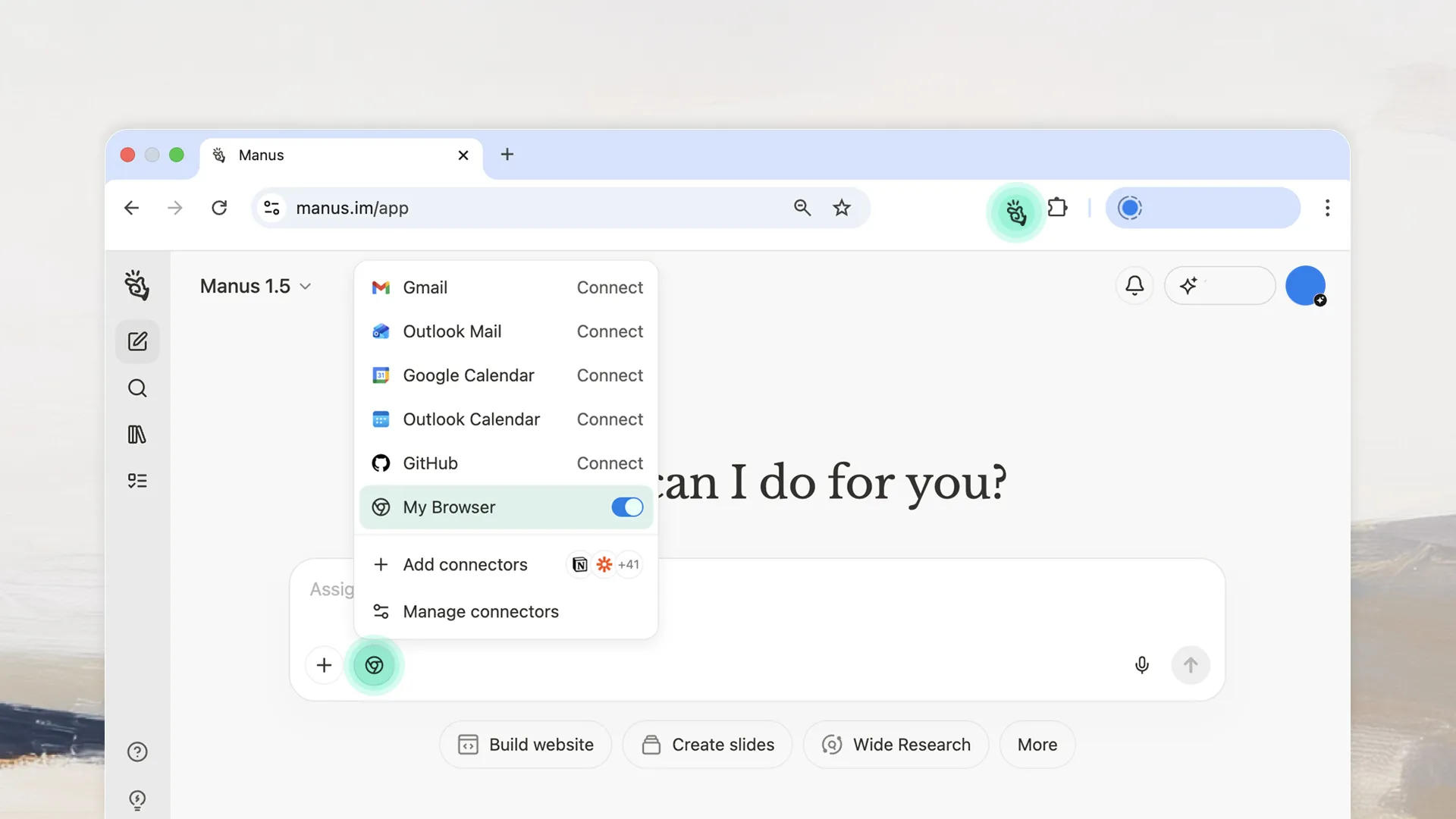
Introducing Manus Browser Operator
One extension that turns any browser into an AI browser. Automate tasks in premium platforms, CRM systems, and authenticated services using your trusted local sessions. Full transparency and control.
WebMCP | AI on Chrome | Chrome for Developers
WebMCP has two APIs that allow browser agents to take action on behalf of the user.

Browser Use - The way AI uses the internet
78,000+ GitHub stars. Trusted by Fortune 500. The #1 open-source browser automation platform.

AI Focus
NotebookLM is one of my favorite applications in decades. If you haven’t experienced it before, it’s an application that lets you pull in sources from all around - Google Drive, PDFs, public links - collate them into a notebook, and then query or transform that content. Want to turn five research papers into a podcast? Done. Need to extract key takeaways from a collection of articles? Easy. It’s a fundamentally different way of interacting with information that wasn’t possible before large language models.
Big Help or Big Brother? Auditing Tracking, Profiling, and Personalization in Generative AI Assistants
Generative AI (GenAI) browser assistants integrate powerful capabilities of GenAI in web browsers to provide rich experiences such as question answering, content summarization, and agentic navigation. These assistants, available today as browser extensions, can not only track detailed browsing activity such as search and click data, but can also autonomously perform tasks such as filling forms, raising significant privacy concerns. It is crucial to understand the design and operation of GenAI browser extensions, including how they collect, store, process, and share user data. To this end, we study their ability to profile users and personalize their responses based on explicit or inferred demographic attributes and interests of users. We perform network traffic analysis and use a novel prompting framework to audit tracking, profiling, and personalization by the ten most popular GenAI browser assistant extensions. We find that instead of relying on local in-browser models, these assistants largely depend on server-side APIs, which can be auto-invoked without explicit user interaction. When invoked, they collect and share webpage content, often the full HTML DOM and sometimes even the user's form inputs, with their first-party servers. Some assistants also share identifiers and user prompts with third-party trackers such as Google Analytics. The collection and sharing continues even if a webpage contains sensitive information such as health or personal information such as name or SSN entered in a web form. We find that several GenAI browser assistants infer demographic attributes such as age, gender, income, and interests and use this profile--which carries across browsing contexts--to personalize responses. In summary, our work shows that GenAI browser assistants can and do collect personal and sensitive information for profiling and personalization with little to no safeguards.

Paul Klein IV on Twitter / X
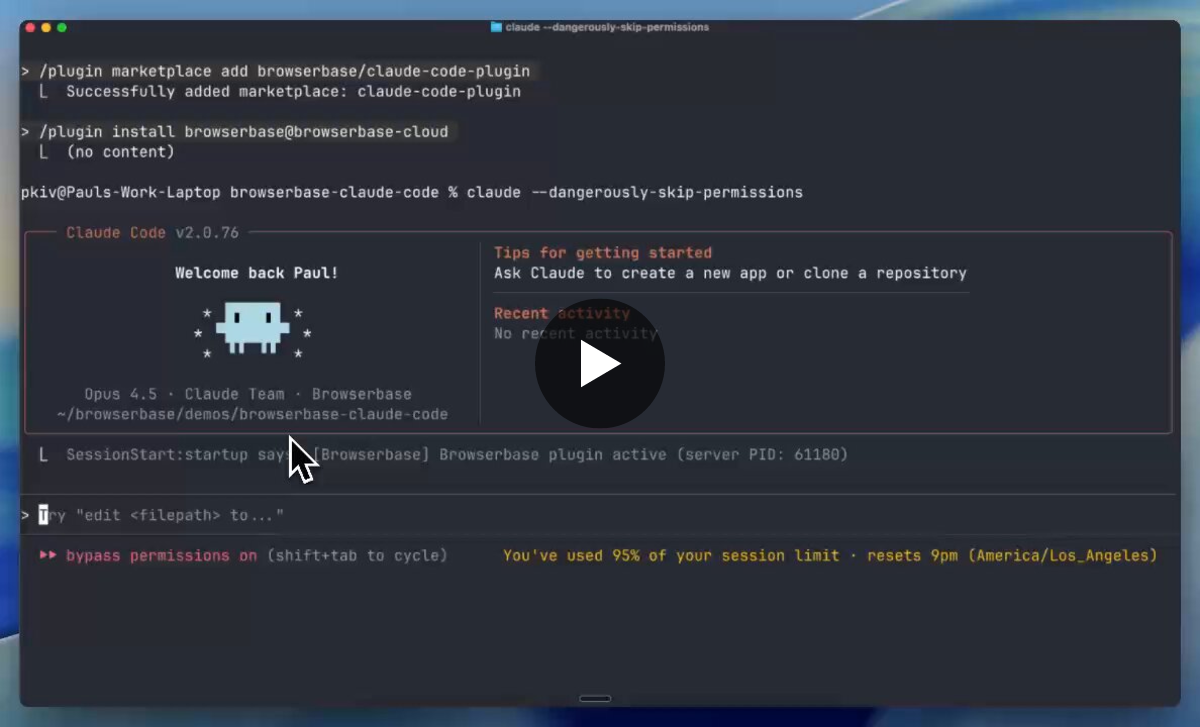
I spent all of Christmas reverse engineering Claude Chrome so it would work with remote browsers. Here's how Anthropic taught Claude how to browse the web (1/7) pic.twitter.com/kBJA1DUWxA— Paul Klein IV (@pk_iv) December 29, 2025
Meet Opera’s AI Browser Operator
We're introducing an AI agent into the browser making us the first major browser with AI-based agentic browsing.
