


One day the web will have a federated way to link to functionality. I swear we will. For those who know me, you can tell that I’ve been thinking about Web Intents again… a lot. If you don’t know me, Web Intents was a 2012 attempt to give the web a vocabulary for “I want to do X, what site can help me?”. Share, edit, pick, save-for-later, buy. And a way for sites to ask for a link to a site that matched their intent. It was basically Android Intents for the web. It got pulled. I’ve written about what happened to Web Intents and again when I was reinventing Web Intents.
Maximiliano Firtman on Twitter / X
Chrome 146 includes an early preview of WebMCP, accessible via a flag, that lets AI agents query and execute services without browsing the web app like a user.Services can be declared through an imperative navigator.modelContext API or declaratively through a form. pic.twitter.com/UaUplZ8Q28— Maximiliano Firtman (@firt) February 9, 2026
WebMCP | AI on Chrome | Chrome for Developers
WebMCP has two APIs that allow browser agents to take action on behalf of the user.
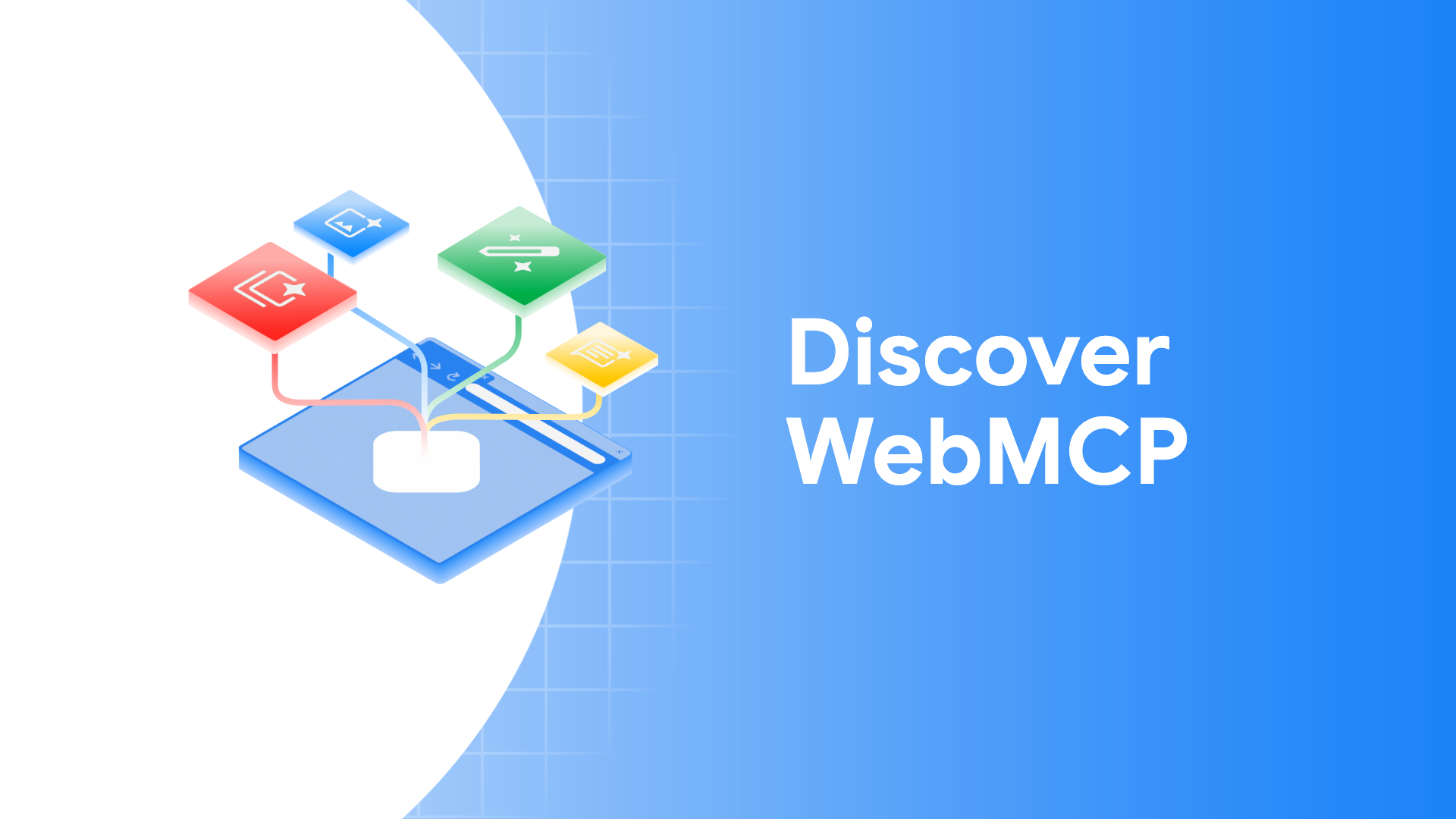
Why ActivityPub is the future
We often tout things like “Mastodon is based on open web protocols” as one of its advantages. I want to elaborate why exactly that’s a good thing.
Intent to Ship: Update Device Memory API limits
Does this intent deprecate or change behavior of existing APIs, such that it has potentially high risk for Android WebView-based applications?
The Web Needs a Context Layer Built on a Shared Protocol
Making context a shared protocol, rather than a platform feature, would let readers see competing perspectives anywhere on the web, argue Mallory Knodel, Evan Friedman, and Brad Friedman.

NEAR Intents | Simplifying Web3 Interactions
NEAR Intents let users and AI agents define what they want to do—NEAR handles the rest. A new framework for seamless, multichain execution without complexity, powered by solvers and Chain Signatures.

Declare and resolve website links for at:// URIs. A demo of the me.byjp.atproto.deeplink lexicons.
The State of the Web at Google I/O 2018
The web is a global treasure, and has many strengths we all enjoy. It is a distribution platform like no other, providing people around the ...

Connecting records, web pages and apps
This is a bit of a follow-up to Mapping web pages to canonical AT records We’re continuing to work on making the Bluesky app more Atmospheric, building on features like the Germ, Streamplace, and Standard Site integrations. This leads to some common questions that have cropped up before, like: what’s the best way to link an atproto record and a web page, and how does it know which app someone is using? This is relevant to a few proposals and other conversations and I want to try to tie them tog...
feynon/intent-router-blueprint
A hybrid LLM intent routing system for secure agent orchestration.

Thoughts on a "Web Follow" protocol
Mastodon's cross-instance following is clunky. I propose a solution using the web+follow URL scheme, like mailto, to streamline following users on ActivityPub platforms. A user's home instance registers as a handler for web+follow. Clicking a web+follow link opens the home instance, redirecting to a /follow request on the target instance. This page uses a meta refresh tag to redirect to /resolve-app, which redirects back to web+follow: with the user's ID. This triggers the registered handler (if available), creating a seamless follow experience within the user's preferred app. If no handler is installed, the user remains on the target instance's follow page, preserving existing functionality.
The web was always social Diving into the idea of bridging different social networks and protocols like ATproto and ActivityPub to enhance the web. Looking back at my personal web journey, from Web 2.0 to now, emphasizing that building connections... herve.bzh/the-web-was-always-social/
The web was always social
herve.bzh