

We spend a substantial part of our lives online. The design of those spaces shapes how we feel, how we treat one another, and what kinds of communities we can build.
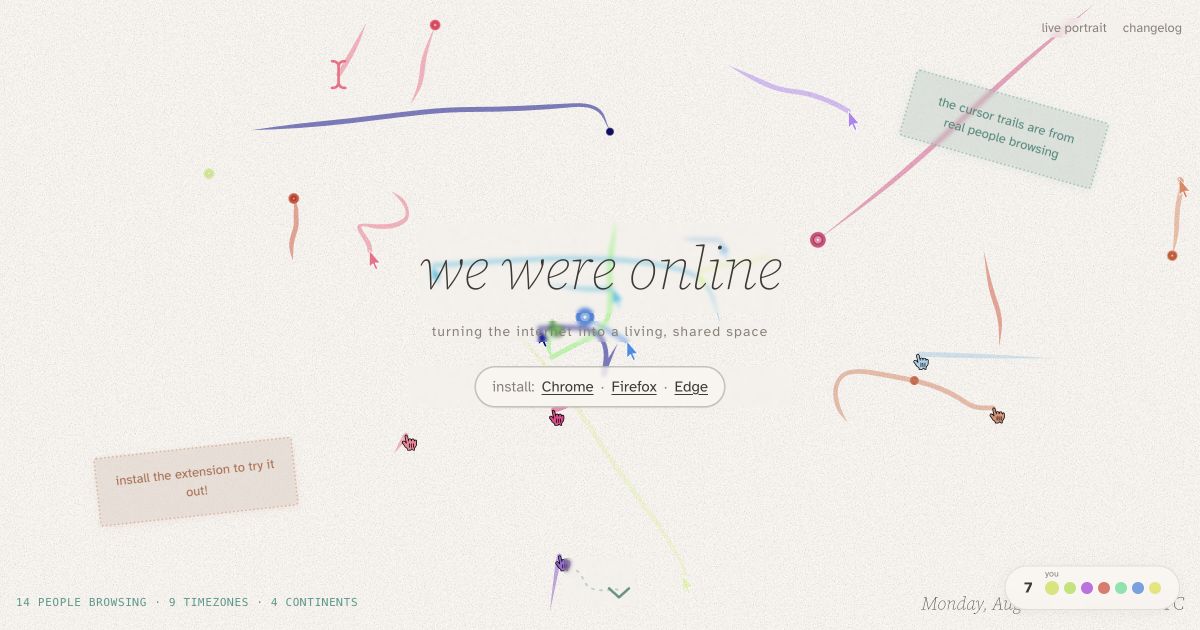
we were online
Turn the internet into a living, shared space with real-time traces of people browsing.
Architecture and the Internet: Designing places in cyberspace
Cyberspace, as the information space is called, has become accessible in the past decade through the World Wide Web. And although it can only be experienced through the mediation of computers, it is quickly becoming an alternative stage for everyday economic, cultural, and other human activities. As such, there is a potential and a need to design it according to place–like principles. Making places for human inhabitation is, of course, what architects, landscape architects, and town planners have been doing in physical space for thousands of years. It is curious, therefore, that Cyberspace designers have not capitalized on the theories, experiences, and practices that have been guiding physical place–making. While most 3D environments closely mimic physical spaces, they are, by and large, devoid of the essential characteristics that differentiate a ‘place’ from mere ‘space.’ And only rarely are they sensitive to, and take advantage of, the peculiarities of Cyberspace. We believe that this state of affairs is temporary, characteristic of early adoption stages of new technologies. As the Web matures, and as it assumes more fully its role as a destination rather than as means of communication, there will be a growing need to design it according to place–making principles. By looking at physical architecture as a case study and metaphor for organizing space into meaningful places, this paper explores the possibility of organizing Cyberspace into spatial settings that not only afford social interaction, but, like physical places, also embody and express cultural values. At the same time, because Cyberspace lacks materiality, is free from physical constraints, and because it can only be ‘inhabited’ by proxy, these ‘places’ may not necessarily resemble their physical counterparts.
Toward Wayfinding Infrastructure for the Living Web · Atlas Research Group
Our world is getting crazier by the day. Our old maps and compasses weren’t made for this complexity. While new tools may open up amazing possibilities, they also make it easier to lose ourselves – especially when they don’t belong to us, and make us vulnerable to other people’s hidden choices and unsavory intentions about what is worth attending to.

Wholesome internet 🌱
I’m watering a “cursed websites” folder in my digital garden shed, but also a “wholesome websites” counterpart, like any reasonably sane person on the internet should do in this day and age. And that's that.
All Internet Roads Lead Back to 2014
Ten years ago, developments in commerce, activism, and influencer culture coalesced, and our contemporary concept of “being online” was born

toward a new aesthetic
Lately I’ve been thinking about what being online looks like. The actual look of it. The aesthetic. As I continue to think and write and talk about escaping...
toward a new aesthetic
Lately I’ve been thinking about what being online looks like. The actual look of it. The aesthetic. As I continue to think and write and talk about escaping...
Mx. Aria Stewart (@aredridel@kolektiva.social)
I've been thinking a lot about how the common ways handle certain things in online spaces are kinda broken. The three persistently tweak me:
Thoughts on Cyberpositionality: The Construction of Digital Communities in Digital Spaces, Damien Patrick Williams
I found Rebecca Monteleone, Martin Perez Comisso, and Elma Hajric’s “Cyberpositionality: Sociotechnical Location in the Digital Age” (2024) to be an extremely timely and important article which can…

juliet shen likes being online
The first time I built my personal site, I coded it by hand. It was simple and maybe a little ugly, but I made it. The second time I built this site, I used AI so I can celebrate what I loved about the early web using technology born of the new web. It's pretty and I also made it.
Rethink: Web - Open Space
When we struggle to explain the inherent qualities of a medium, we tend to defer to analogies and metaphors. This is especially true of the internet. Clouds, highways, streams, and real estate are just a few examples of the concepts employed to represent this intangible invention. Staring into a screen, it’s easy to imagine an […]

A healthier internet isn’t just wishful thinking — our friends at the @prosocialdesign.bsky.social have a whole library of research-backed design solutions for building prosocial spaces online, organized by our Civic Signals research! 🧵

Prosocial Design Network
www.prosocialdesign.org‘Building a better web is much more universal. Empowering people to own their identity, publish more freely, form many kinds of communities, and leave without losing everything.’ manton.org/2026/07/18/social-web-disconn…
Social web disconnect
www.manton.orgThe Internet, and how we've developed with it

Not "doomscrolling has killed our lives". But how, looking back, our enjoyment of the internet has shaped our experience of life.
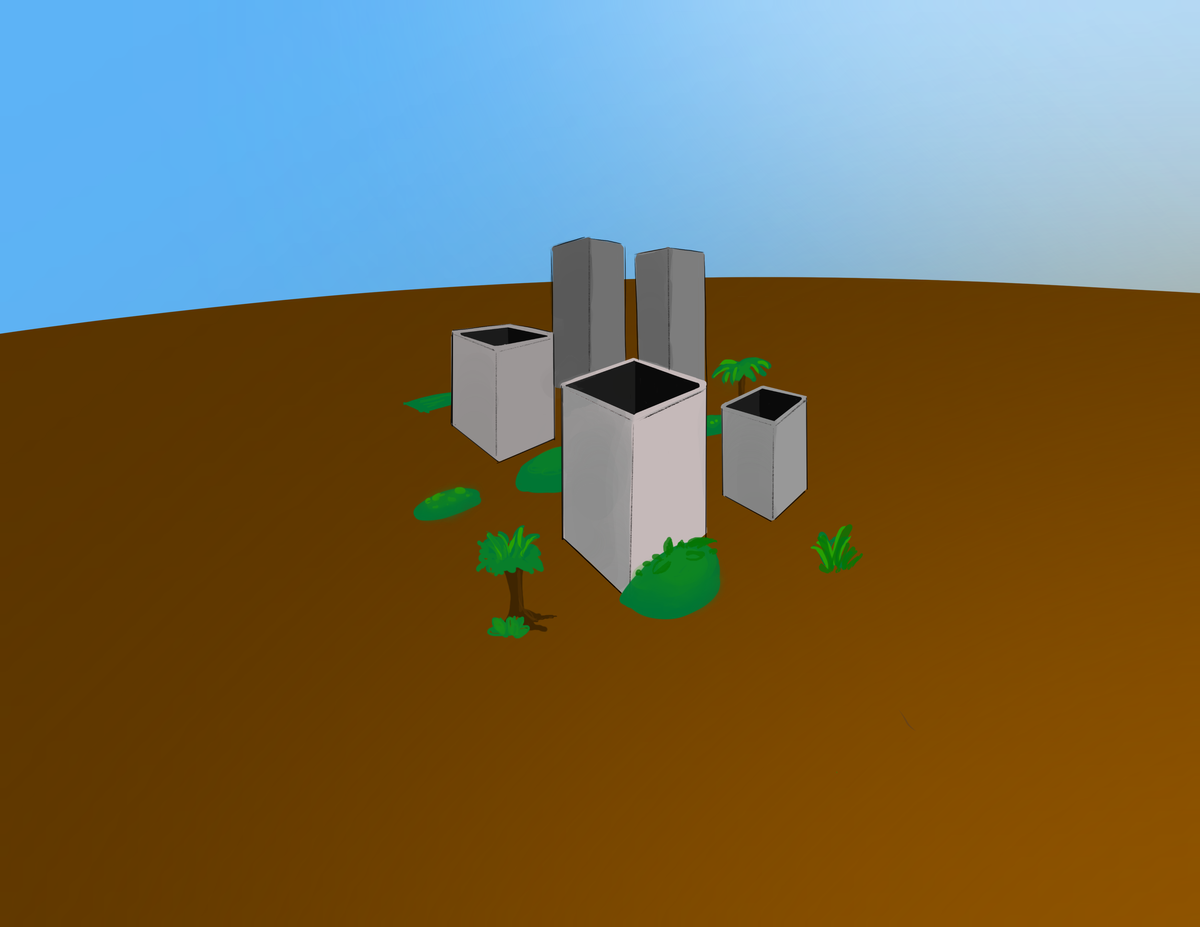
We can have a different web

My journey to the heart of the forgotten internet
VC&G | » My memories of what life was like before the Internet

Habbo Hotel Memories - Sneer Campaign
blogs.loc.gov

My old SoundCloud page is a time capsule

