This editorial calls for a values-guided approach to AI-mediated IS scholarship. By AI-mediated IS scholarship, we refer to IS scholars’ use of AI applications in their research activities. We first describe AI-mediated IS scholarship and its link to scholarly values. Next, we briefly describe the ethical, epistemic, relational, and disciplinary values that have traditionally informed the work of IS scholars. Then, we explain how AI-mediated scholarship can strengthen and weaken these values, stressing the importance of not only espoused values but also enacted values and values work. We conclude by offering a values-guided agenda for our field.
The tech industry hijacking of the AI ethics research agenda and why we should reclaim it
This paper reflects on the tech industry’s colonization of the AI ethics research field and addresses conflicts of interest in public policymaking concerning AI. The AI ethics research community faces two intertwined challenges: In the first place, we have a tech industry heavily influencing the AI ethics research agenda. Secondly, cleaning up after the tech industry has implied that we have turned to value-driven design methods to bring ethics to AI design. But by framing research questions relevant to a technical practice, we have facilitated the technological solutionism behind the tech industry’s business model. Therefore, this paper takes the first steps to reshape the AI ethics research agenda by suggesting moving toward an emancipatory framework that brings politics to design while, at the same time, bearing in mind that AI is not to be treated as an inevitability. As a research community, we must focus on the repressive power dynamics exacerbated by AI and address challenges facing the vulnerable groups seldom heard, despite the fact that they are the ones most negatively affected by AI initiatives.
AI & Ethics Workgroup | Lincoln Center for Applied Ethics
Artificial Intelligence (AI) is a term with an array of contingent and shifting meanings, unified only by a general aspiration to use mathematical computation to emulate human cognition, language and problem-solving. Rather than a technical term, “AI” can be thought of as a sociotechnical system and assemblage, consisting of technical objects and social imaginaries, practices and ideologies. How we characterize and conceptualize AI shapes how, why and when we use it and when we may constrain or refuse its use. This paper provides a primer on various technologies that often fall under the rubric of “AI” and outlines the various discursive and cultural meanings carried by the term.
Towards Critical Artificial Intelligence Literacies
Critical Artificial Intelligence Literacies (CAILs) is the collection of ways of thinking about and relating to so-called artificial intelligence (AI) that rejects dominant frames presented by the technology industry, by naive computationalism, and by dehumanising ideologies. Instead, CAILs centre human cognition and uphold the integrity of academic research and education. We present a selection of CAILs across research and education, which we analyse into the following non-orthogonal dimensions: conceptual clarity, critical thinking, decoloniality, respecting expertise, and slow science. Finally, we note how we see the present with and without a wider adoption of CAILs — a fundamental aspect is the assertion that AI cannot be allowed to drive change, even positive change, in education or research. Instead cultivation of and adherence to shared values and goals must guide us. Ultimately, CAILs minimally ask us to contemplate how we as academics can stop AI companies from wielding so much power.
Charting AI’s Role in Scientific Discovery — Renaissance Philanthropy – A brighter future for all through science, technology, and innovation
Renaissance Philanthropy, with support from Google.org , is conducting a landscape study of AI integration in scientific research — and we want your perspective.

Project Rachel: Can an AI Become a Scholarly Author?
This paper documents Project Rachel, an action research study that created and tracked a complete AI academic identity named Rachel So. Through careful publication of AI-generated research papers, we investigate how the scholarly ecosystem responds to AI authorship. Rachel So published 10+ papers between March and October 2025, was cited, and received a peer review invitation. We discuss the implications of AI authorship on publishers, researchers, and the scientific system at large. This work contributes empirical action research data to the necessary debate about the future of scholarly communication with super human, hyper capable AI systems.

Building Scholar-Ready AI: A Conversation with Todd Toler - The Scholarly Kitchen
A conversation on AI retrieval, the provenance problem, and the shared infrastructure scholarly publishing needs.

Governing the scholarly AI Commons – Open Future
New report explores how academic communities can shape AI governance in research and publishing, from regulation to community-led approaches.
Exploring AI’s growing role in scientific peer review
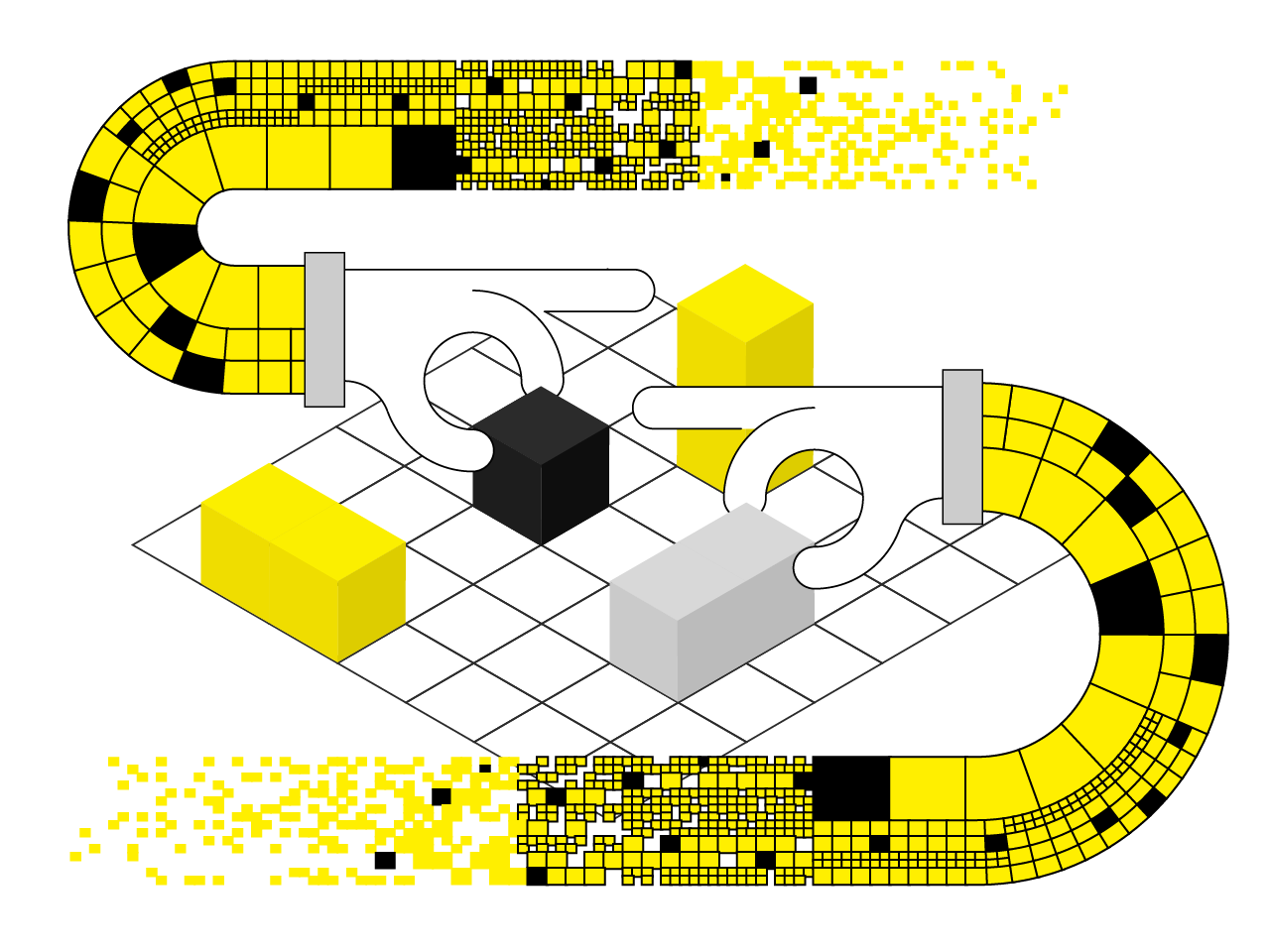
Stanford computer scientist James Zou discusses AI’s strengths at spotting errors and limitations in judging research significance.

Tapping Into AI’s Conservatism
AI favors established frameworks. Knowing that will change how you develop your information systems.

Shahan Ali Memon (@shahanmemon.bsky.social)
Researching {science of AI-mediated science, metascience #SciSci, #AI4Science, #GenAI, LLMs, agents, alignment, AI governance, misinformation in science} PhD @ UW. Visiting @ NYU & MSR Alum @ Carnegie Mellon Academic webpage: https://samemon.github.io

Field Theory: AI as Social Science Question, Object & Tool
Uses of advanced artificial intelligence are changing how societies organize labor, govern, produce knowledge, and make meaning. In light of these developments, this essay argues that AI models, tools, and systems pose three interrelated imperatives for social science: they demand renewed attention to social theories of how technology, human experience, and social order are entangled; they require study as objects of inquiry in their own right; and they offer capabilities that may transform—or upend—the practice of social investigation itself. From Weber’s analysis of rationalization to Du Bois’s study of technology and inequality to contemporary scholarship on algorithmic governance, the essay examines what social science distinctively offers: the capacity to historicize the apparently unprecedented, to trace connections across scales, and to center those most affected by technological change. It identifies how algorithmic systems are remaking the distribution of opportunity and risk as a central task of social inquiry and asks what futures social science might help bring into being.
A Cross‐Disciplinary Analysis of <span style="font-variant:small-caps;">AI</span> Policies in Academic Peer Review
ABSTRACT Rapid advances of artificial intelligence (AI) have substantially impacted the field of academic publishing. This study examines AI integration in peer review by analysing policies from 439 high‐ and 363 middle‐impact factor (IF) journals across disciplines. Using grounded theory, we identify patterns in AI policy adoption. Results show 83% of high‐IF journals have AI guidelines, with varying stringency across disciplines. Meanwhile, only 75% of middle‐IF journals have AI guidelines. Science, technology, and medicine (STM) disciplines exhibit stricter regulations, while humanities and social sciences adopt more lenient approaches. Key ethical concerns focus on confidentiality risks, accountability gaps, and AI's inability to replicate critical human judgement. Publisher policies emphasise transparency, human oversight, and restricted AI usage for auxiliary tasks only, such as grammar checks or reviewer finding. Disciplinary differences highlight the need for tailored guidelines that balance efficiency gains with research integrity. This study proposes collaborative frameworks for responsible AI integration. It focuses on accountability, transparency, and interdisciplinary policy development to address peer review challenges. , Key Points Application of AI tools in peer review has received increasing attention. Among the 439 high‐IF journals investigated, 83% provided AI policies for peer review, while 75% of middle‐IF journals did so. AI policies focus on confidentiality risks, accountability gaps, and capacity deficiencies of AI. AI policies for peer review vary according to the affiliated publishers and disciplines. Tailored AI guidelines need to be established according to the discipline.

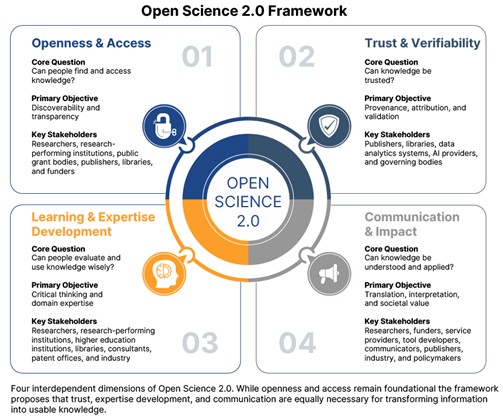
Open Science 2.0: Building Understanding in an AI-Mediated World - The Scholarly Kitchen
Open Science 2.0 must focus not only on access, but also on trust, interpretation, learning, and effective communication. The challenge facing the scholarly publishing ecosystem is ensuring that what is open is also trustworthy, understandable, and genuinely useful.
The Impact of Artificial Intelligence on Human Thought
This research paper examines, from a multidimensional perspective (cognitive, social, ethical, and philosophical), how AI is transforming human thought. It highlights a cognitive offloading effect: the externalization of mental functions to AI can reduce intellectual engagement and weaken critical thinking. On the social level, algorithmic personalization creates filter bubbles that limit the diversity of opinions and can lead to the homogenization of thought and polarization. This research also describes the mechanisms of algorithmic manipulation (exploitation of cognitive biases, automated disinformation, etc.) that amplify AI's power of influence. Finally, the question of potential artificial consciousness is discussed, along with its ethical implications. The report as a whole underscores the risks that AI poses to human intellectual autonomy and creativity, while proposing avenues (education, transparency, governance) to align AI development with the interests of humanity.
AI as the Catalyst of the New Paradigm of Science? | Cadmus Journal
The rapid advancement of Artificial Intelligence (AI) is reshaping the landscape of scientific inquiry. This article examines the challenges confronting modern science, including knowledge fragmentation, diminishing returns of current paradigms, and the disconnect between science and society. It explores how AI offers solutions enhancing collaboration and integrating knowledge—as well as considers the possible “darker side” of using AI in research. However, the advent of AI in science not only enhances scientific research but also redefines the role of human researchers and fosters a new paradigm of human understanding. By embracing these transformations, a more cohesive and responsive scientific enterprise can emerge.
AI Use in The Scholarly Kitchen - The Scholarly Kitchen
Some thoughts on the reader response the Scholarly Kitchen has seen regarding AI use by authors, a recent Nature News article on the efficacy of AI detection tools, and why it's important to keep experimenting to figure out what's ethically acceptable.