

Exploring new and renewed ideas for how personal computing and the interfaces we think with can better serve people’s lives – expanding opportunity, agency, curiosity, and creativity.
Augment
A collection of essays on the future of personal computing — specifically, on the kind we’d like to see more of in the future, and the ideas that might help us get there.
The Interfaces With Which We Think
The concepts in modern operating systems — apps, windows, desktops, notifications, and so on — have so permeated our understanding of personal computing, it’s hard to imagine anything else, let alone believe there could be anything better.
Feeling of Computing — Conversations
» Apple, Carmen Sandiego, and the Rise of Edutainment The Digital Antiquarian
If there was any one application that was the favorite amongst early boosters of personal computing, it was education. Indeed, it could sometimes be difficult to find one of those digital utopianists who was willing to prioritize anything else — unsurprisingly, given that so much early PC culture grew out of places like The People’s Computer Company, who made “knowledge is power” their de facto mantra and talked of teaching people about computers and using computers to teach with equal countercultural fervor. Creative Computing, the first monthly magazine dedicated to personal computing, grew out of that idealistic milieu, founded by an educational consultant who filled a big chunk of its pages with plans, schemes, and dreams for computers as tools for democratizing, improving, and just making schooling more fun. A few years later, when Apple started selling the II, they pushed it hard as the learning computer, making deals with the influential likes of the Minnesota Educational Consortium (MECC) of Oregon Trail fame that gave the machine a luster none of its competitors could touch. For much of the adult public, who may have had their first exposure to a PC when they visited a child’s classroom, the Apple II became synonymous with the PC, which was in turn almost synonymous with education in the days before IBM turned it into a business machine. We can still see the effect today: when journalists and advertisers look for an easy story of innovation to which to compare some new gadget, it’s always the Apple II they choose, not the TRS-80 or Commodore PET. And the iconic image of an Apple II in the public’s imagination remains a group of children gathered around it in a classroom.
Andy Matuschak
I'm an applied researcher, focused on creating user interfaces that expand what people can think and do. My current focus is an augmented book which actively helps people understand, remember, and use what they read.
Feeling of Computing
Feeling of Computing is an online community with a welcoming, cooperative, and revolutionary spirit. We are unified in the belief that the computer is tragically less humane than it could be. There’s a world of possibilities that get more beautiful the further away from the norm you go. We’re here to explore this world together, to discuss ideas about theory and practice, and to champion and support our members’ research and development efforts to reimagine the computer.
Revisiting creative behaviour as an epistemic process: lessons from 12 computational artists and designers | Proceedings of the 35th Australian Computer-Human Interaction Conference
As part of the Digital Library's transition to Open Access, new features for researchers are available in the Premium Edition. Click here to learn more.

ben guo 🏇 on Twitter / X
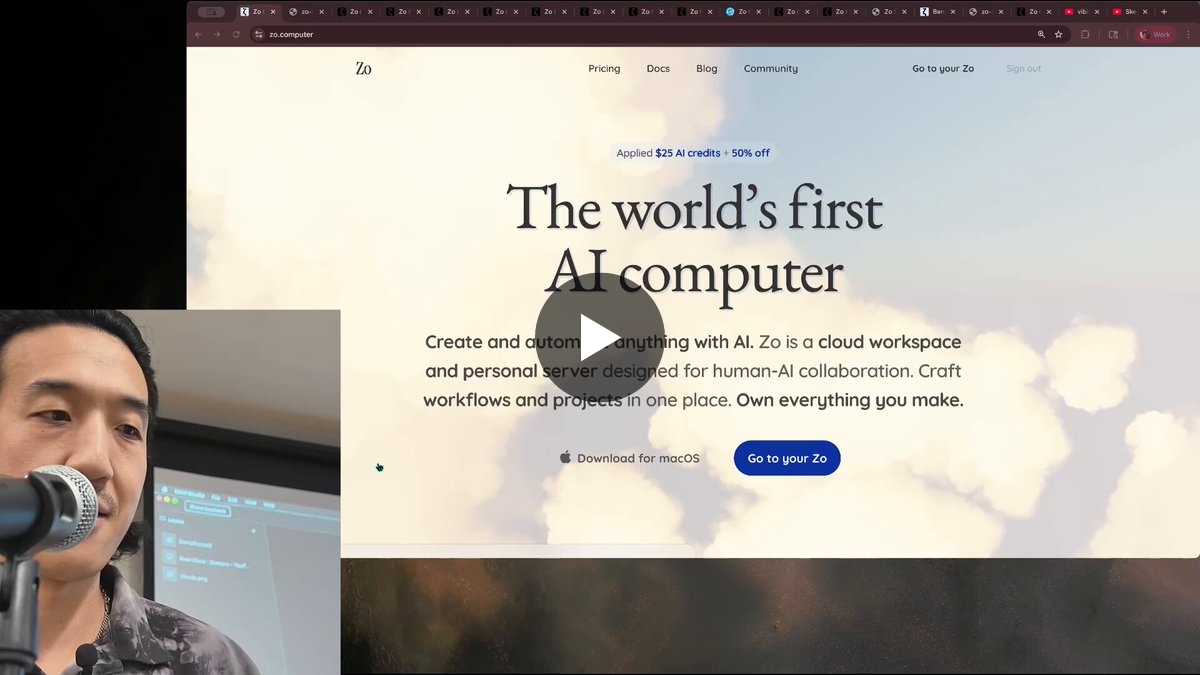
i gave this talk last night at @southpkcommons about why the personal computing revolution never happened, and what we can do about it. pumped about the feedback afterwards: "it's giving early tumblr", "you guys are like punk apple", "i want more early internet mixtape vibes" pic.twitter.com/0Lwz3CaWBX— ben guo 🏇 (@0thernet) November 6, 2025
Basic | The Personal Computing Platform
We build products, tools, and standards to make computers more personal.

Amelia Wattenberger
I create things on the web, explore novel interfaces, turn data into meaning, and empower devs with AI.
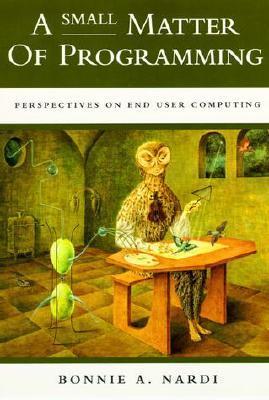
A small matter of programming: perspectives on end user computing
A Small Matter of Programming asks why it has been so d…
Are we stuck with the same Desktop UX forever? | Ubuntu Summit 25.10
Are we stuck with the same Desktop UX forever? | Ubuntu Summit 25.10
Are we stuck with the same Desktop UX forever? | Ubuntu Summit 25.10
feeling of computing, london
💞 welcome to the london branch of the feeling of computing community. 💞
Personal Computing

www.cs.columbia.edu

Are we stuck with the same Desktop UX forever? | Ubuntu Summit 25.10
Triumph of the Nerds: The Transcripts, Part I
Everest Pipkin

Digital Topology & Economic Power
bandukwala.me