A practical guide to stylized GGX shading: mixing sharp toon specular highlights with soft PBR gradients.
Shades of Halftone - The Blog of Maxime Heckel
An interactive deep dive into building halftone shaders in GLSL, covering everything from classic dot patterns and CMYK color separation to Moiré interference, gooey effects, and animated displacement.

Evaluating and Sampling Glinty NDFs in Constant Time
Geometric features between the micro and macro scales produce an expressive family of visual effects grouped under the term 'glints'. Efficiently rendering these effects amounts to finding the highlights caused by the geometry under each pixel. To allow for fast rendering, we represent our faceted geometry as a 4D point process on an implicit multiscale grid, designed to efficiently find the facets most likely to cause a highlight. The facets' normals are generated to match a given micro-facet normal distribution such as Trowbridge-Reitz (GGX) or Beckmann, to which our model converges under increasing surface area. Our method is simple to implement, memory-and-precomputation-free, allows for importance sampling and covers a wide range of different appearances such as anisotropic as well as individually colored particles. We provide a base implementation as a standalone fragment shader.
modular and versioned GLSL
a WebGL demo of glsl-lut, for efficient color transforms on the GPU. source code here Contents # Intro glslify Installing Dependencies Compiling The Shader Relative Requires Example Modules The Awesomeness of NPM Unit Testing Extras As a Source...

The Best Darn Grid Shader (Yet)
For as long as I’ve been writing shaders, there’s been one specific shader I’ve always tried to write…

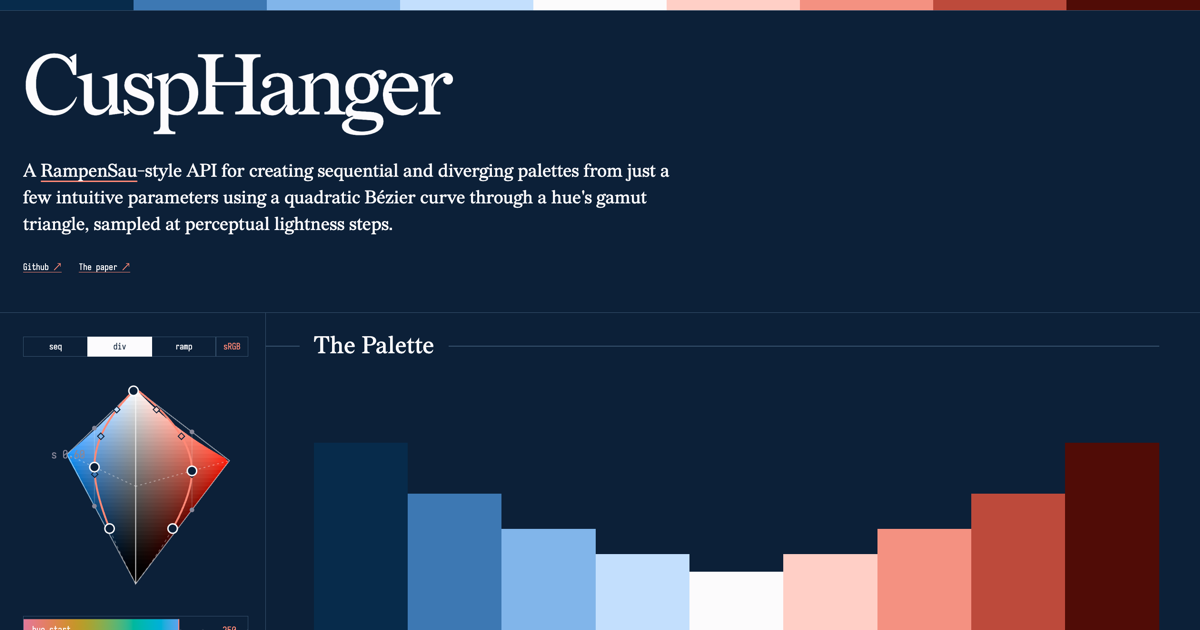
CuspHanger — palettes from intuitive parameters
Sequential and diverging OKLCH palettes from a few intuitive parameters — the Wijffelaars et al. 2009 model, in-gamut by construction, for sRGB and Display-P3.
Shader Color
Shader Color is three groundbreaking typefaces that reimagine our existing design Shader for its Color Font debut. Shader 16 boasts bright 16-bit pixels. Shader 64 revels in shiny 64-bit chrome. Shader Glitch conjures a future where technology conspires against us.
Greg Girard May Be Too Cool | The Tyee
The Vancouver photographer got famous documenting life in China and Hong Kong. A new survey of his career showcases his work with fresh eyes.

Infinite Grid Shader
Learning to create an infinite grid procedurally using GLSL shaders. This post contains my notes, lessons and findings, and is intended for personal reference. Therefore, you might find errors, misjudgments, and other issues, which are fine by me because my intention was to learn by teaching myself. In a way, I was being my own rubber duck.

Aesthetics Wiki | Fandom
Thank you to the winner of our redesign contest, Ethan Duke! The background and wordmark are both his work. You can check him out on both Instagram and Twitter at @theduke2442! The dark mode was designed by Gwenanenn.

mmeshy - make beautiful mesh gradients
Design buttery smooth mesh gradients in the browser and export high-res images. All for free.

Hash Functions for GPU Rendering – Nathan Reed’s coding blog
Pixels and polygons and shaders, oh my!
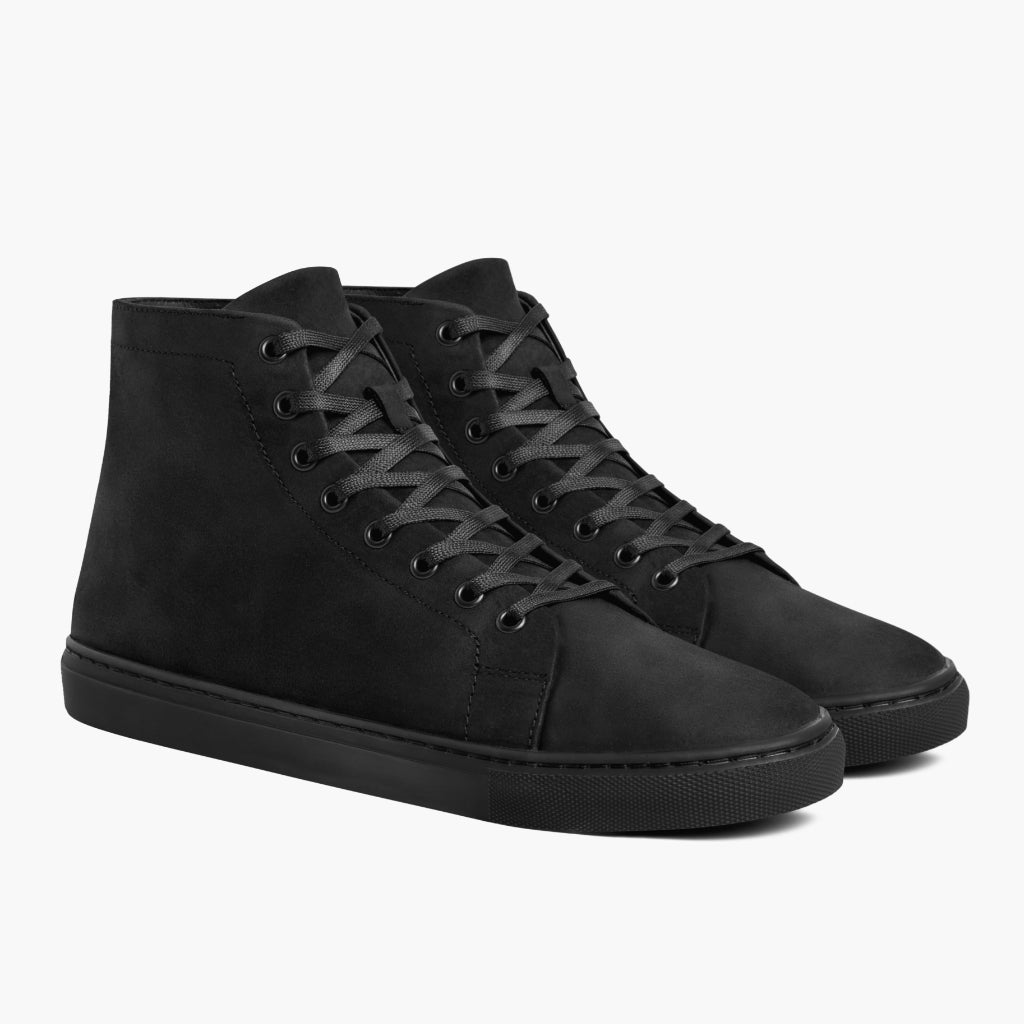
Premier High Top | Black Matte
Product Features Black Matte Rugged & Resilient Leather Clean Design to Accentuate High Quality Materials Buttery Soft Leather Interior Lining Shock-Absorbent Performance Footbeds Natural Vachetta Leather Insoles Long-Lasting Polyester Laces Dual Density Rubber Outsoles for Comfort & Traction Handcrafted with Integrity Shipping Info Free Domestic U.S. Ground Shipping Free Domestic U.S. Returns. See Our Full Policy International shipping available Expedited shipping options available at checkout
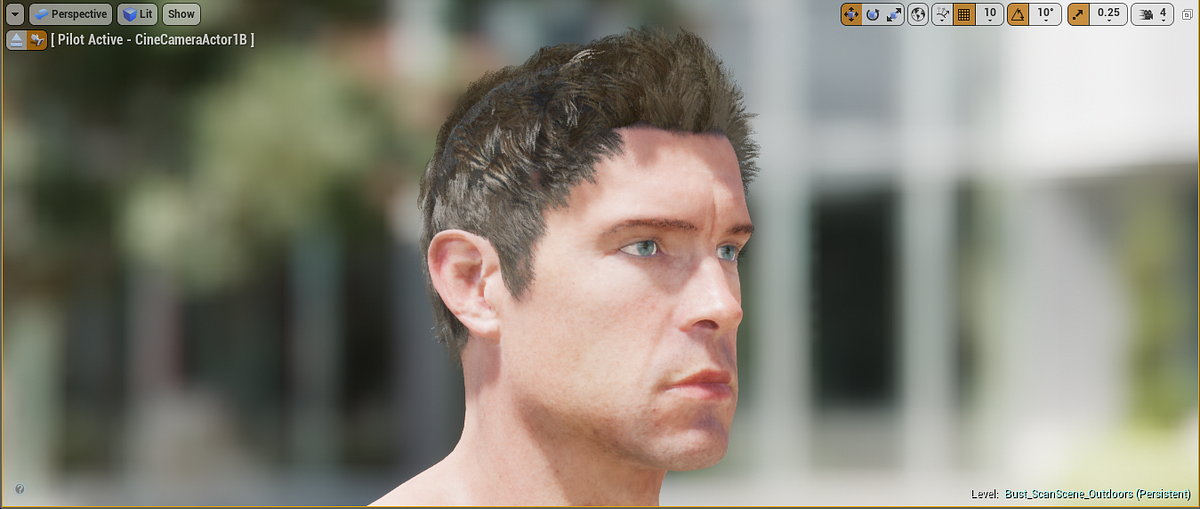
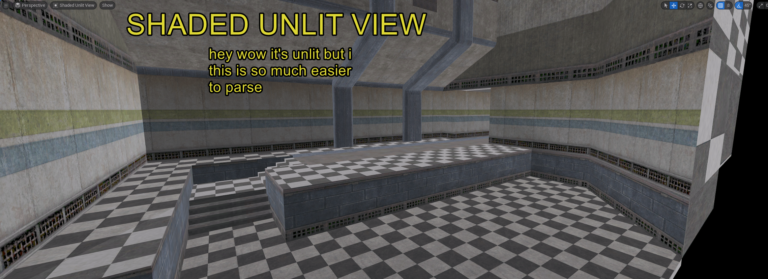
Unreal Scoop: Make your own “shaded textured unlit” viewmode real quick
Hammer, king of level editors, has a view mode where the scene is unlit, but not fullbright; it’s shaded to make it easier to parse. Unreal doesn’t have that! But you can add it yourself, really easily, with no C++ or Blueprint – just a postprocess material and a line in a config file. Here’s how!