


How I've come to terms with LLM non-determinism in software and abandoned the comforting lies we've been telling ourselves about traditional software.
Deterministic Core, Non-Deterministic Shell - Outdata
Determinism, architecture, and the de-sloppification of legacy code.

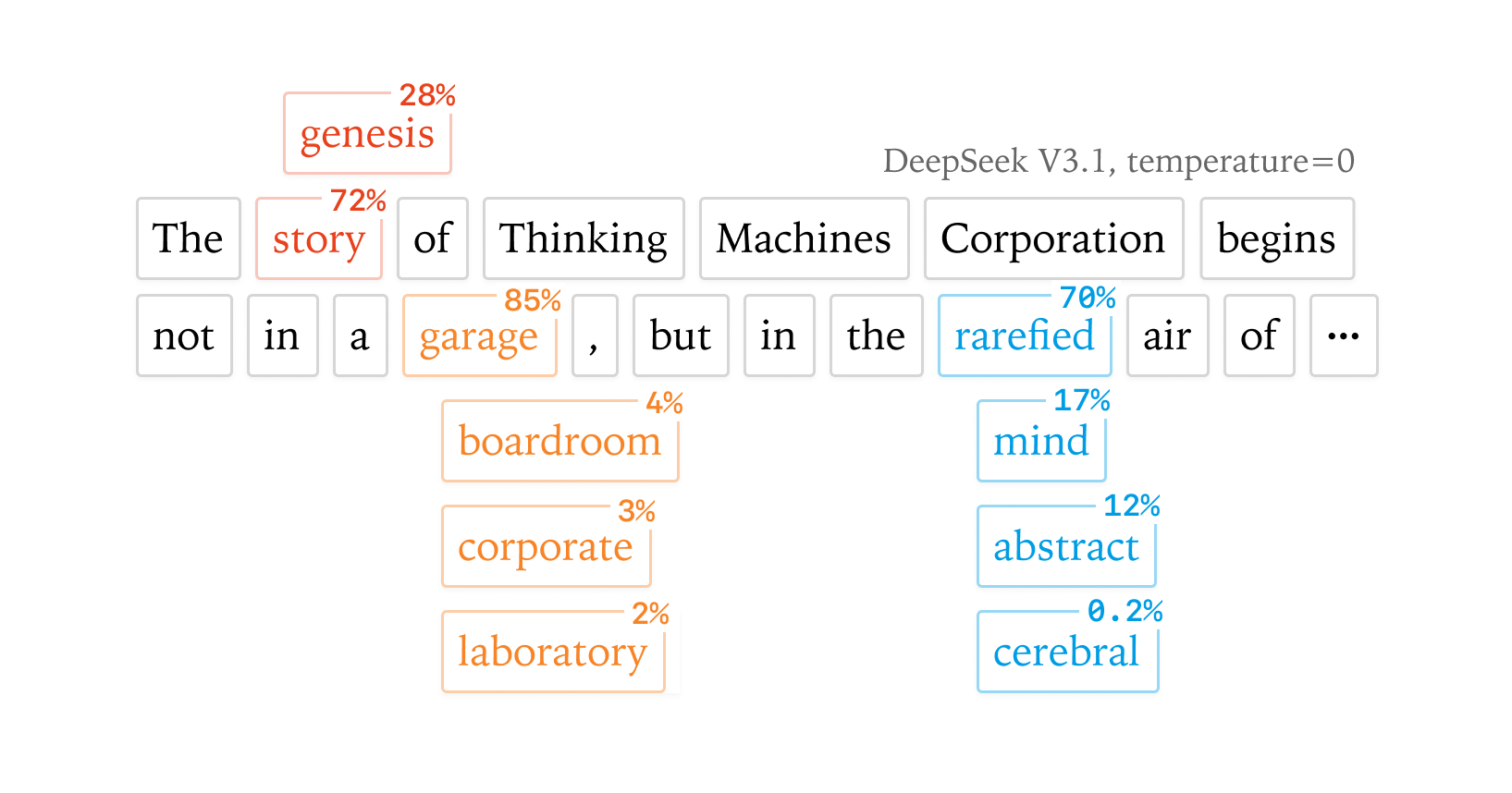
Defeating Nondeterminism in LLM Inference
Reproducibility is a bedrock of scientific progress. However, it’s remarkably difficult to get reproducible results out of large language models. For example, you might observe that asking ChatGPT the same question multiple times provides different results. This by itself is not surprising, since getting a result from a language model involves “sampling”, a process that converts the language model’s output into a probability distribution and probabilistically selects a token. What might be more surprising is that even when we adjust the temperature down to 0This means that the LLM always chooses the highest probability token, which is called greedy sampling. (thus making the sampling theoretically deterministic), LLM APIs are still not deterministic in practice (see past discussions here, here, or here). Even when running inference on your own hardware with an OSS inference library like vLLM or SGLang, sampling still isn’t deterministic (see here or here).
The two worlds of programming: why developers who make the same observations about LLMs come to opposite conclusions
Writing at the end of the world, from Hveragerði, Iceland
Nicholas Carlini - Black-hat LLMs | [un]prompted 2026
Andrej Karpathy: Software Is Changing (Again)
open-slopware
Free/Open Source Software choosing to use and/or support LLM usage/AI, as well as alternatives and tips to requesting better policies or forking.
chad/whichlang
What programming language do LLMs default to when you don't tell them? A small benchmark.
Compiling knowledge, not retrieving it: a hands-on deep dive into llm-wiki-compiler
The thesis of this piece is simple and uncomfortable: the problem of making an LLM “remember” what you’ve read isn’t solved with more…
The Return of Language-Oriented Programming | Middle of Nowhere
I’ve been wondering what LLMs mean for language design and implementation. Some believe that, because language models are obviously trained on existing content, they are inherently less capable of assisting users with new programming languages. Intuitively this makes sense. However:
A pocket full of personal software - Bailey's Retrospective
A year-ish spent building software I want, the way I want with *in a low voice* llms
Histomat of F/OSS: We should reclaim LLMs, not reject them
A few days ago, I came across a blog post titled On FLOSS and training LLMs that articulates a growing frustration within the free and open source software…
Meet the Pirates of the RAG: Adaptively Attacking LLMs to Leak Knowledge Bases
Meet the Pirates of the RAG: Adaptively Attacking LLMs to Leak Knowledge Bases

Extensible Software in the age of LLMs | Jeremy Morrell
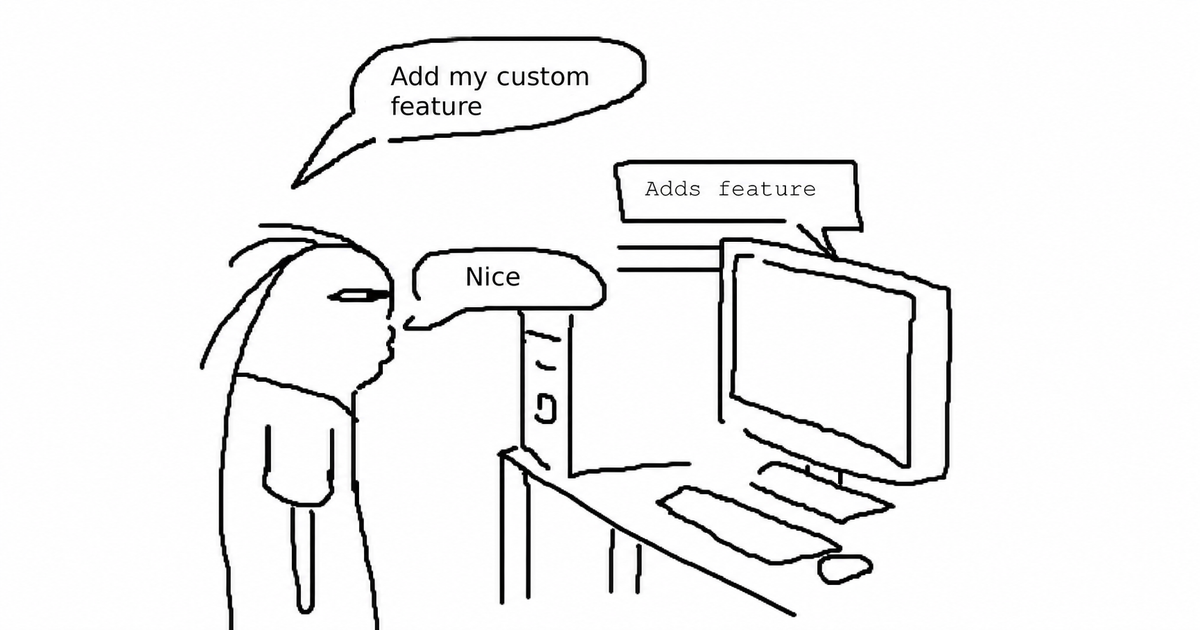
Solid core + capability-based sandboxes + LLMs = Users with superpowers
Artificial
An LLM is a computer program. We should talk about it like a computer program.

Artificial
An LLM is a computer program. We should talk about it like a computer program.