

In late May 2026, rsync blew up. GitHub, Hacker News, Lobsters: hundreds of people arguing about whether open-source maintainers can ship AI-written code and have it be reliable — and whether the people taking the code for free get to demand how it is made.
Daily Dose of Data Science on Twitter / X
Claude Code fully dissected!Researchers from UCL reverse-engineered the leaked Claude source. What they found changes how you should think about agent design.Only 1.6% of the codebase is AI decision logic.The other 98.4% is operational infrastructure. Permission gates, tool… https://t.co/5HYH7qV3wQ pic.twitter.com/5SBHQy5wFH— Daily Dose of Data Science (@DailyDoseOfDS_) June 13, 2026

rsync and outrage
I gave up blogging a long time ago (apart from an occasional thing about ArduPilot), I tend to just write code and hope people find it…
Robin Berjon (@robin.berjon.com)
Again, we can try to be generous. But this fits a pattern. When people found issues in their open source code, instead of fixing them they went closed source. When they had an XSS vulnerability right at launch it took over a day for them to acknowledge and close it.

Vulnerability Research Is Cooked
For the last two years, technologists have ominously predicted that AI coding agents will be responsible for a deluge of security vulnerabilities. They were right! Just, not for the reasons they thought.
I Switched From Claude Code to OpenCode — Here's Why
I tested OpenCode against Claude Code for real development work. Here's what surprised me about the open-source alternative — and what I don't miss.

AI slows down open source developers. Peter Naur can teach us why.
Measuring the Impact of Early-2025 AI on Experienced Open-Source...
Despite widespread adoption, the impact of AI tools on software development in the wild remains understudied. We conduct a randomized controlled trial (RCT) to understand how AI tools at the...

Measuring the Impact of Early-2025 AI on Experienced Open-Source Developer Productivity
We conduct a randomized controlled trial to understand how early-2025 AI tools affect the productivity of experienced open-source developers working on their own repositories. Surprisingly, we find that when developers use AI tools, they take 19% longer than without—AI makes them slower.
AI Slopageddon and the OSS Maintainers
AI slop is ripping up the social contract between maintainers and contributors essential to open source development. Practitioners have been repeatedly assured that AI would supercharge their communities, but so far that hasn’t been the case. Just look at what happened last month. Mitchell Hashimoto’s Ghostty implemented a zero-tolerance policy where submitting bad AI-generated code

Open source was not ready for AI-speed contributions
AI did not create the maintainer burden problem in open source. It accelerated it. Contributors are being amplified, but maintainers are still the verification bottleneck.

Open source was not ready for AI-speed contributions
AI did not create the maintainer burden problem in open source. It accelerated it. Contributors are being amplified, but maintainers are still the verification bottleneck.
What the hell happened with AGI timelines in 2026?
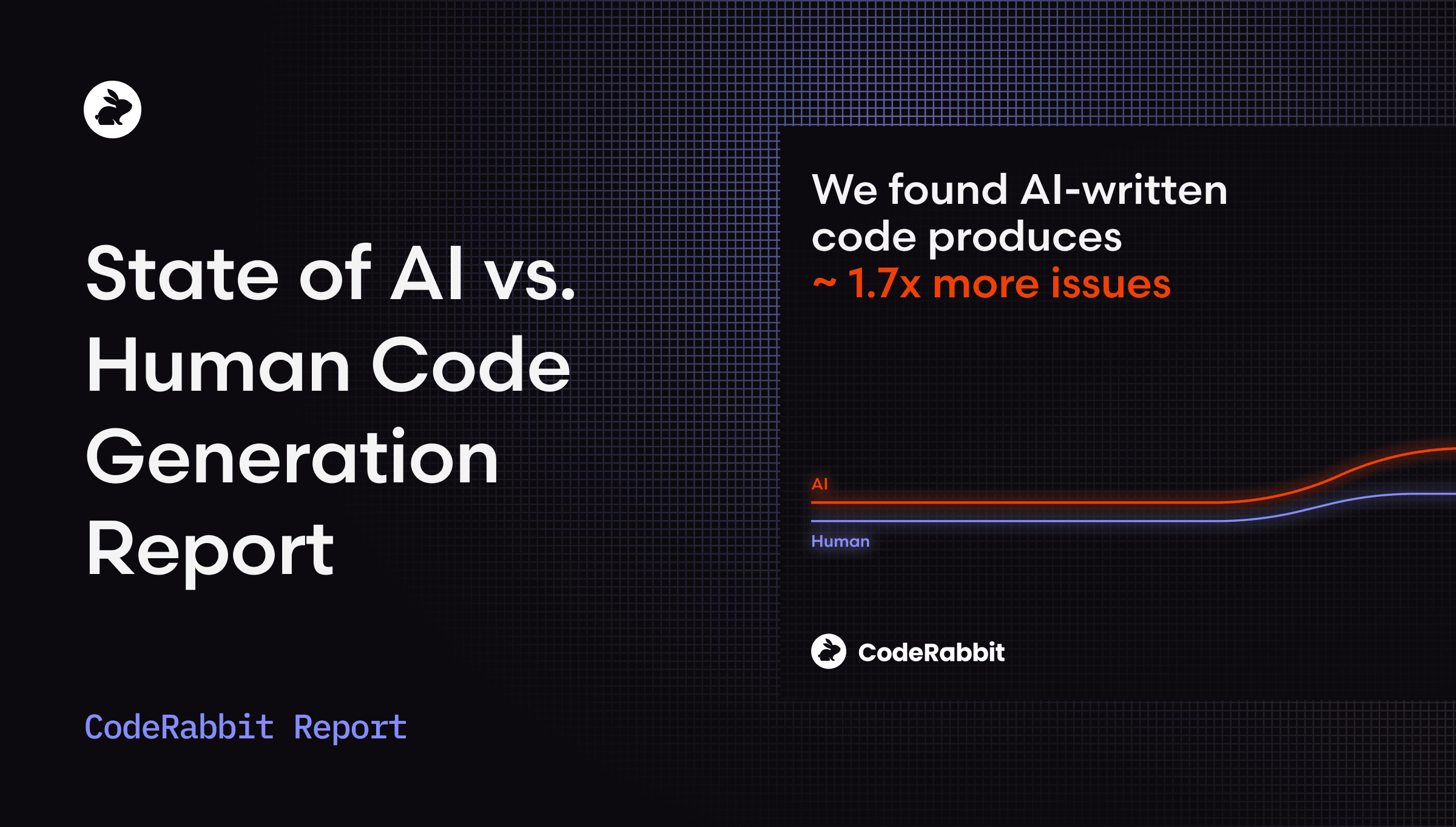
AI vs human code gen report: AI code creates 1.7x more issues
We analyzed 470 open-source GitHub pull requests, using CodeRabbit’s structured issue taxonomy and found that AI generated code creates 1.7x more issues.
Andrej Karpathy Stopped Using AI to Write Code. He’s Using It to Build a Second Brain Instead
His new workflow turns raw research into a self-maintaining wiki.No vector databases, no RAG pipelines, just markdown files and an LLM that…
I Think They Are Lying To You
Does Code Cleanliness Affect Coding Agents? A Controlled Minimal-Pair Study
As autonomous coding agents see rapid adoption, their evaluation has primarily focused on task completion rates holding the target codebase fixed. This leaves a critical question unanswered: does the structural and stylistic quality, or ``cleanliness'' of the underlying code affect an agent's ability to navigate and modify it? To isolate the effect of code cleanliness from agent capability, we introduce an evaluation protocol built around minimal pairs: repositories that match on architecture, dependencies, and external behaviour, but differ on static-analysis rule violations and cognitive complexity. The pairs are constructed in both directions, by agent pipelines that either degrade a clean repository or clean a messy one. We author 33 tasks across six such pairs, evaluated through hidden tests at the application's public surface. Across 660 trials with Claude Code, code cleanliness does not change the agent's pass rate. However, it substantially alters the agent's operational footprint: agents working on cleaner code use 7 to 8% fewer tokens and reduce file revisitations by 34%. Our findings suggest that traditional maintainability principles remain highly relevant in the era of AI-driven development, shaping the computational cost and navigational efficiency of coding agents. Code cleanliness joins model choice, harness, and prompting as a factor that materially affects agent behaviours.