

Social media sheds its most unreliable component: other people
Study: Social media probably can’t be fixed
The [structural] mechanism producing these problematic outcomes is really robust and hard to resolve."
Sources on social media: Information context collapse and volume of content as predictors of source blindness - George Pearson, 2021
Although social media has become a primary news platform, the effects of social media features on users’ information processing remains under-explored. This stu...

Social Media Fails Many Users. Experts Have an Idea to Fix It
In a new paper, digital activist Audrey Tang and others emphasize the need for context and community over clicks.
Sharing of misinformation is habitual, not just lazy or biased
Why do people share misinformation on social media? In this research ( N = 2,476), we show that the structure of online sharing built into social platforms is more important than individual deficits in critical reasoning and partisan bias—commonly cited drivers of misinformation. Due to the reward-based learning systems on social media, users form habits of sharing information that attracts others' attention. Once habits form, information sharing is automatically activated by cues on the platform without users considering response outcomes such as spreading misinformation. As a result of user habits, 30 to 40% of the false news shared in our research was due to the 15% most habitual news sharers. Suggesting that sharing of false news is part of a broader response pattern established by social media platforms, habitual users also shared information that challenged their own political beliefs. Finally, we show that sharing of false news is not an inevitable consequence of user habits: Social media sites could be restructured to build habits to share accurate information.
RIP social media. What comes next is messy.
As social media splinters, how can we keep the new online spaces from devolving into toxic pits of despair?

The Interplay of Knowledge Overestimation, Social Media Use, and Populist Ideas: Cross-Sectional and Experimental Evidence From Germany and Taiwan - Niels G. Mede, Adrian Rauchfleisch, Julia Metag, Mike S. Schäfer, 2024
Social media expose users to an abundance of information about various issues. But they also make it difficult for users to assess the quality of this informati...
How Social Media Rewards Misinformation
A majority of false stories are spread by a small number of frequent users, suggests a new study co-authored by Yale SOM’s Gizem Ceylan. But they can be taught to change their ways.

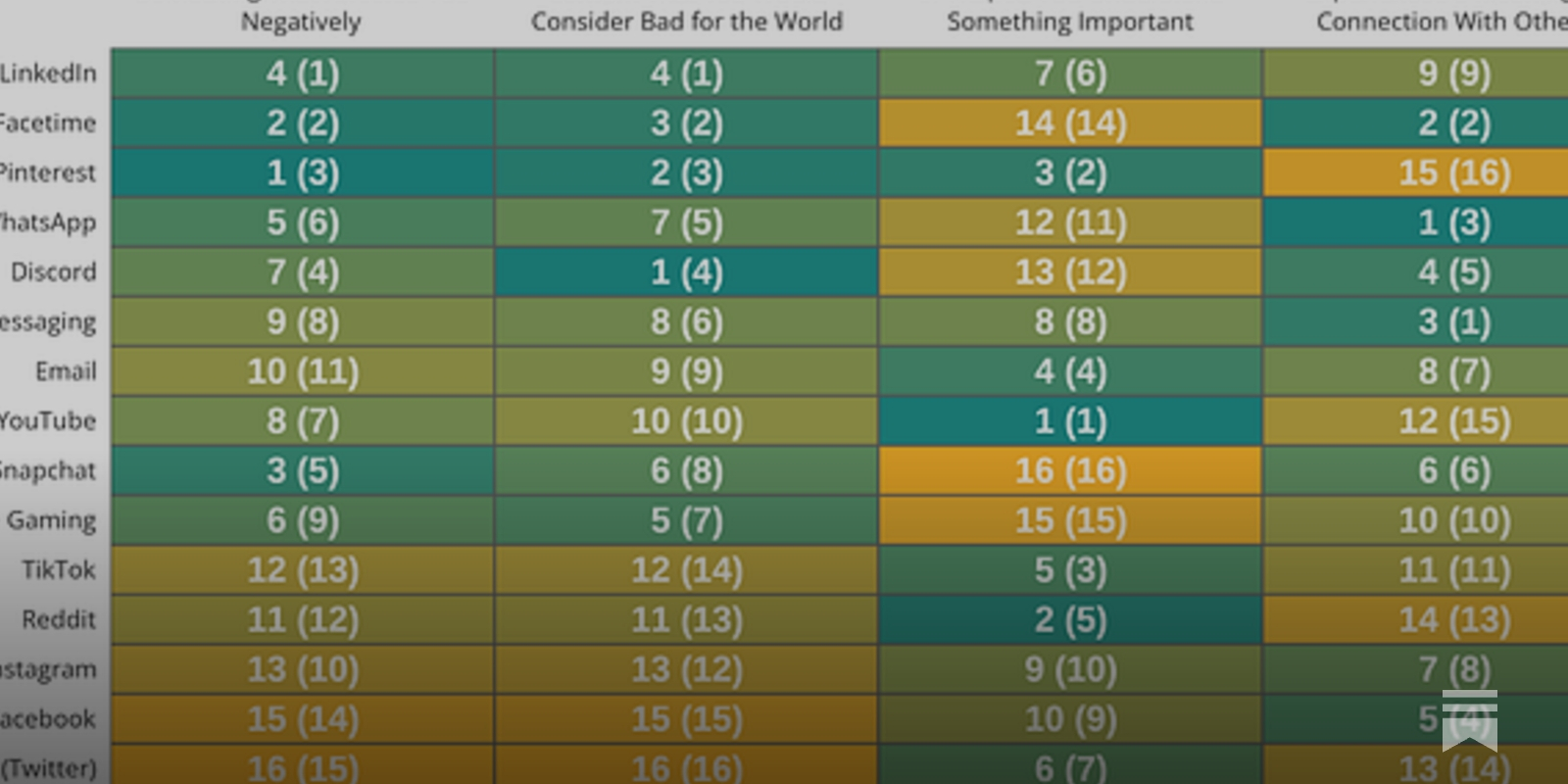
Social Media Experiences Across Nearly 2 Years Since Launching the Social Media Index
With new data through January 2025, we find that social media use is decreasing, bad experiences are mostly holding steady, and positive experiences are increasing on some platforms
Social media can predict what you’ll say, even if you don’t participate
On Twitter, your words are predictable using the words of your network.

Empowering social media users to assess content helps fight misinformation
MIT researchers built a prototype social media platform to study the effects of giving users more agency to assess content for accuracy and control the posts they see based on accuracy assessments from others. Users were able to make accurate assessments, despite having no prior training, and they valued and utilized the assessment and filtering tools they designed.

The Social Media Sea Change
What happens when the thing that structured so much of our lives loses its utility?

Social media is a gnarly coordination problem we need to decompose - a warm space
Social media ‘trust’/’distrust’ buttons could reduce spread of misinformation | UCL News
The addition of ‘trust’ and ‘distrust’ buttons on social media, alongside standard ‘like’ buttons, could help to reduce the spread of misinformation, finds a new experimental study led by UCL researchers.

How Social Media Brings Out the Worst in Us
A new book argues that social media does more harm than good and we might be happier and healthier using it less.
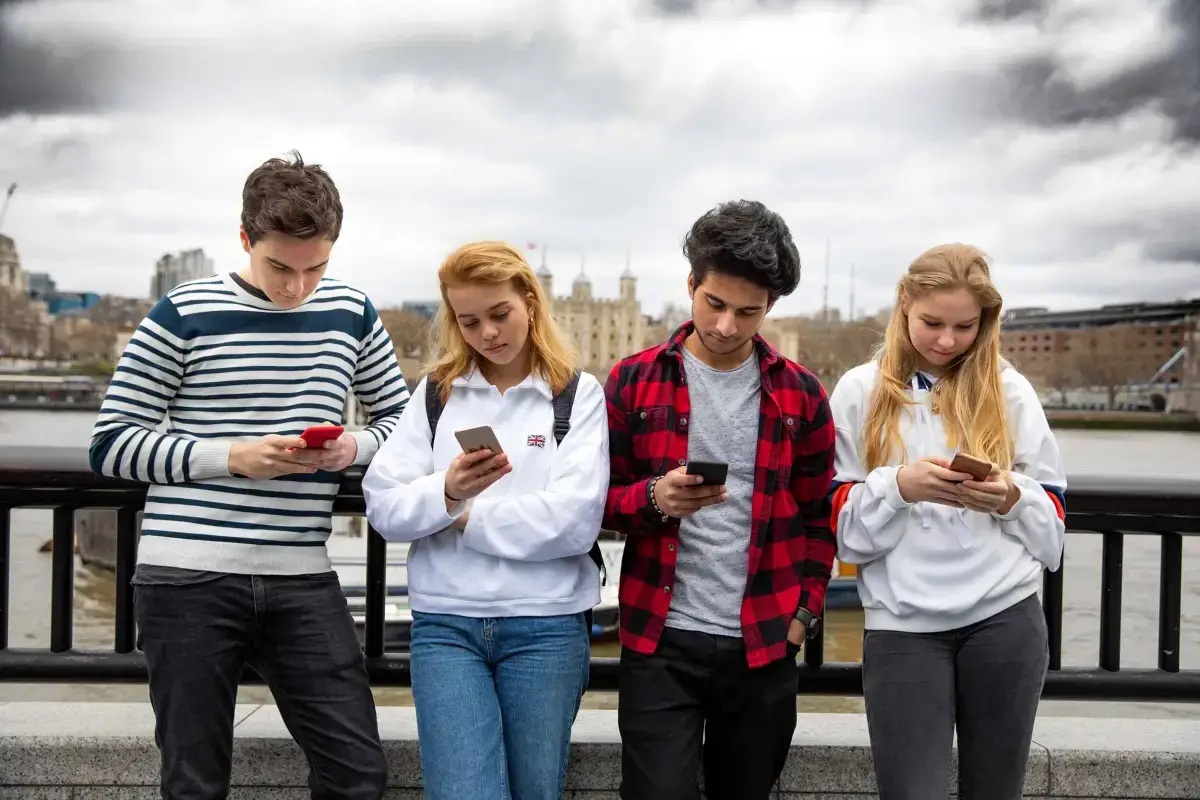
Social media is no longer social. Most of it is passive viewing of videos and pictures from people we've never met. But we're still studying social media like it's 2010. We've entered the post-social media era — and research needs to catch up. osf.io/preprints/socarxiv/6nue7_v1 preprint w/ Richard Rogers
