

For my piece on Catholic miracle apologetics, I read (correction: skimmed) a 25,000-word post by rationalist blogger Scott Alexander. My piece, which cited (but does not focus on) his, ended up being a cool 2,700 words. I don't think it would benefit from being longer, and it was the result of me cutting around 70% of the text I initially wrote.


15 rules for blogging, and my current streak
Posted on Thursday 10 Sep 2020. 493 words, 2 links. By Matt Webb.

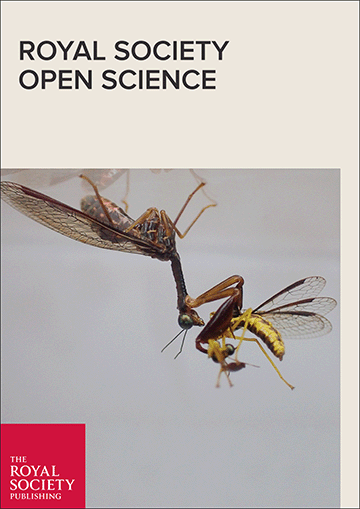
Post-publication critique at top-ranked journals across scientific disciplines: a cross-sectional assessment of policies and practice
Journals exert considerable control over letters, commentaries and online comments that criticize prior research (post-publication critique). We assessed policies (Study One) and practice (Study Two) related to post-publication critique at 15 top-ranked journals in each of 22 scientific disciplines ( N = 330 journals). Two-hundred and seven (63%) journals accepted post-publication critique and often imposed limits on length (median 1000, interquartile range (IQR) 500–1200 words) and time-to-submit (median 12, IQR 4–26 weeks). The most restrictive limits were 175 words and two weeks; some policies imposed no limits. Of 2066 randomly sampled research articles published in 2018 by journals accepting post-publication critique, 39 (1.9%, 95% confidence interval [1.4, 2.6]) were linked to at least one post-publication critique (there were 58 post-publication critiques in total). Of the 58 post-publication critiques, 44 received an author reply, of which 41 asserted that original conclusions were unchanged. Clinical Medicine had the most active culture of post-publication critique: all journals accepted post-publication critique and published the most post-publication critique overall, but also imposed the strictest limits on length (median 400, IQR 400–550 words) and time-to-submit (median 4, IQR 4–6 weeks). Our findings suggest that top-ranked academic journals often pose serious barriers to the cultivation, documentation and dissemination of post-publication critique.
Why Are We Still Doing This?
Hi! If you like this piece and want to support my work, please subscribe to my premium newsletter. It’s $70 a year, or $7 a month, and in return you get a weekly newsletter that’s usually anywhere from 5000 to 185,000 words, including vast, extremely detailed analyses

The Shapeshifter’s Little Brother
On Mark Zuckerberg’s AI manifesto—aka nine blog posts in a trenchcoat.

Alexis King’s Blog
This is a blog post I have been considering writing for a long time.
How To Argue With An AI Booster
Editor's Note: For those of you reading via email, I recommend opening this in a browser so you can use the Table of Contents. This is my longest newsletter - a 16,000-word-long opus - and if you like it, please subscribe to my premium newsletter. Thanks for reading! In
Andy's Blog
Originally published in October, 2017 – over three years later in 2021 I am still happily using Posteo!
A blogging style guide | Robert Heaton
Here are 39 ways to make your blog more entertaining to read and more pleasurable to write.

I spent several hours today, away from the code, writing about Gifthood. It's likely the longest blog post I have ever written. Might make for some good weekend reading for atproto and decentralized web folks alike.

The Condition of Giving
gifthood.org
