


The Tetris effect is one of psychology’s most easy to reproduce experiments.Simply spend a bit of time playing the eponymous game every day for a few weeks.A...
How Playing Tetris Tames The Trauma Of A Car Crash
Researchers were able to dial down painful recollections of a car crash by having people play the video game Tetris while in the emergency room. The technique makes use of the malleability of memory.

Almost anything you give sustained attention to will begin to loop on itself and bloom
When people talk about the value of paying attention and slowing down, they often make it sound prudish and monk-like. But we shouldn’t forget how interesting and overpoweringly pleasurable sustained attention can be.

How to be more creative in seconds!
How to reclaim your attention from the distraction economy | Psyche Videos
Could you watch this video on full screen, 1x speed, with no distractions? Here are five steps to rebuild your attention span

How We Pay Attention Changes the Very Shape of Our Brains
Imagine arriving at the airport just in time to catch a plane. Everything in your behavior betrays the heightened concentration of your attention. Your mind on alert, you look for the departures si…

Philosophy Experiments — Interactive Thought Experiments
Explore 27 interactive philosophy experiments that challenge your moral intuitions, test your logical reasoning, and probe the boundaries of belief.
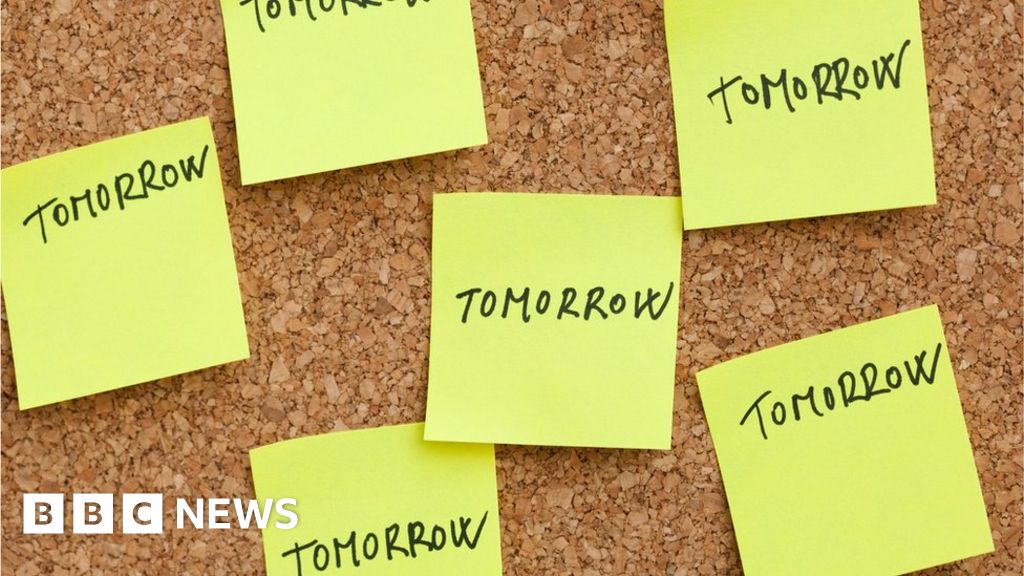
Procrastination: It's pretty much all in the mind
Scans show differences in the brains of those who love to put things offs compared with the "doers".
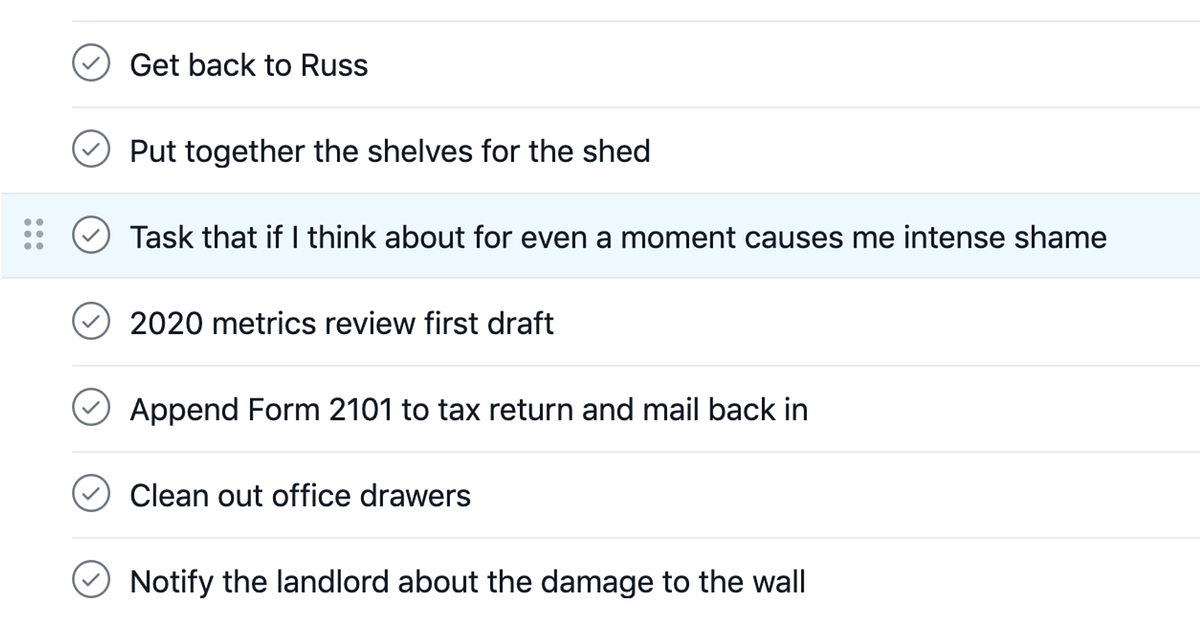
‘Ugh Fields’, or why you can’t even bear to think about that task
Have you ever had a long-overdue task — a task which isn’t so bad in itself — but which you can’t even bring yourself to think about?
Does each click of attention cost a bit of ourselves? | Aeon Essays
It costs nothing to click, respond and retweet. But what price do we pay in our relationships and our peace of mind?

inessential: Social Anxiety
I will leave you hanging, because it never occurs to me to wonder why you have your hand raised.
How tiny experiments can set you free | Anne-Laure Le Cunff | TEDxNashville | Transcript
When Dr Anne-Laure Le Cunff was told she might die, her first instinct was to check her calendar. In this talk, she reveals how our desperate need for control keeps us stuck and how tiny experiments can set us free. Dr Anne-Laure Le Cunff is a neuroscientist, author, and entrepreneur who studies curiosity – both in the lab and in life. Her research at King’s College London explores how our brains seek, learn, and adapt, spanning areas from ADHD to AI and mental health. She founded Ness Labs, a science-based learning platform helping people live more experimental lives. Her bestselling book Tiny Experiments offers a practical guide to transforming uncertainty into curiosity, creativity, and self-discovery. Through her research and writing, she bridges science and everyday life, showing how curiosity can help us loosen control, embrace change, and uncover who we truly are.

Do LLMs Exhibit Human-like Response Biases? A Case Study in Survey Design
Abstract One widely cited barrier to the adoption of LLMs as proxies for humans in subjective tasks is their sensitivity to prompt wording—but interestingly, humans also display sensitivities to instruction changes in the form of response biases. We investigate the extent to which LLMs reflect human response biases, if at all. We look to survey design, where human response biases caused by changes in the wordings of “prompts” have been extensively explored in social psychology literature. Drawing from these works, we design a dataset and framework to evaluate whether LLMs exhibit human-like response biases in survey questionnaires. Our comprehensive evaluation of nine models shows that popular open and commercial LLMs generally fail to reflect human-like behavior, particularly in models that have undergone RLHF. Furthermore, even if a model shows a significant change in the same direction as humans, we find that they are sensitive to perturbations that do not elicit significant changes in humans. These results highlight the pitfalls of using LLMs as human proxies, and underscore the need for finer-grained characterizations of model behavior.1

Experiments — ux-phi
Playable versions of canonical experiments in philosophy: the Socratic-questionnaire thought experiments — the trolley problem, Gettier cases, the side-effect effect, Mary the colour scientist.
Email: The Variable Reinforcement Machine
How often do you check your email per day? Does checking your email make you more productive or less productive? Oh, sure, we delude ourselves into thinking we’re being extra-productive by obsessively checking and responding to our email, but in reality we’re attending too frequently to our

Capturing our Attention by @neillevy.bsky.social "we possess sophisticated capacities of epistemic vigilance, which work reasonably well to distinguish reliable from unreliable information, but ... we do not have parallel defences against attentional capture" > tandfonline.com/doi/full/10.1080/00048402.202…
Another valuable AI tool to address the massive de-skilling event we are currently experiencing! By @lav.io

Sam Lavigne
I made a chrome extension that makes LLMs appear to run very slowly... slowllm.lav.io

