


The Tetris effect is one of psychology’s most easy to reproduce experiments.Simply spend a bit of time playing the eponymous game every day for a few weeks.A...
Almost anything you give sustained attention to will begin to loop on itself and bloom
When people talk about the value of paying attention and slowing down, they often make it sound prudish and monk-like. But we shouldn’t forget how interesting and overpoweringly pleasurable sustained attention can be.
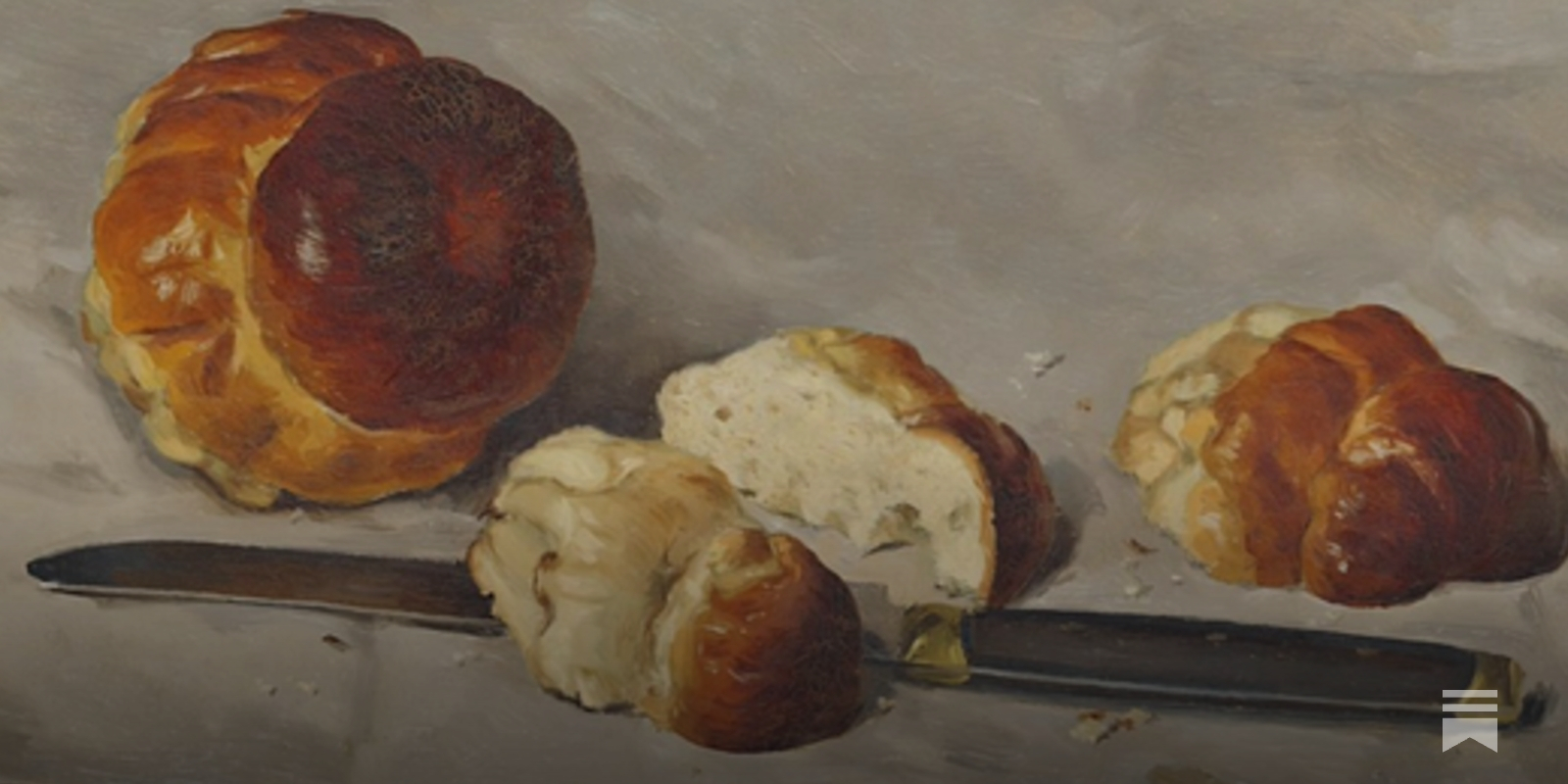
How to be more creative in seconds!
How to reclaim your attention from the distraction economy | Psyche Videos
Could you watch this video on full screen, 1x speed, with no distractions? Here are five steps to rebuild your attention span

Philosophy Experiments — Interactive Thought Experiments
Explore 27 interactive philosophy experiments that challenge your moral intuitions, test your logical reasoning, and probe the boundaries of belief.
How tiny experiments can set you free | Anne-Laure Le Cunff | TEDxNashville | Transcript
When Dr Anne-Laure Le Cunff was told she might die, her first instinct was to check her calendar. In this talk, she reveals how our desperate need for control keeps us stuck and how tiny experiments can set us free. Dr Anne-Laure Le Cunff is a neuroscientist, author, and entrepreneur who studies curiosity – both in the lab and in life. Her research at King’s College London explores how our brains seek, learn, and adapt, spanning areas from ADHD to AI and mental health. She founded Ness Labs, a science-based learning platform helping people live more experimental lives. Her bestselling book Tiny Experiments offers a practical guide to transforming uncertainty into curiosity, creativity, and self-discovery. Through her research and writing, she bridges science and everyday life, showing how curiosity can help us loosen control, embrace change, and uncover who we truly are.

Experiments — ux-phi
Playable versions of canonical experiments in philosophy: the Socratic-questionnaire thought experiments — the trolley problem, Gettier cases, the side-effect effect, Mary the colour scientist.
Erlend Sogge Heggen (@erlend.sh)
1. solitude: single-player game loop 2. bottomlessness: infinite scroll 3. speed: instant delivery/gratification 4. teasing: generally satisfactory, never perfect; “maybe the next one is exactly what I want” ↘️ quoting NPR (@npr.org): Taken together, these four features can create a trancelike state that can keep us stuck on social media apps or video games for hours. Children are particularly vulnerable. n.pr/4mH6i6s
Note · Mikkel Malmberg
Of all the psychoses I've taken part of, this current AI coding one sure is my favourite. Never have I felt this unlocked, locked in, ambitious and unconstr...
Overcoming information overload with circular attention economies - Cosmik Labs
Netigen
Take a glance at a life chock full of second-guesses and the occasional dramatic pause.

The High Cost of Not Doing Experiments - Behavioral Scientist
We can pay dearly, in blood, treasure, and well-being, for experiments that aren’t done. -Richard Nisbett, Mindware

Meet Pebble Index 01 - External Memory For Your Brain
Catch your best ideas before they slip through your fingers Do you ever have flashes of insight or an idea worth remembering? This happens to me 5 10 times e...

Capturing our Attention by @neillevy.bsky.social "we possess sophisticated capacities of epistemic vigilance, which work reasonably well to distinguish reliable from unreliable information, but ... we do not have parallel defences against attentional capture" > tandfonline.com/doi/full/10.1080/00048402.202…
Another valuable AI tool to address the massive de-skilling event we are currently experiencing! By @lav.io

Sam Lavigne
I made a chrome extension that makes LLMs appear to run very slowly... slowllm.lav.io


