

Auto-review offers a safer default for deploying coding agents, using a separate agent to approve or deny boundary-crossing actions.
There is more to code review than (automatable) detection
The abstract for article “The End of Code Review: Coding Agents Supersede Human Inspection” paints this picture for the reader…

The End of Code Review: Coding Agents Supersede Human Inspection
Code review has been the primary quality gate in software development since Fagan formalised code inspection in 1976. For five decades, having a human examine and comment on a colleague's changes before merge has been a cornerstone practice at organisations of every size. Coding agents are large language model (LLM)-based autonomous systems capable of reading, writing, testing, and repairing software. We argue that coding agents have crossed a threshold of capability at which traditional human code review is no longer a necessary component of a software quality pipeline. Our argument rests on two claims: every stated goal of code review can be served by agents at lower cost and higher throughput; the naive integration in which agents write code and humans remain the mandatory reviewers is a dead end because it neither provides meaningful assurance nor scales with AI-assisted throughput.

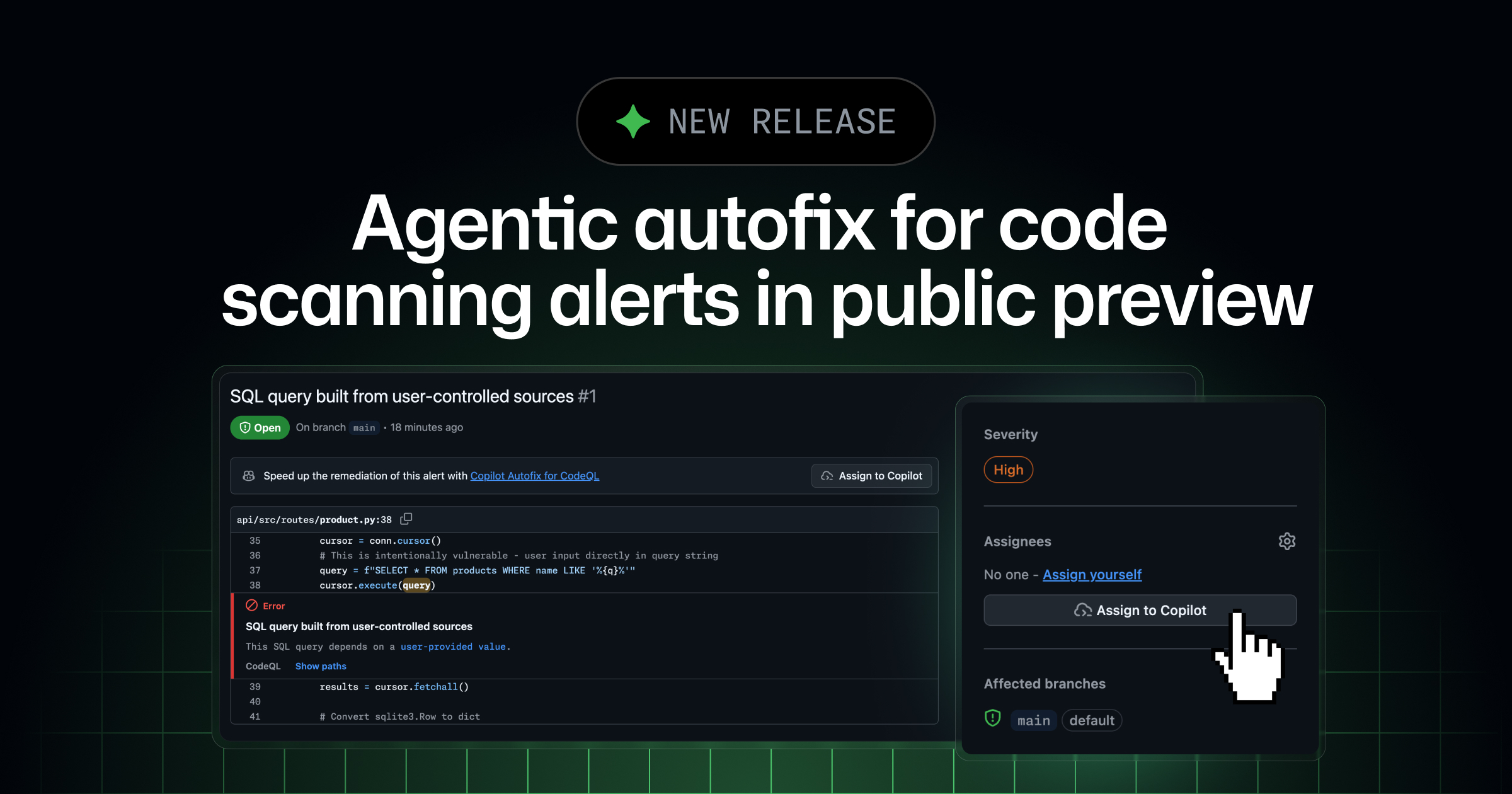
Agentic autofix for code scanning alerts in public preview - GitHub Changelog
Fix code scanning alerts faster with agentic autofix.
Agents Done Right: A Framework Vision for 2026
Agents choke on context, loop on failures, and dump walls of code for review. It's time to rethink the architecture.
AI Agents Push Humans Out of the Loop
AI agents pose significant risks as they are granted increasing autonomy. A commonly proposed solution is human oversight and keeping a ''human in the loop'', but this is not a simple solution: Not only do current approaches to AI agent design impede effective human oversight, but the cognitive capacities required for it are also themselves degraded by extended use of AI systems. This position paper argues that current approaches to the development and deployment of AI agent systems do not support effective human oversight -- they contribute to its degradation. To address this, a top priority in the advancement of AI agents should be supporting the situated goals and cognitive requirements of effective human oversight, treating the human needs of overseers at the same level of importance as AI agent capability. To put this idea into practice, we connect work on automation and human-computer interaction to AI agent processes, outlining design-level affordances and organizational protocols that (1) support overseers in exercising critical judgement and (2) counteract the skill atrophy that arises from extended use of automation. We urge developers and deployers to adopt these or similar approaches. Without explicit support for the cognitive demands of effective human-agent interaction, AI agent systems will continue to passively incentivize the degradation of the very human skills they rely on.
MI9: An Integrated Runtime Governance Framework for Agentic AI
Agentic AI systems capable of reasoning, planning, and executing actions present fundamentally distinct governance challenges compared to traditional AI models. Unlike conventional AI, these systems exhibit emergent and unexpected behaviors during runtime, introducing novel agent-related risks that cannot be fully anticipated through pre-deployment governance alone. To address this critical gap, we introduce MI9, the first fully integrated runtime governance framework designed specifically for safety and alignment of agentic AI systems. MI9 introduces real-time controls through six integrated components: agency-risk index, agent-semantic telemetry capture, continuous authorization monitoring, Finite-State-Machine (FSM)-based conformance engines, goal-conditioned drift detection, and graduated containment strategies. Operating transparently across heterogeneous agent architectures, MI9 enables the systematic, safe, and responsible deployment of agentic systems in production environments where conventional governance approaches fall short, providing the foundational infrastructure for safe agentic AI deployment at scale. Detailed analysis through a diverse set of scenarios demonstrates MI9's systematic coverage of governance challenges that existing approaches fail to address, establishing the technical foundation for comprehensive agentic AI oversight.
AI Code Reviews | CodeRabbit | Try for Free.
AI-first pull request reviewer with context-aware feedback, line-by-line code suggestions, and real-time chat.
Agent Skills
AI coding agents take the shortest path to done, which usually means skipping the specs, tests, and reviews that make software reliable at scale. Agent Skill...

Humans are Missing from AI Coding Agent Research
Recent progress in AI coding agent research has led to rapid improvements in agents' ability to autonomously perform complex software engineering tasks, from editing large codebases to executing long-horizon development workflows. As these systems make strides, however, the primary bottleneck to practical usefulness increasingly shifts away from pure task-solving capability, and toward challenges in how users communicate with, supervise, and trust agents. In this position paper, we argue for a reorientation from autonomous to human-centered coding agents: systems designed not only to complete tasks, but to collaborate effectively with people. We identify four core interaction-level dimensions that characterize the human-agent task-solving loop: task alignment, verifiability, steerability, and adaptability. Finally, we outline concrete research directions to advance these dimensions, including user-involved coding environments, comprehensive verification mechanisms, and principled measures of human-agent interaction quality.
Under the hood: Security architecture of GitHub Agentic Workflows
Learn how our threat model and security architecture help teams run agents safely in GitHub Actions.

Agentic test processes, LLM benchmarks, and other notes on agentic coding from Galapagos Island
I've been using AI fairly heavily since last November and the whole thing is a funny experience. An agent will do something that, if a human did it, you'd immediately fire them. My reaction, of course, is to act as if this is great and spin up a thousand agents so they can do even more of that.
Agentic AI Governance: Securing Autonomous AI Agents in Enterprise
When AI agents start making decisions, calling tools, and coordinating with other agents without waiting for human approval, the governance playbook most...

Microsoft offers devs a better way to control AI agent behavior | TechCrunch
The specification lets developer, compliance, and security teams define their own policies for agents to follow in portable policy files.

Git AI - Track AI Code all the way to production
Cross-agent observability from prompt to production. Track AI-generated code from Cursor, Claude Code, GitHub Copilot, Gemini, and more through the entire SDLC.
Agent Interaction Guidelines (AIG) – Linear Developers
Foundational principles and practices for designing agent interactions that integrate more naturally into human workflows.