


As web designers, we concern ourselves with how users move from page to page, but forget the needs of those whose purpose is to be still. Learn the design techniques that create a mental space for …
mmm.page — Your Corner of the Internet
Websites don't have to be so cookie cutter. Make a website that feels uniquely you in under five minutes.


Shift Browser | Drag and Drop. Build Your Custom Browser
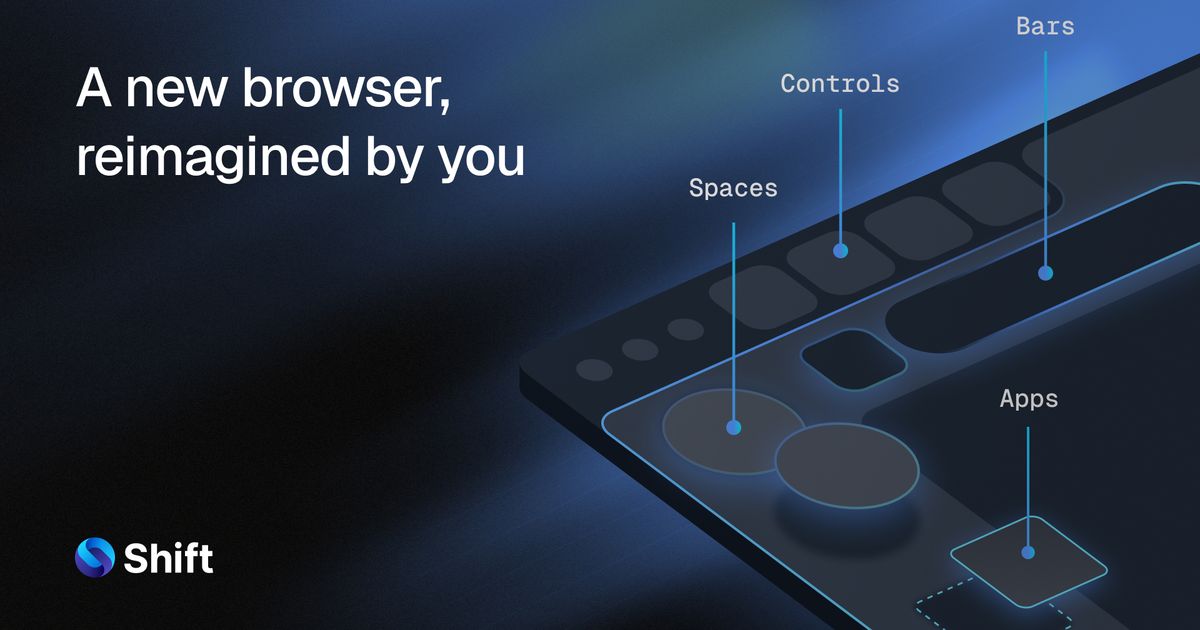
Build a custom layout for your browser. Create Spaces to separate work, hobbies, and passion projects. Integrate apps to make your browser capable of anything.
Navigation queues | Navigation cues
A web-essay written by Domitille Debret, designed and developed by F451 for The HTML Review Issue 04, Spring 2025.
swup — Versatile and extensible page transition library for server-rendered websites
Versatile and extensible page transition library for server-rendered websites

A few HTML tips – Mozilla Hacks - the Web developer blog
A while ago I wrote an article with some CSS tips, now it’s time to give some polish to our HTML! In this article I’ll share some tips and advice ...

I’m rewriting my book in HTML instead of Markdown. Here’s why. — josh.earth
When you think of a book you probably think of prose. A bunch of paragraphs with section headers and chapter names, and perhaps a few illustrations. In short, you are thinking of a paper book. When I first wrote the HTML Canvas Deep Dive I was thinking along those lines as well, but I also wanted interactivity. What’s the point of having an educational book on the web if we can’t push the envelope a bit.
dietrich (@burrito.space)
A lot of Peek is window manager-y fun things, but with web pages, eg this design detail: - global hotkey -> cmd bar, doesn't take app focus - opening a URL there *does* take app focus, but *only* for the new/matching window, doesn't bring the rest along You get the page, but it *feels* in-place.

Responsive Web Design
Designers have coveted print for its precision layouts, lamenting the varying user contexts on the web that compromise their designs. Ethan Marcotte advocates we shift our design thinking to approp…


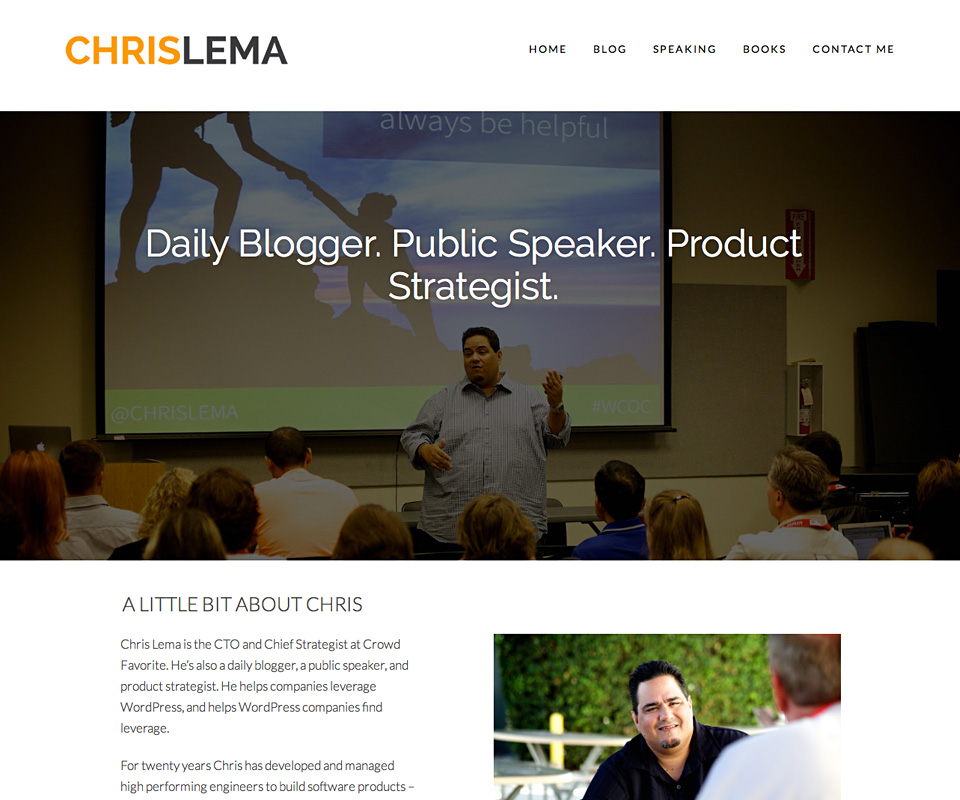
Create compelling About page content with these tips - The Theme Foundry – WordPress themes for publishers
Tips and tricks for creating About page content that meets branding objectives (and that readers love)
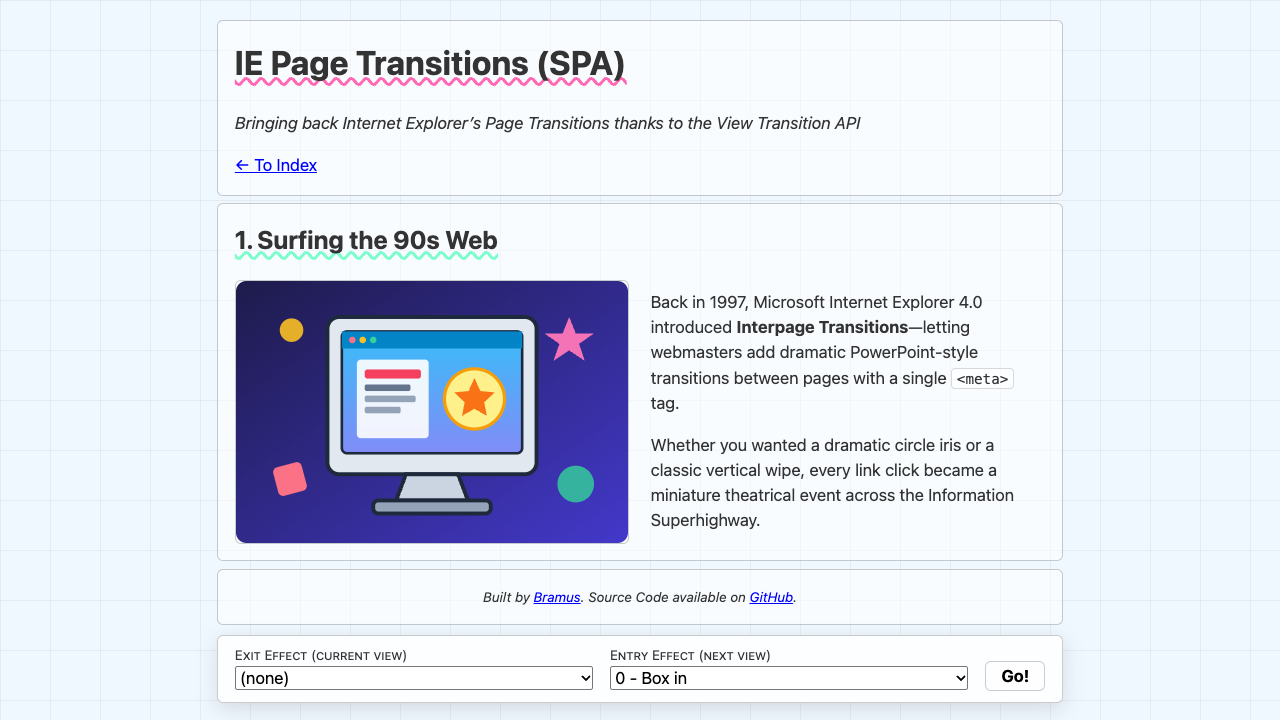
page-transitions.style — Bringing back Internet Explorer’s Page Transitions
Bringing back Internet Explorer’s Page Transitions thanks to the View Transition API
Object-Oriented UX
We know big, monolithic webpages won’t meet the needs of responsive sites and endless screens. But we’re often still quilting together design patterns and content modules, rather than truly thinkin…

How to create reading experiences that "go beyond information transmission and toward reader transformation.” Great paper by @blue-phia.bsky.social @lepidopterane.bsky.social @yijunliu.bsky.social Sarah Sterman @sh1m.bsky.social @maxkreminski.bsky.social arxiv.org/abs/2606.04308 >
Thinking about this more: If the goal is to attract more writers I feel like linking to a document doesn’t do much unless that page also encourages it Looking at an example if I’m a first time user, I have no way of knowing that this page is on a Writing platform.

Atproto for small makers
queergeometry.pckt.blog

