


Hate has a significant advantage on social networks: its ability to go viral. The case of Luigi Mangione, the alleged murderer, urgently calls for a rethink of digital commons.
The Case for a Public Social Media Platform - JSTOR Daily
Artist and writer Joshua Citarella explores why corporate platforms corrode democracy—and what a postal-service-style digital commons could do differently.
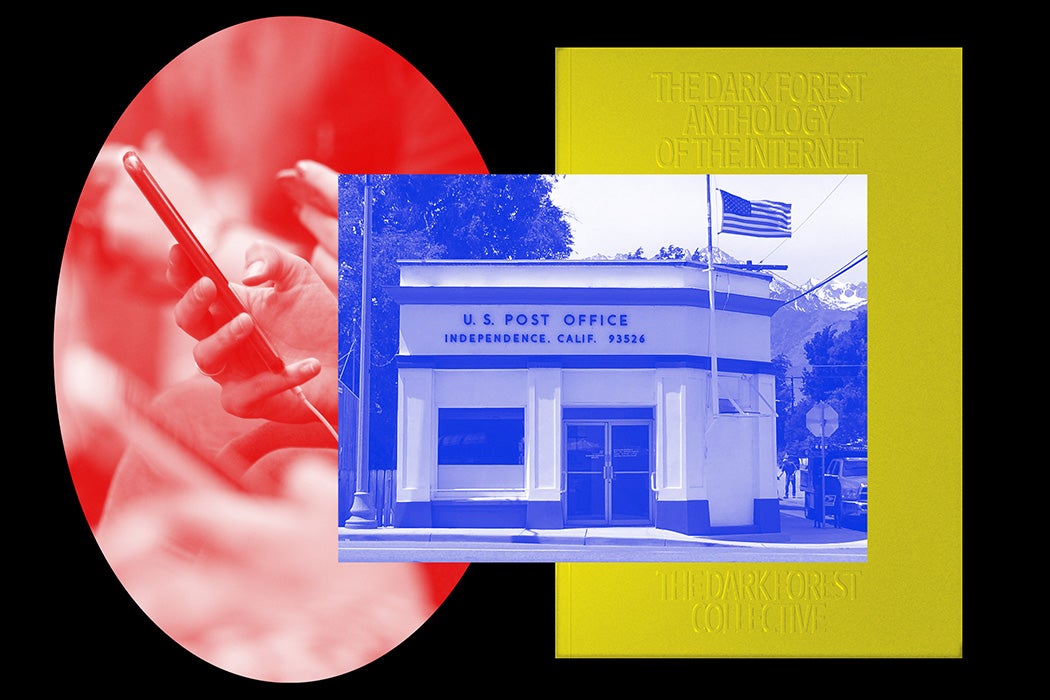
Digital Commons: Our Shared Right to Knowledge and Culture
As the volume of cultural and scientific works produced and available on the internet continues to expand, the question of freedom to consult and use this immense ‘digital commons’ is becoming a critical one, particularly as cutting off access could entail serious consequences for education, cultural exchange, and even the health of European citizens.

AI-powered hate content is on the rise, experts say | CBC News
Experts say that artificial intelligence technology is allowing for a rapid increase in the amount of hateful content and misinformation online.

Virality | The Paper Pilot
The Paper Pilot's digital garden of thoughts on philosophy, politics, and sociology
Bluesky COO Rose Wang On Building a Better Social Network
Is Digital Campaigning Dead?
The Commons is an online library for the change makers of the world and for those interested in social change, activism, organising, advocacy and justice.
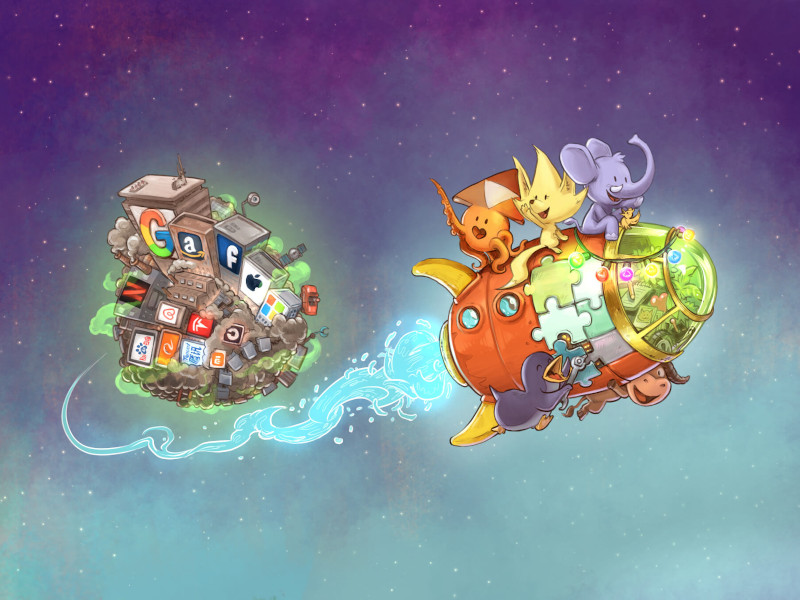
De-google-ify Internet - Main Page
The web giants centralize our digital lives in exchange for their services The Free Software community offers alternative ethical services The Framasoft network intends to prove itby hosting them
Free Our Feeds
Social media is broken: controlled by a handful of billionaires who shape what people see, say, and believe. These platforms profit from division, exploit user data, and lock people into closed systems.
The Algorithm, Apparently Chronological
A German court has explicitly named Mastodon and Bluesky as positive examples of social networks that could retain hosting protection. It gets Bluesky’s feeds wrong, but its reasoning about user control might be more useful than it realises.

The Internet is for Extremism
How MrBeast explains why everything online is going insane
RIP social media. What comes next is messy.
As social media splinters, how can we keep the new online spaces from devolving into toxic pits of despair?
Pirate Social — A Distributed Social Network
Pirate Social is a distributed social network connecting Bluesky, RSS, and YouTube, hosted on your own free website with integrated CMS.
Medsky
Decentralized social media built for community power, culture, and collective freedom.
Digital Social Norm Enforcement: Online Firestorms in Social Media
Actors of public interest today have to fear the adverse impact that stems from social media platforms. Any controversial behavior may promptly trigger temporal, but potentially devastating storms of emotional and aggressive outrage, so called online firestorms. Popular targets of online firestorms are companies, politicians, celebrities, media, academics and many more. This article introduces social norm theory to understand online aggression in a social-political online setting, challenging the popular assumption that online anonymity is one of the principle factors that promotes aggression. We underpin this social norm view by analyzing a major social media platform concerned with public affairs over a period of three years entailing 532,197 comments on 1,612 online petitions. Results show that in the context of online firestorms, non-anonymous individuals are more aggressive compared to anonymous individuals. This effect is reinforced if selective incentives are present and if aggressors are intrinsically motivated.
Digital Social Norm Enforcement: Online Firestorms in Social Media
Actors of public interest today have to fear the adverse impact that stems from social media platforms. Any controversial behavior may promptly trigger temporal, but potentially devastating storms of emotional and aggressive outrage, so called online firestorms. Popular targets of online firestorms are companies, politicians, celebrities, media, academics and many more. This article introduces social norm theory to understand online aggression in a social-political online setting, challenging the popular assumption that online anonymity is one of the principle factors that promotes aggression. We underpin this social norm view by analyzing a major social media platform concerned with public affairs over a period of three years entailing 532,197 comments on 1,612 online petitions. Results show that in the context of online firestorms, non-anonymous individuals are more aggressive compared to anonymous individuals. This effect is reinforced if selective incentives are present and if aggressors are intrinsically motivated.
NEW: In one of the most horrifying stories I've ever reported, I found that Facebook is hosting huge quantities of AI-generated videos of violent child abuse -- kids being beaten, burned, and far more But the genuinely shocking thing was how little Meta seems to care futurism.com/artificial-intelligence/faceb…
