

I wanted to write this as a sequel to "What is a property?" where I would talk about how Property-Based Testing libraries generate random structures, don't worry, I'll still do that! But I realized that without talking about randomness in computers, the writing would be incomplete. So the first part of this article will go into a core problem that we consider "solved" in PBT, which is designing good random number generators, with the latter part talking about implementing complex random data generators on top of such RNGs.
Random Object Creativity Technique — Think Jar Collective
Michael Michalko shares a useful technique for generating relevant creative ideas using random words to inspire creativity.

Harnessing Chaos: How the Brain Turns Randomness into Robust Memory | Columbia Engineering
AI systems reveal how random fluctuations in brain activity may help stabilize memories
Let’s Use the Emergent CSS random() Function in all the Browsers | CSS-Tricks
The journey to create a polyfill for the upcoming CSS random() function that works in all browsers.

Vinyl Mockup Generator
Generate mockup images of your vinyl records, labels, and jackets using a variety of vinyl types, styles, and colors. Explore unique variants with Vinyl Mockup.

Random Hash Generator - BenNadel.com
The following hashes are generated from 300-bytes of random input using the "sha1prng" algorithm.
Against theory-motivated experimentation: Can random experimental choice lead to better theories?
Scientists must choose which among many experiments to perform. We study the epistemic success of experimental choice strategies proposed by philosophers of science or executed by scientists themselves. We develop a multi-agent model of the scientific process that jointly formalizes its core aspects: active experimentation, theorizing, and social learning. We find that agents who choose new experiments at random develop the most informative and predictive theories of the world. The agents aiming to confirm, falsify theories, or resolve theoretical disagreements end up with an illusion of epistemic success: they develop promising accounts for the data they collected, while misrepresenting the ground truth that they intended to learn about. Agents experimenting in these theory-motivated ways acquire less diverse or less representative samples from the ground truth that also turn out to be easier to account for. Random data collection, on the other hand, combines virtues of diverse and representative sampling from a target scientific domain which enables cumulative development of the successful theoretical accounts of it. We suggest that randomization, already a gold standard within experiments, is also beneficial at the level of experiments themselves.

RNGdle
A daily random number game. Roll your number, collect badges, and compete with friends.
Essential Randomness — Ms Boba's Emporium of Weirdness
Ms Boba's experimental website. Open for business while construction is ongoing.

Keynote: Reproducibility and replicability of computer simulations | Canal U
Since the early days of the reproducibility crisis, much progress has been made in understanding and improving computational reproducibility and replicability (R and R)...

Prof. Lee Cronin on Twitter / X
It is easy to see that biology does things that cannot be computed in advanced because the future is not controlled by statistics, it is controlled by creative actions. This means today’s statistically-driven GenAI is fundamentally unintelligent.— Prof. Lee Cronin (@leecronin) March 28, 2026
Rabrg/artificial-life
A simple (300 lines of code) reproduction of Computational Life: How Well-formed, Self-replicating Programs Emerge from Simple Interaction
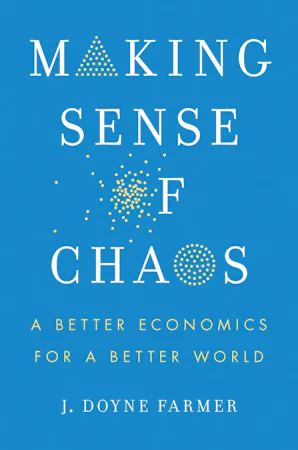
Making Sense of Chaos
From a pioneer in the field of complexity science and chaos theory, a plan for solving the world’s most pressing problems “Farmer convincingly argues t...
Cryptographic Nature
I consider the many ways in which evolved information-flows are restricted and metabolic resources protected and hidden -- the thesis of living phenomena as evolutionary cryptosystems. I present the information theory of secrecy systems and discuss mechanisms acquired by evolved lineages that encrypt sensitive heritable information with random keys. I explore the idea that complexity science is a cryptographic discipline as "frozen accidents", or various forms of regularized randomness, historically encrypt adaptive dynamics.

Choosing properties for property-based testing
Or, I want to use PBT, but I can never think of any properties to use
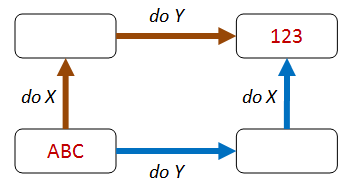
Weird Machines HQ
The expression "weird machines" was first used in the RSS 2009 talk. It referred to state-of-the-art exploitation as finding and programming an execution model (a machine, such as a virtual automaton) within the target via crafted inputs. It was soon extended to other methods of reliably or probabilistically influencing the target's state. A compressed version of that original talk was given at the Chaos Computing Congress 27c3 [slides], [video].
Computational reproducibility

The why and how of making scientific computations reproducible
Home Page - Software Heritage
GNU Guix transactional package manager and distribution — GNU Guix
Keynote: Reproducibility and replicability of computer simulations | Canal U

Reproducible research: methodological principles for transparent…
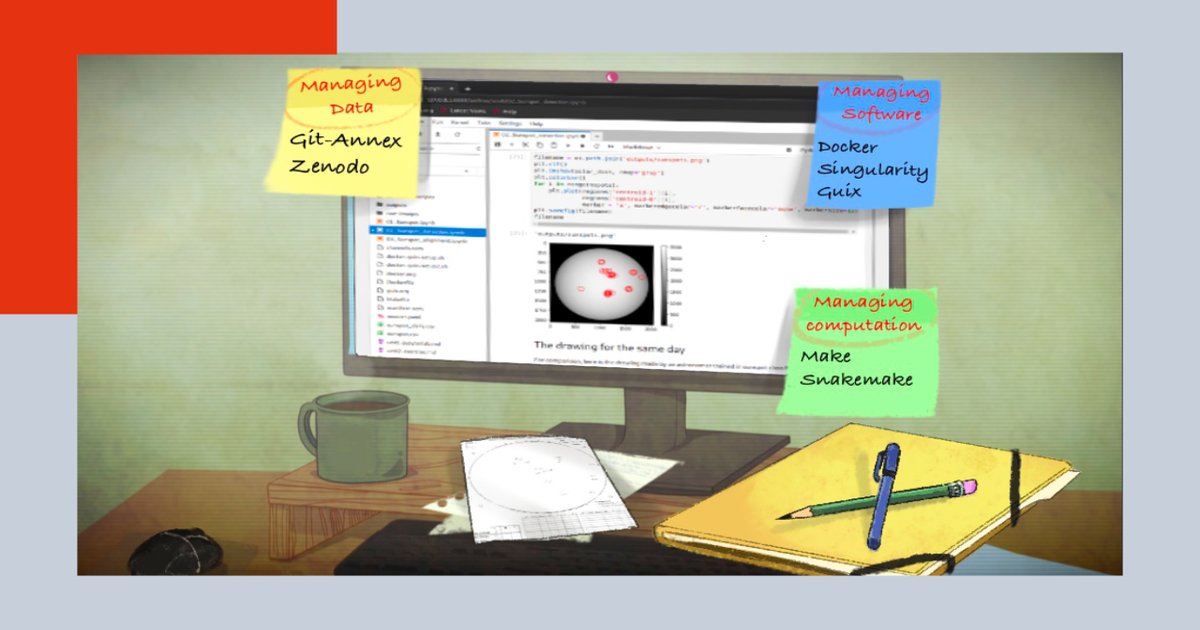
Reproducible Research II: Practices and tools for managing compu…