A counterintuitive conclusion
Kroger’s Surveillance Pricing Harms Consumers and Raises Prices, With or Without Facial Recognition
Every time you step into a grocery store, you step into a machinery of data that tracks, analyzes, shares, and influences your shopping behavior. Based on shopping history and data shared from data brokers—including internet browsing history and online purchases—grocery stores may infer your age, gender, race, economic status, family makeup, health conditions, or other lifestyle characteristics.

Cheaper Groceries | Platform | The Australian Greens
Everyone should be able to afford healthy food, without the profit-driven price tag.

Genetic Determinants of Macronutrient Intake Are Associated With Specific Food Intake in Youth: A Cohort Study Across Childhood and Adolescence
OBJECTIVE. We examined associations of polygenic scores (PS) for macronutrient intake with food intake and cardiometabolic outcomes during childhood and ad

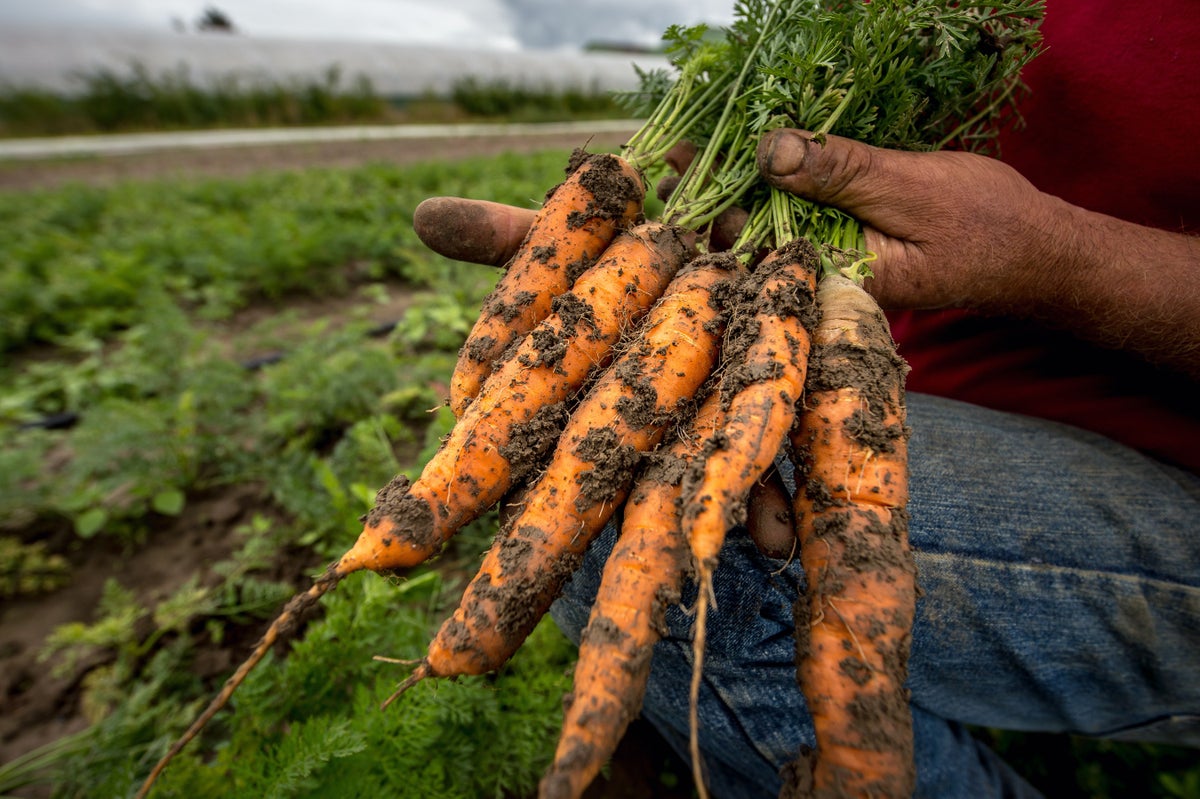
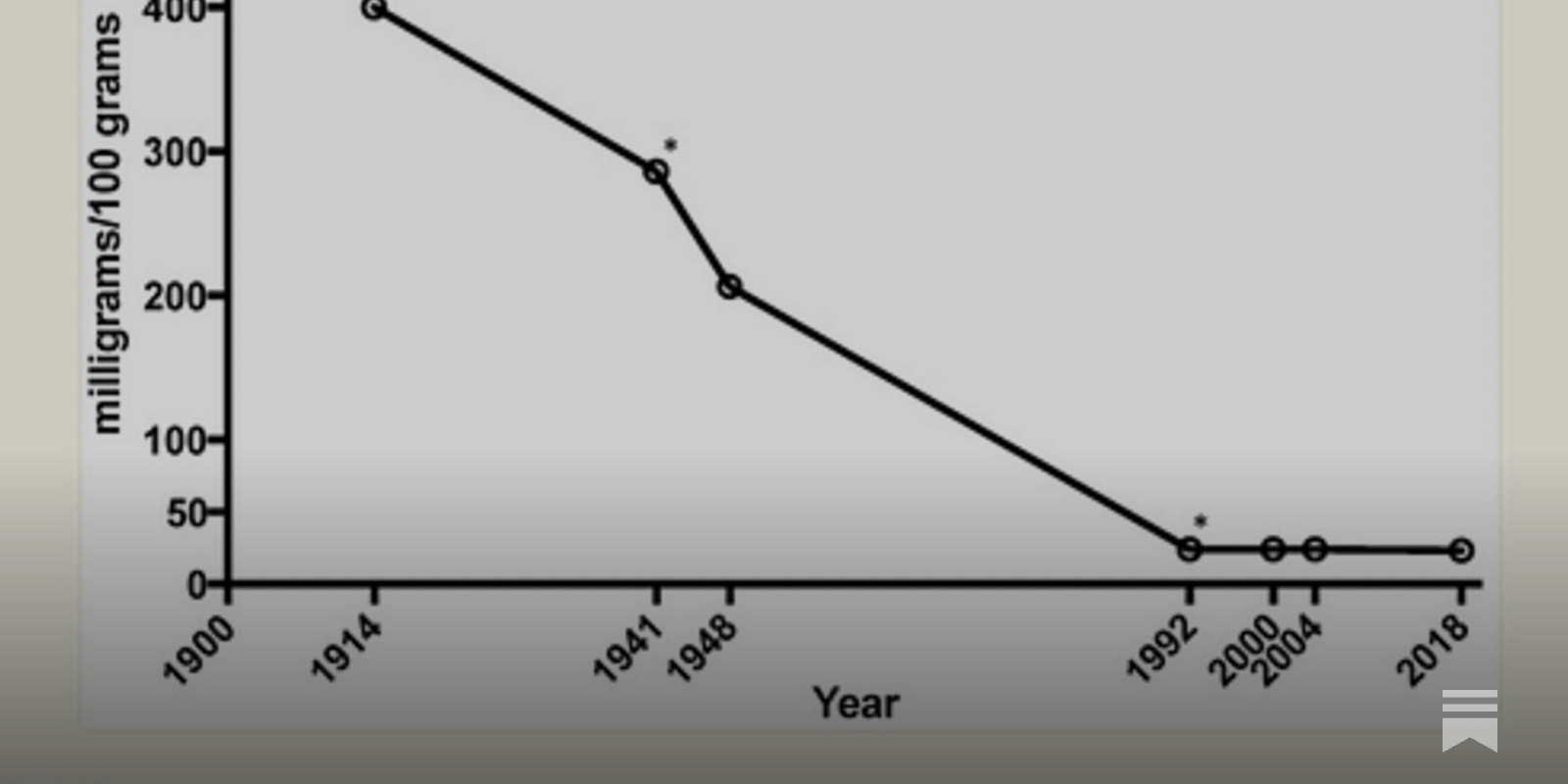
Fruits and vegetables are less nutritious than they used to be
Mounting evidence shows that many of today’s whole foods aren't as packed with vitamins and nutrients as they were 70 years ago, potentially putting people's health at risk.

Dietary Habits Related to Food Packaging and Population Exposure to PFASs
Abstract Background: Per- and polyfluoroalkyl substances (PFASs) are common industrial and consumer product chemicals with widespread human exposures that have been linked to adverse health effects. PFASs are commonly detected in foods and food-contact materials (FCMs), including fast food packaging and microwave popcorn bags. Objectives: Our goal was to investigate associations between serum PFASs and consumption of restaurant food and popcorn in a representative sample of Americans. Methods: We analyzed 2003–2014 serum PFAS and dietary recall data from the National Health and Nutrition Examination Survey (NHANES). We used multivariable linear regressions to investigate relationships between consumption of fast food, restaurant food, food eaten at home, and microwave popcorn and serum levels of perfluorooctanoic acid (PFOA), perfluorononanoic acid (PFNA), perfluorodecanoic acid (PFDA), perfluorohexanesulfonic acid (PFHxS), and perfluorooctanesulfonic acid (PFOS). Results: Calories of food eaten at home in the past 24 h had significant inverse associations with serum levels of all five PFASs; these associations were stronger in women. Consumption of meals from fast food/pizza restaurants and other restaurants was generally associated with higher serum PFAS concentrations, based on 24-h and 7-d recall, with limited statistical significance. Consumption of popcorn was associated with significantly higher serum levels of PFOA, PFNA, PFDA, and PFOS, based on 24-h and 12-month recall, up to a 63% (95% CI: 34, 99) increase in PFDA among those who ate popcorn daily over the last 12 months. Conclusions: Associations between serum PFAS and popcorn consumption may be a consequence of PFAS migration from microwave popcorn bags. Inverse associations between serum PFAS and food eaten at home—primarily from grocery stores—is consistent with less contact between home-prepared food and FCMs, some of which contain PFASs. The potential for FCMs to contribute to PFAS exposure, coupled with concerns about toxicity and persistence, support the use of alternatives to PFASs in FCMs. https://doi.org/10.1289/EHP4092
Nut intake and hyperuricemia risk in young adults
Objective:The relationship between dietary nut intake and hyperuricemia risk remains unclear. The aim of this study was to investigate the relationship between different nut intake and hyperuricemia risk with a cross-sectional study.Design:A semi-quantitative FFQ was adopted to collect dietary information. Biochemical and anthropometric parameters were measured by standard methods. Multivariate-adjusted logistic regression models were implemented to analyse the relationship between individual nut intake and hyperuricemia risk.Setting:Qingdao University in Shandong Province, China.Participants:During 2018–2019, a total of 14 056 undergraduates (6862 males and 7194 females) aged 15–25 years participated in the study.Results:After adjusting for multiple confounding factors, compared with the lowest quartile, the highest quartile intakes of pine nut (95 % CI (0·51, 0·98)) was significantly associated with 29 % reduction in hyperuricemia risk, the highest quartile intake of walnut (OR = 0·78; 95 % CI (0·58, 1·05)) was marginally negatively associated with hyperuricemia risk.Conclusions:The present study showed that the relationships between intakes of different nuts and hyperuricemia risk were different. Increased dietary intakes of walnut and pine nut are negatively associated with the hyperuricemia.
How Are SNAP Benefits Spent? Evidence from a Retail Panel
We use a novel retail panel with detailed transaction records to study the effect of the Supplemental Nutrition Assistance Program (SNAP) on house-hold spending. We use administrative data to motivate three approaches to causal inference. The marginal propensity to consume SNAP-eligible food (MPCF) out of SNAP benefits is 0.5 to 0.6. The MPCF out of cash is much smaller. These patterns obtain even for households for whom SNAP benefits are economically equivalent to cash because their benefits are below their food spending. Using a semiparametric framework, we reject the hypothesis that households respect the fungibility of money. A model with mental accounting can match the facts.
Association Among Dietary Supplement Use, Nutrient Intake, and Mortality Among U.S. Adults: A Cohort Study
Jim Prosser on Twitter / X
Ask: "I spend $250 a week on groceries at Safeway. Can you get that under $200 without changing what we eat?"Agent: Reviews receipt photos, compares local prices and coupons, finds cheaper equivalents, builds a shopping cart, and tracks weekly savings.— Jim Prosser (@jimprosser) October 8, 2026
Inside the food industry: the surprising truth about what you eat
Think you eat only healthy, unprocessed foods? Think again. Joanna Blythman went undercover and discovered that even your fruit salad is not what it seems

Ultra-processed foods: the 19 things everyone needs to know
They make up 57% of the UK diet – and the risks are becoming ever more evident. Here is how to recognise UPFs and find healthier alternatives

Enough with 'local' and 'organic'. We'll begin to eat well when we farm well | James Rebanks
We need to know how and where our food is grown and thereby take more responsibility for the planet

The Hunger Gap
A gulf in public understanding prevents us from seeing how and why our food supply is at risk.


How Activism Has Supported A New Wave Of Black-Led Food Co-ops - PopularResistance.Org
Ask a person on the street to describe a food co-op, and the image that often springs to mind is, as one Boston Globe reporter succinctly put it, a “crunchy granola” store “where largely white, affluent customers buy organic grains from bulk bins.” This image sometimes has been unwittingly reinforced by advocates themselves. A 2011 trade article, titled “Location, Location, Location,” advised readers seeking to develop new food co-ops to site them in communities where residents were “better educated (college or graduate school), with incomes that are slightly above average, with occupation types that are more white-collar and professional in nature.”
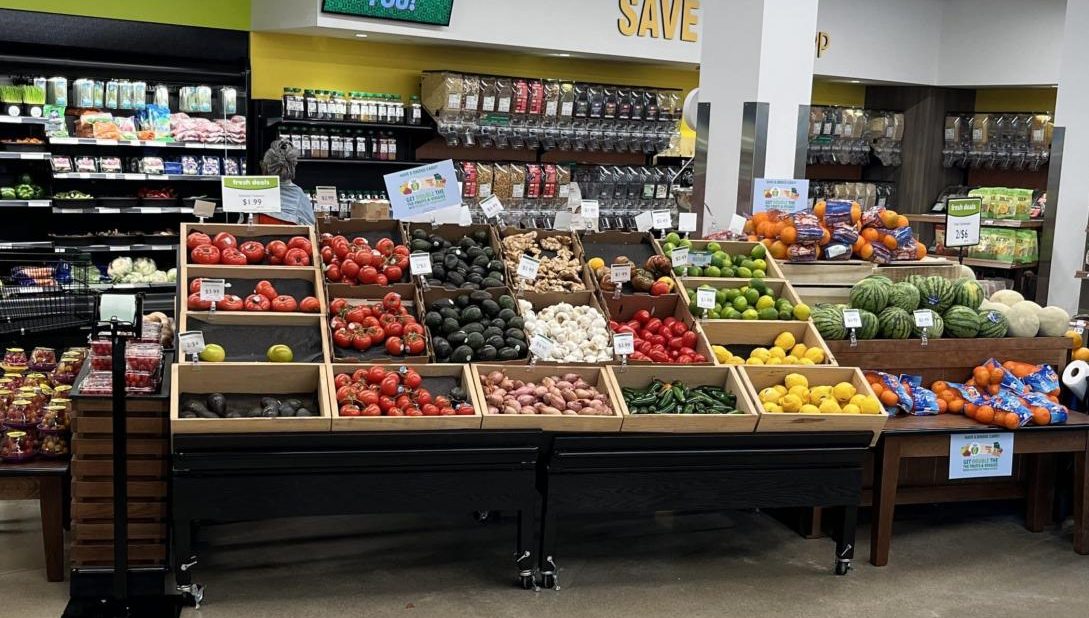
Dirt Poor: Have Fruits and Vegetables Become Less Nutritious?
Because of soil depletion, crops grown decades ago were much richer in vitamins and minerals than the varieties most of us get today