


Developers love classes. They pile on custom classes everywhere, but HTML already counts with many attributes that do a better job. So why not use them? This article goes through some of the most common native attributes that can be used instead of a class. :: Blog post at Alvaro Montoro's Personal Website.
Useful patterns for building HTML tools
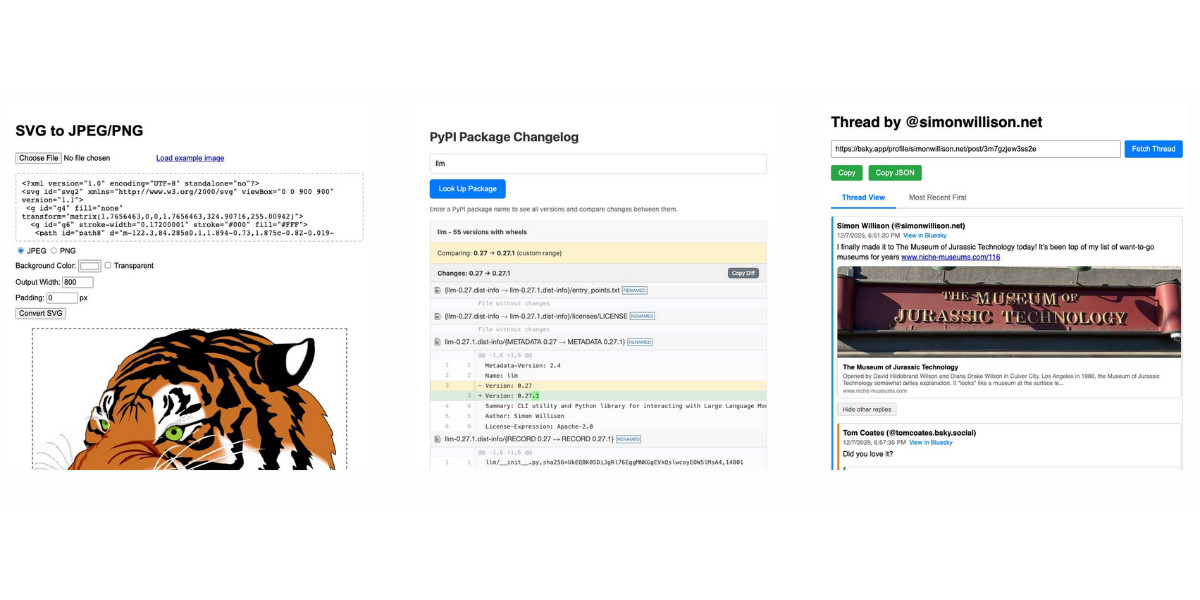
I’ve started using the term HTML tools to refer to HTML applications that I’ve been building which combine HTML, JavaScript, and CSS in a single file and use them to …

RFC: Plan for custom element attributes/properties in React 19 · Issue #11347 · facebook/react
This is meant to address #7249. The doc outlines the pros and cons of various approaches React could use to handle attributes and properties on custom elements. TOC/Summary Background Proposals Opt...
Pseudo-classes - CSS | MDN
A CSS pseudo-class is a keyword added to a selector that lets you select elements based on information that lies outside of the document tree, such as a specific state of the selected element(s). For example, the pseudo-class :hover can be used to style a button when a user's pointer hovers over it.

Styling with utility classes - Core concepts
Building complex components from a constrained set of primitive utilities.
My HTML boilerplate in 2026 - Manuel Matuzović
Every element I use for the basic structure of a HTML document, with explanations why.

My HTML boilerplate in 2026 - Manuel Matuzović
Every element I use for the basic structure of a HTML document, with explanations why.
Reasonable.html
Reasonable.html is a single HTML document that contains a reasonably complete set of example HTML elements.
7 CSS Tricks That Actually Have Good Browser Support
Alex Russell | Web Components and Model Driven Views | Fronteers 2011
There's a lot of tension between today's markup and the semantics we're trying to express in our apps. HTML5 adds a few new types to help describe common cases, but what about when there's no allegory in markup for what you're building? What we need now is infrastructure, not guilt about being "non-semantic". This talk explores new standards-track work in WebKit that's going to enable say-what-you-mean development in completely new ways.

A Complete Introduction to Web Components
Web Components are a standard way to create reusable and modular HTML elements without using a JavaScript framework.


Web Components Are Not the Future
A few years ago I wrote an article suggesting that Web Components might not be the most beneficial...

Hey #atprotodev; should we make a convention for annotating HTML elements with the AT uris they’re built with? (So that, say, a browser extension could offer links to @pds.ls) Something like this? <li typeof="schema:Thing" resource="at://did:web:example.com/org.example.lexicon/rkey">
If you're an #atprotodev I'd love your thoughts on this short proposal. I think we'd all benefit from a way to tag our HTML to reference the at:// uris they're derived from! @popfeed.social, @bookhive.buzz, @sifa.id, @leaflet.pub, @pckt.blog, @offprint.app and many more — penny for your thoughts?

Atproto markup for HTML
byjp.leaflet.pubi agree that is not an easy lift to add html tags to every page especially if you don’t have a static site generator or similar automated workflows. but to prevent showing spam, impersonation and the use of “verification” arbiters i think it’s a reasonable ask. if we want decentralized

dan
right, my question is specifically "why does each page need to verify this". i would assume that confirming the site's verification (via well-known or otherwise) means we trust the records and don't need to check HTML. i'm asking because i think modifying HTML is still a big hurdle

