

Check if your browser has a unique fingerprint, how identifiable you are on the Internet
Am I Unique ?
Check if your browser has a unique fingerprint, how identifiable you are on the Internet
Browser Fingerprinting: An Introduction and the Challenges Ahead | Tor Project
In the past few years, a technique called browser fingerprinting has received a lot of attention because of the risks it can pose to privacy. What is it? How is it used? What is Tor Browser doing against it? In this blog post, I’m here to answer these questions.
Here’s What Your Browser is Telling Everyone About You
Your browser sends a lot of information with each website you visit. That can be used to track you across the internet.

Fingerprints are the new cookies
Now open it on your phone or some other device and your nickname will be different and just as consistent.
taken.
A web page that tells you what your browser gave away the moment you arrived. No login, no form, no permission. Most pages do this. None of them tell you.
Checking your browser - reCAPTCHA
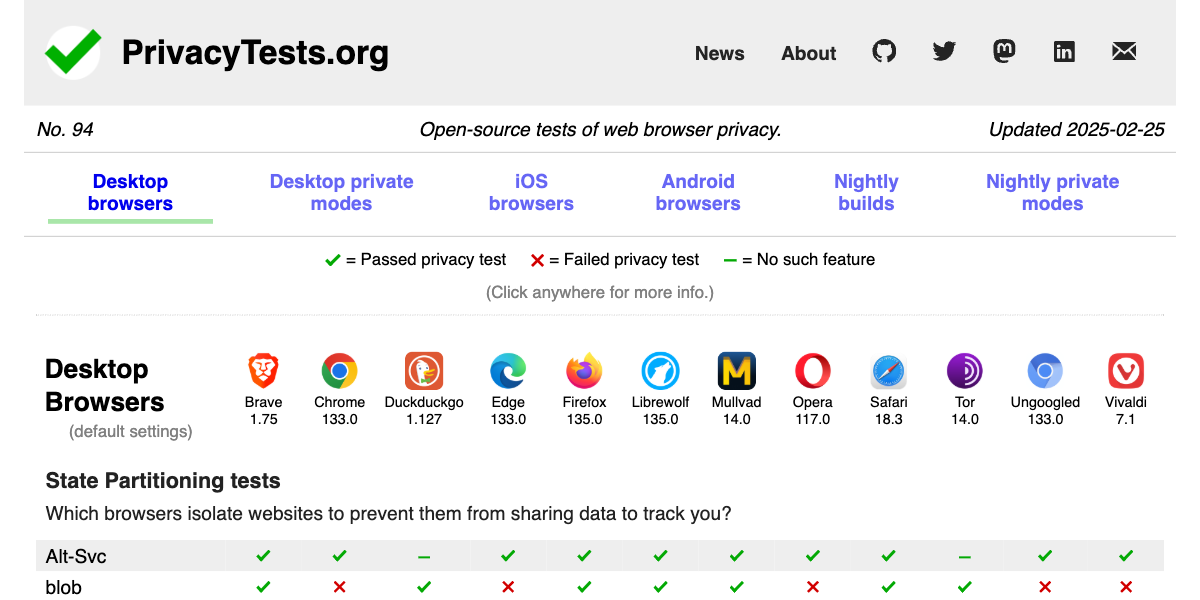
Which browsers are best for privacy?
An open-source privacy audit of popular web browsers.
The web should remain anonymous by default | The Mozilla Blog
The unique architecture of the web enables a much higher degree of user privacy than exists on other platforms. Many factors contribute to this, but an ess

IIW – Internet Identity Workshop
The Internet Identity Workshop — where the identity community meets to discuss and advance digital identity.

What your browser supports
Live capability check, performed in your browser. "You" is your current engine. Click any capability for the MDN reference.
I Verified My LinkedIn Identity. Here's What I Actually Handed Over.
I wanted a blue badge on LinkedIn. To get it, I gave a US company my passport, my face, and my biometric data. Then I read the fine print.
What is Digital Identity?
Who you are is hardly defined by your drivers license or passport. And yet, this is often how we understand ourselves and others.
Petname Tool: Enabling web site recognition using the existing SSL infrastructure
The existing WWW infrastructure already provides for authentication of web sites. Unfortunately, the advent of phishing has shown that the mainstream user interface to web site authentication is not meaningful to users. This paper proposes a new browser user interface widget, the petname tool, that integrates meaningful authentication information into the browsing workflow.
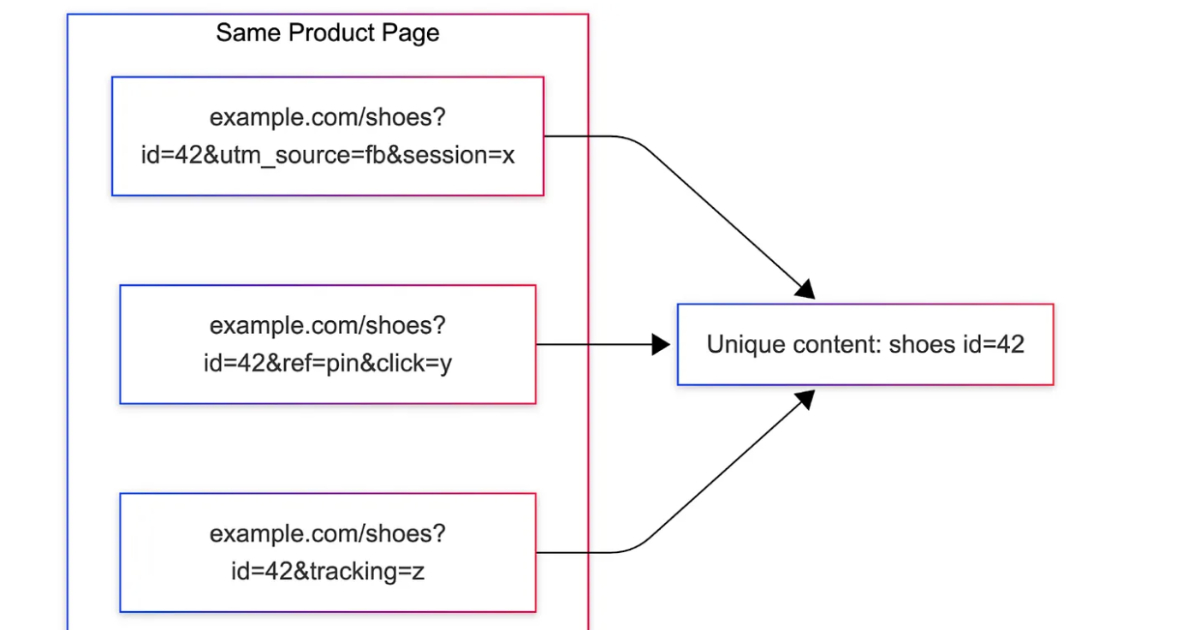
Pinterest Uses Content Fingerprints for URL Deduplication across Millions of Domains
Pinterest introduced MIQPS, a URL normalization system that identifies which query parameters affect page identity using rendered content fingerprints. It reduces duplicate processing across millions of domains by replacing rule-based approaches with offline analysis, anomaly detection, and runtime parameter maps, improving ingestion efficiency and scalability in large-scale content pipelines.
have you ever done an age/ID biometric verification online? congrats, you're fucked. your biometric data is now permanently circulating the dark web with no way to stop it

your face just got leaked. permanently.
youtu.be
♍ Bee 🐝
I'm upset about age verification stuff today and might do a thread or write up later Just catching up with the mercor data breach and fml. fuck all of our lives. Especially re: the doxxing of sex workers. jesus fucking christ