


PFAS was found in seven of eight samples bought at US stores, with organic kale containing higher levels of the toxic compounds
How Well Do Product Labels Indicate the Presence of PFAS in Consumer Items Used by Children and Adolescents?
Abstract. PFAS are persistent and toxic chemicals used in many commercial and industrial applications that are often added to consumer products, including
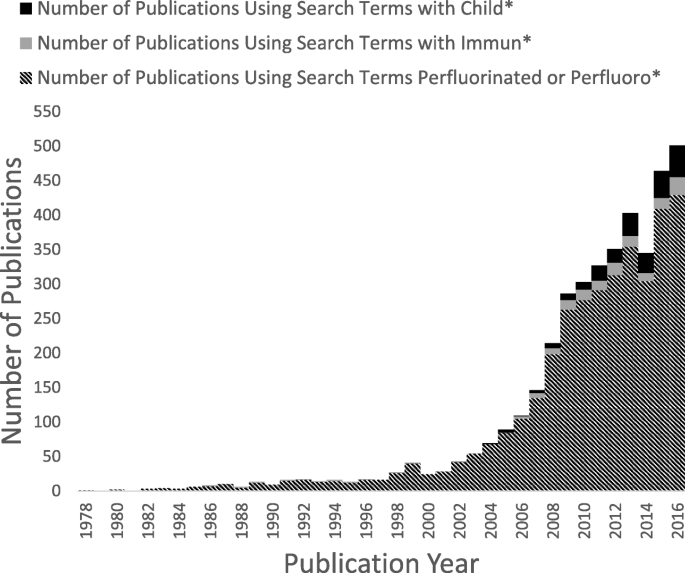
Delayed discovery, dissemination, and decisions on intervention in environmental health: a case study on immunotoxicity of perfluorinated alkylate substances
Identification and characterization of environmental hazards that impact human health must rely on the best possible science to inform and inspire appropriate public health intervention. The perfluorinated alkylate substances (PFASs) are persistent emerging pollutants that are now being recognized as important human health hazards. Although the PFASs have been produced for over 60 years, academic research on environmental health aspects has appeared only in the most recent 10 years or so. In the meantime, these persistent chemicals accumulated in the global environment. Some early studies e.g., on population exposures and toxicity, were not released to the public until after year 2000. Still, the first PFAS risk assessments ignored these reports and relied on scant journal publications. The first guidelines and legal limits for PFAS exposure, e.g., from drinking water, were proposed 10 years ago. They have decreased substantially since then, but remain higher than suggested by data on human adverse effects, especially on the immune system, that occur at background exposure levels. By now, the best-known PFASs are being phased out, and related PFASs are being introduced as substitutes. Given the substantial delays in discovery of PFAS toxicity, in dissemination of findings, and in regulatory decisions, PFAS substitutes and other persistent industrial chemicals should be subjected to prior scrutiny before widespread usage.
Scientific Basis for Managing PFAS as a Chemical Class
Abstract This commentary presents a scientific basis for managing as one chemical class the thousands of chemicals known as PFAS (per- and polyfluoroalkyl substances). The class includes perfluoroalkyl acids, perfluoroalkylether acids, and their precursors; fluoropolymers and perfluoropolyethers; and other PFAS. The basis for the class approach is presented in relation to their physicochemical, environmental, and toxicological properties. Specifically, the high persistence, accumulation potential, and/or hazards (known and potential) of PFAS studied to date warrant treating all PFAS as a single class. Examples are provided of how some PFAS are being regulated and how some businesses are avoiding all PFAS in their products and purchasing decisions. We conclude with options for how governments and industry can apply the class-based approach, emphasizing the importance of eliminating non-essential uses of PFAS, and further developing safer alternatives and methods to remove existing PFAS from the environment.
Addressing Urgent Questions for PFAS in the 21st Century
Abstract. Despite decades of research on per- and polyfluoroalkyl substances (PFAS), fundamental obstacles remain to addressing worldwide contamination by

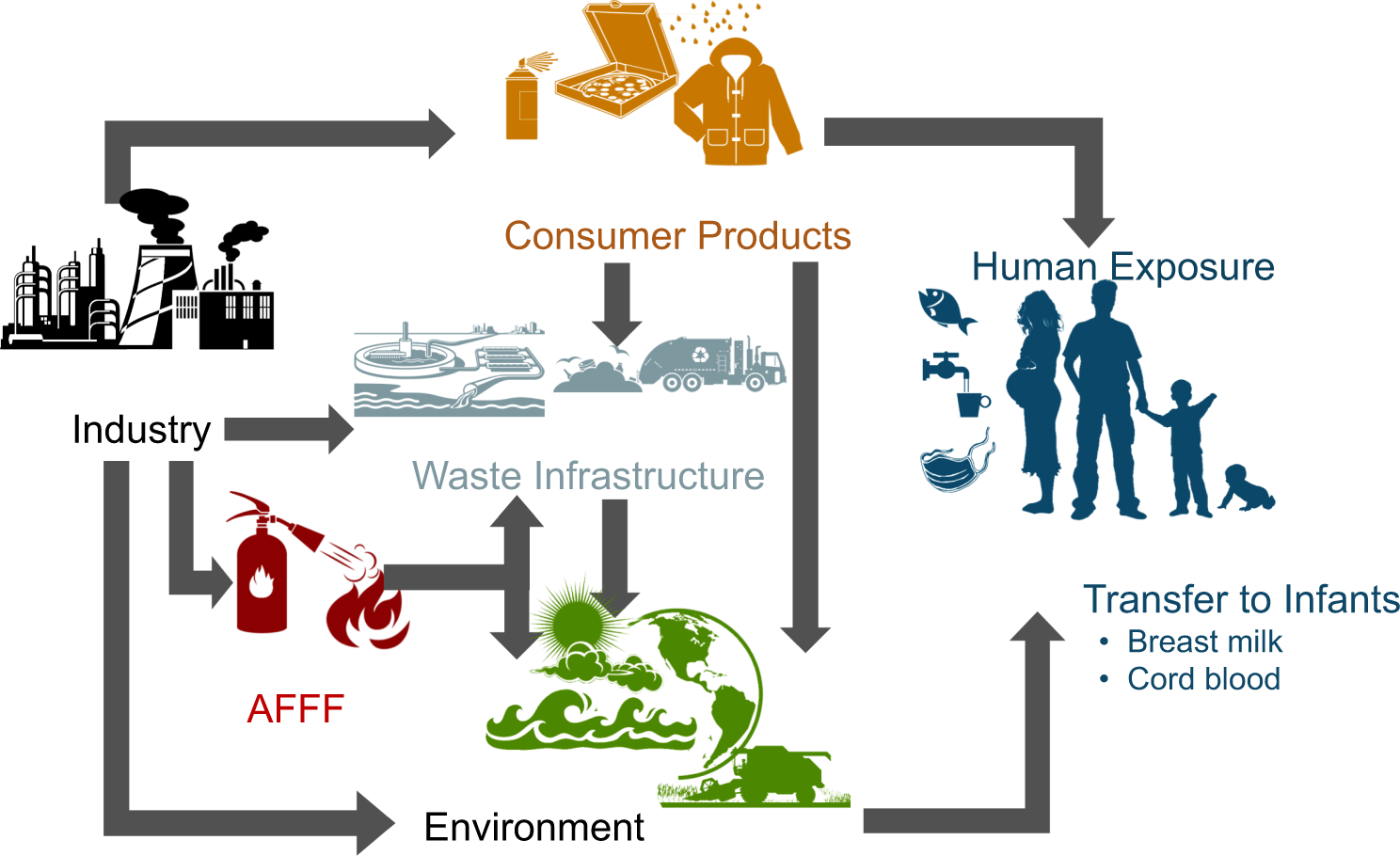
A review of the pathways of human exposure to poly- and perfluoroalkyl substances (PFASs) and present understanding of health effects
Here, we review present understanding of sources and trends in human exposure to poly- and perfluoroalkyl substances (PFASs) and epidemiologic evidence for impacts on cancer, immune function, metabolic outcomes, and neurodevelopment. More than 4000 PFASs have been manufactured by humans and hundreds have been detected in environmental samples. Direct exposures due to use in products can be quickly phased out by shifts in chemical production but exposures driven by PFAS accumulation in the ocean and marine food chains and contamination of groundwater persist over long timescales. Serum concentrations of legacy PFASs in humans are declining globally but total exposures to newer PFASs and precursor compounds have not been well characterized. Human exposures to legacy PFASs from seafood and drinking water are stable or increasing in many regions, suggesting observed declines reflect phase-outs in legacy PFAS use in consumer products. Many regions globally are continuing to discover PFAS contaminated sites from aqueous film forming foam (AFFF) use, particularly next to airports and military bases. Exposures from food packaging and indoor environments are uncertain due to a rapidly changing chemical landscape where legacy PFASs have been replaced by diverse precursors and custom molecules that are difficult to detect. Multiple studies find significant associations between PFAS exposure and adverse immune outcomes in children. Dyslipidemia is the strongest metabolic outcome associated with PFAS exposure. Evidence for cancer is limited to manufacturing locations with extremely high exposures and insufficient data are available to characterize impacts of PFAS exposures on neurodevelopment. Preliminary evidence suggests significant health effects associated with exposures to emerging PFASs. Lessons learned from legacy PFASs indicate that limited data should not be used as a justification to delay risk mitigation actions for replacement PFASs.
Can profiles of poly- and Perfluoroalkyl substances (PFASs) in human serum provide information on major exposure sources?
Humans are exposed to poly- and perfluoroalkyl substances (PFASs) from diverse sources and this has been associated with negative health impacts. Advances in analytical methods have enabled routine detection of more than 15 PFASs in human sera, allowing better profiling of PFAS exposures. The composition of PFASs in human sera reflects the complexity of exposure sources but source identification can be confounded by differences in toxicokinetics affecting uptake, distribution, and elimination. Common PFASs, such as perfluorooctanoic acid (PFOA), perfluorooctane sulfonic acid (PFOS) and their precursors are ubiquitous in multiple exposure sources. However, their composition varies among sources, which may impact associated adverse health effects.
PFAS in fertilisers blamed for killing livestock in Texas and ...
Exceptionally high levels of 'forever chemicals' discovered in soil, water and dead animals

Centurial Persistence of Forever Chemicals at Military Fire Training Sites
Abstract. Drinking water contamination by per- and polyfluoroalkyl substances (PFAS) is widespread near more than 300 United States (U.S.) military bases t
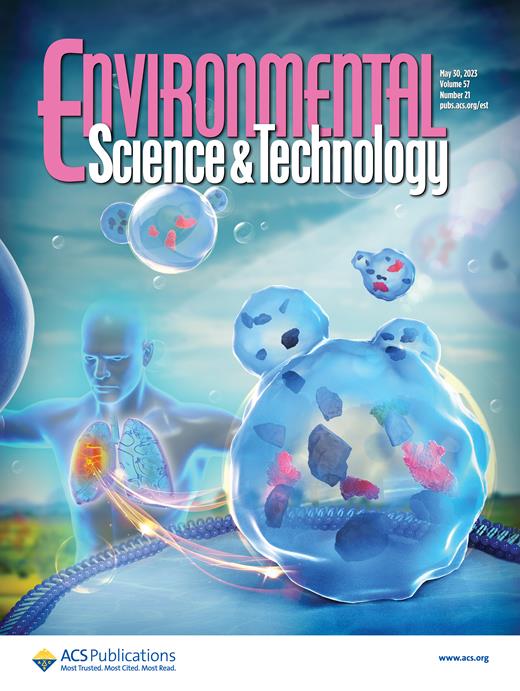
Understanding Mechanisms of PFAS Absorption, Distribution, and Elimination Using a Physiologically Based Toxicokinetic Model
Abstract. Exposures to some per- and polyfluoroalkyl substances (PFAS), including perfluoroalkyl acids (PFAA), have been associated with diverse adverse he

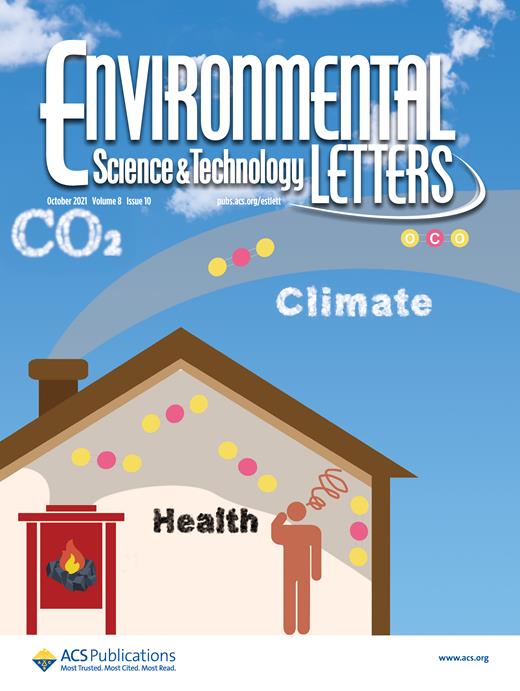
The Air That We Breathe: Neutral and Volatile PFAS in Indoor Air
Abstract. Sources of exposure to per- and polyfluorinated alkyl substances (PFAS) include food, water, and, given that humans spend typically 90% of their
PFAS Statewide Sampling Dataset: PFAS drinking water sampling data from U.S. community water systems
This repository contains a sample of U.S. community water systems (CWS) included in the PFAS statewide sampling dataset. In the first versions of this dataset, 18 states were included as part of Liddie et al., 2023. The statewide sampling dataset now includes compiled data from 28 U.S. statewide sampling campaigns of CWS for per- and polyfluoroalkyl substances (PFAS) in drinking water. The full dataset of samples spans the 2016-2024 period. All data were either publicly available or provided by state agencies upon request. The full dataset contains approximately 98,000 samples from 11,138 CWS in Alabama, Arizona, California, Colorado, Georgia, Illinois, Indiana, Iowa, Kentucky, Maine, Maryland, Massachusetts, Michigan, Minnesota, Missouri, New Hampshire, New Jersey, New York, Ohio, Pennsylvania, Rhode Island, South Carolina, Tennessee, Utah, Vermont, Virginia, Washington, and Wisconsin. Concentrations of 5-40 targeted PFAS were analyzed by multiple labs contracted by the states using comparable methods, including either US EPA Method 537, 537.1, or 533. We assigned a conservative, uniform detection limit at the 98th percentile of all reports detection limits (5 ng/L) for the 5 PFAS that were measured in all states consistently. This dataset also incorporates data from the US EPA’s Safe Drinking Water Information System, including the source water type, county served, zip code, system city, and total population served. The 8-digit hydrological unit code in which a CWS intake is estimated to reside is also provided using data from the United States Geological Survey. This was done by geocoding each CWS using geographical data provided by state agencies, reported zip codes (when available), or based on additional information provided by each system (e.g., system name, city, city served). At this time, the full datasets (either system-level or sample-level) are available by request (see contact information below). Note that additional fields, such continuous concentration data, reported detection limits, concentrations of other PFAS analytes, are also available. Proper citation of both this repository and the original associated paper (see recommended citations below) are required for use of these data. Due to the significant time investment required to curate these data, additional data requests beyond the scope of the details listed here are welcomed but should be agreed upon (e.g., in terms of co-authorship) with the primary point of contact. Please contact Jahred Liddie (jliddie@g.harvard.edu) for questions/suggestions, access to additional variables, or access to the full sampling datasets.
Some Gut Microbes Can Absorb and Help Expel 'Forever Chemicals', Study Shows - Slashdot
"Certain kinds of gut microbes absorb toxic Pfas 'forever chemicals' and help expel them from the body," reports the Guardian, citing a "new first-of-its-kind University of Cambridge research shows." The microbes were found to remove up to 75% of some Pfas from the gut of mice. Several of the stud...

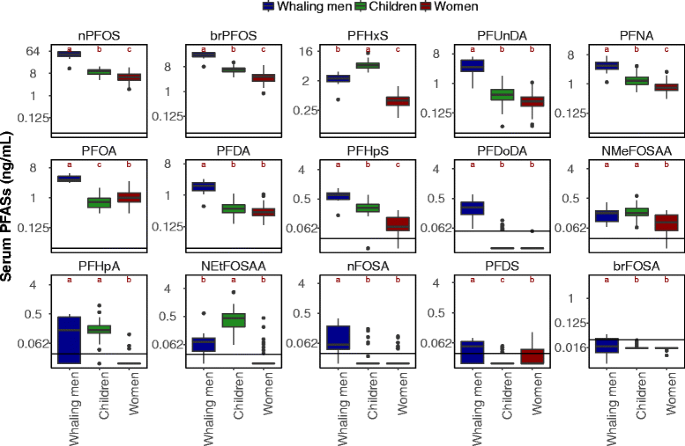
Occurrence of Major Perfluorinated Alkylate Substances in Human Blood and Target Organs
Abstract. Human exposure to perfluorinated alkylate substances (PFASs) is usually assessed from the concentrations in serum or plasma, assuming one-compart

joga4er/PFAS-SCIEX-Data-Processing-Analysis: Data cleaning and QAQC pipeline for targeted PFAS LCMS-MS from Sciex
Code release for publications related to quantifying pfas levels in human liver and serum from Juliana Agudelo.
Unbound Fractions of PFAS in Human and Rodent Tissues: Rat Liver a Suitable Proxy for Evaluating Emerging PFAS?
Abstract. Adverse health effects associated with exposures to perfluoroalkyl and polyfluoroalkyl substances (PFAS) are a concern for public health and are

High organofluorine concentrations in municipal wastewater affect downstream drinking water supplies for millions of Americans
Wastewater receives per- and polyfluoroalkyl substances (PFAS) from diverse consumer and industrial sources, and discharges are known to be a concern for drinking water quality. The PFAS family includes thousands of potential chemical structures containing organofluorine moieties. Exposures to a few well-studied PFAS, mainly perfluoroalkyl acids (PFAA), have been associated with increased risk of many adverse health outcomes, prompting federal drinking water regulations for six compounds in 2024. Here, we find that the six regulated PFAS (mean = 7 to 8%) and 18 measured PFAA (mean = 11 to 21%) make up only a small fraction of the extractable organofluorine (EOF) in influent and effluent from eight large municipal wastewater treatment facilities. Most of the EOF in influent (75%) and effluent (62%) consists of mono- and polyfluorinated pharmaceuticals. The treatment technology and sizes of the treatment facilities in this study are similar to those serving 70% of the US population. Despite advanced treatment technologies, the maximum EOF removal efficiency among facilities in this work was <25%. Extrapolating our measurements to other large facilities across the United States results in a nationwide EOF discharge estimate of 1.0 to 2.8 million moles F y −1 . Using a national model that simulates connections between wastewater discharges and downstream drinking water intakes, we estimate that the sources of drinking water for up to 23 million Americans could be contaminated above regulatory thresholds by wastewater-derived PFAS alone. These results emphasize the importance of further curbing ongoing PFAS sources and additional evaluations of the fate and toxicity of fluorinated pharmaceuticals.
