Move work into new threads without losing your built-up context
Guinness Chen on Twitter / X
Codex can now hand off threads between local and remote hosts.Start work on your laptop, send it to a remote box before you close the lid, bring it back later.And yes, Codex can orchestrate the handoff for you. pic.twitter.com/CcIG9fwzXd— Guinness Chen (@guinnesschen) June 19, 2026

Loom — thread prototype (offline)
Context Engineering | Meetup
"Context engineering is the delicate art and science of filling the context window with just the right information for the next step" - Andrej KarpathyLearn about tools, frameworks, and code that is in service of context engineering from practitioners in this space.Dive into the set of strategies fo


MemGPT: Towards LLMs as Operating Systems
Large language models (LLMs) have revolutionized AI, but are constrained by limited context windows, hindering their utility in tasks like extended conversations and document analysis. To enable using context beyond limited context windows, we propose virtual context management, a technique drawing inspiration from hierarchical memory systems in traditional operating systems that provide the appearance of large memory resources through data movement between fast and slow memory. Using this technique, we introduce MemGPT (Memory-GPT), a system that intelligently manages different memory tiers in order to effectively provide extended context within the LLM's limited context window, and utilizes interrupts to manage control flow between itself and the user. We evaluate our OS-inspired design in two domains where the limited context windows of modern LLMs severely handicaps their performance: document analysis, where MemGPT is able to analyze large documents that far exceed the underlying LLM's context window, and multi-session chat, where MemGPT can create conversational agents that remember, reflect, and evolve dynamically through long-term interactions with their users. We release MemGPT code and data for our experiments at https://memgpt.ai.

Context Engineering
Context engineering strategies for AI agents: write, select, compress, and isolate context to optimize performance and manage long-running tasks.
Infinite-Parameter LLMs: Generating and Adapting Weights from Live Data
Scaling laws hold that language models grow more capable with more parameters and more training data. Mixture-of-Experts (MoE) architectures are a remarkable demonstration of these laws, activating only a fraction of an enormous parameter bank for each token. But this success is built on static pretraining data --- the facts and corrections supplied by users during live interactions are a significant untapped source of potential improvement for a deployed model, but cannot be exploited by conventional architectures whose weights are frozen after training. Instead, this newfound knowledge must be placed in the context (by instruction or retrieval) and re-read on every request, only to be discarded afterwards. We seek instead to learn from live interactions by dynamically updating model weights. Inspired by MoEs, we propose the \textbf{Infinite-Parameter LLM}. A compact hypernetwork turns the online data into low-rank modulations of a shared base network, so feed-forward weights are generated from live data, not read from static memory. Whereas existing weight generators are held fixed after reading the context once, we form a Bayesian belief over the generator's latent state and update it online, such that the effective weights are re-derived as our belief evolves during the session. Although the model's memory footprint is constant, the feasible space of generated weights is thus effectively infinite. Representing live data in the weights rather than the prompt amortises compute, frees the context window, persists updates across turns, and can generalise better than in-context use. Our evaluation protocol applies this methodology to in-context learning and retrieval.
Luke Wroblewski on Twitter / X
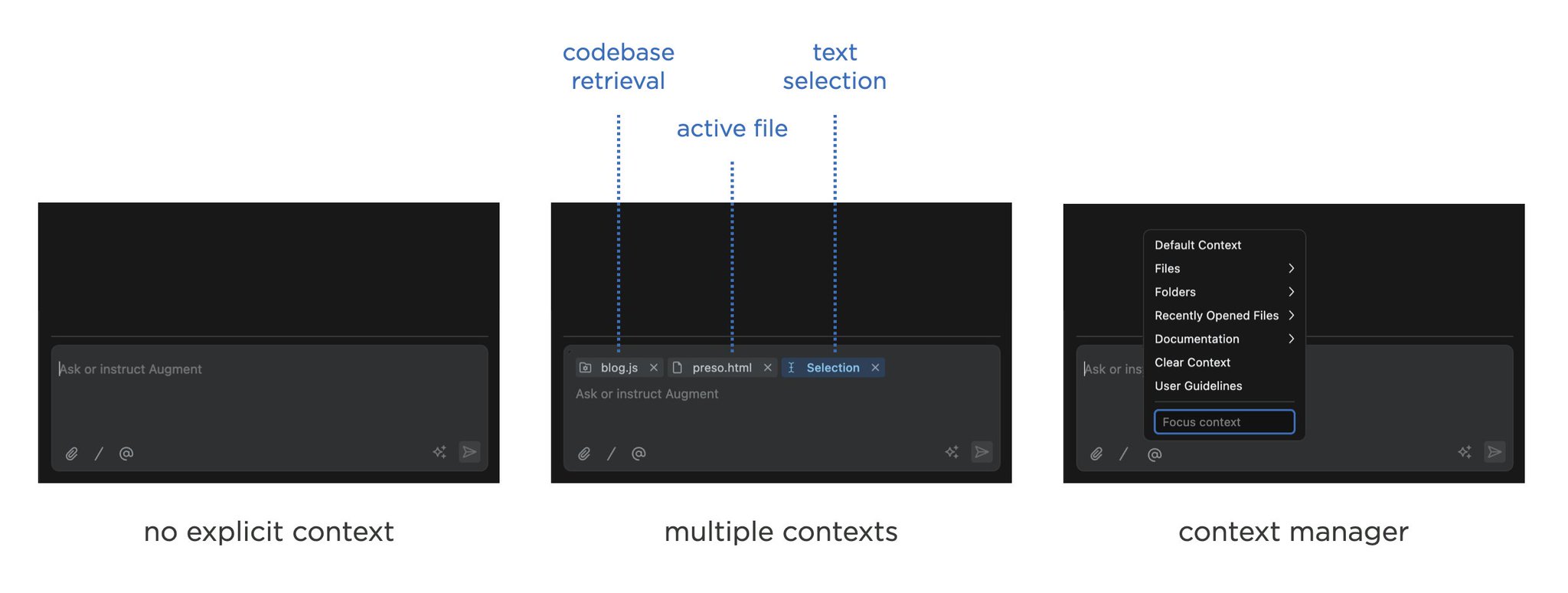
If context engineering is the new hotness for engineering, context management is the new UI hotness/challenge for designers. pic.twitter.com/iXNTYnVRIi— Luke Wroblewski (@LukeW) July 10, 2025
Understanding memory management
Learn MemGPT memory management techniques for controlling LLM context windows with in-context and external storage.

Signals and Threads
Stephen Dolan works on Jane Street’s Tools and Compilers team where he focuses on the OCaml compiler. In this episode, Stephen and Ron take a trip down memory lane, discussing how to manage computer memory efficiently and safely. They consider trade-offs between reference counting and garbage collection, the surprising gains achieved by prefetching, and how new language features like local allocation and unboxed types could give OCaml users more control over their memory.

OpenAI on Twitter / X
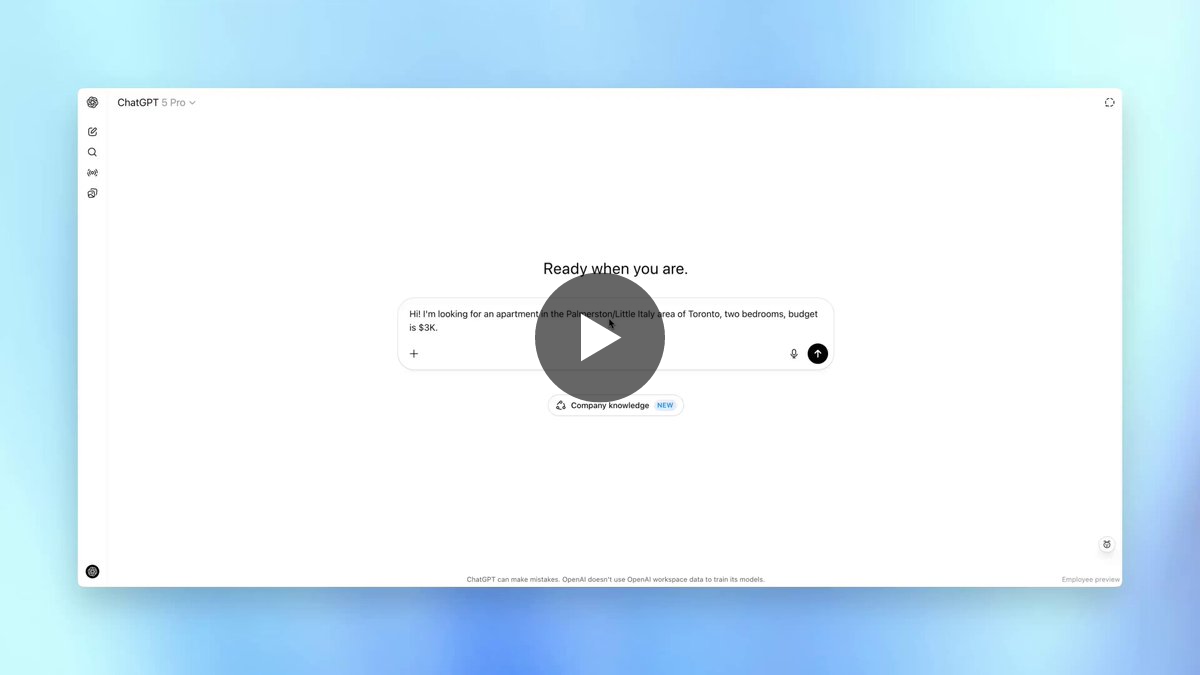
You can now interrupt long-running queries and add new context without restarting or losing progress.This is especially useful for refining deep research or GPT-5 Pro queries as the model will adjust its response with your new requirements. Just hit update in the sidebar and… pic.twitter.com/kESrkU9hc9— OpenAI (@OpenAI) November 5, 2025

JUNDE WU on Twitter / X
Introducing OneContext. I built it for myself but now I can’t work without it, so it felt wrong not to share.OneContext is an Agent Self-Managed Context Layer across different sessions, devices, and coding agents (Codex / Claude Code).How it works:1. Open Claude Code/Codex… pic.twitter.com/h0D4KAFNC5— JUNDE WU (@JundeMorsenWu) February 7, 2026