

The fastest & easiest way to get HTTPS in your local development environment.
Requirements for HTTPS for Local Domains
When connecting to servers on their local network, users are surprised to encounter user interfaces that display errors, show insecure connections, and block some HTTP features when missing a secure context. However, obtaining PKIX certificates for those servers is difficult for a variety of reasons. This document explores requirements for authenticating local servers.
The Core Tech Behind Datum's Desktop App
We built an app to expose your localhost to a public HTTPS URL, here's how it's built and what we learned along the way.


Caddy - The Ultimate Server with Automatic HTTPS
Caddy is a powerful, enterprise-ready, open source web server with automatic HTTPS written in Go

Cloudflare Quick Tunnels
Put localhost on the Internet with a free, encrypted Cloudflare Quick Tunnel. No account, DNS, or open ports required.
zeroserve: a zero-config web server you can script with eBPF
zeroserve is a small, fast, zero-config HTTPS server. You hand it a tarball of a website and it serves it - over HTTP/2 and TLS 1.3, with hot reload and a tiny resident footprint. The twist is that you can drop eBPF programs into the tarball and they run on every request, in userspace, as sandboxed middleware - rewriting, authenticating, and rate-limiting requests, or reverse-proxying them to a backend when you want it to act as a gateway in front of your app.
HTTPS for Local Networks · Issue #78 · w3c/tpac2024-breakouts
Session description It is not possible to get a publicly trusted CA to sign a certificate for a local domain (i.e. a non-publicly resolvable domain name such as router.local, printer.home, 192.168....
How do you secure API secrets in local development without exposing them to devs?
20 votes, 25 comments. Hey everyone! I’m a tech-lead managing a development team, and we’re currently using .env files shared among developers to…
CertSimple | An nginx config for 2017
With HTTP/2 in every browser, load balancing with automatic failover, IPv6, a sorry page, separate blog server, HTML5 SSE and A+ HTTPS.
mitmproxy - an interactive HTTPS proxy
mitmproxy is your swiss-army knife for debugging, testing, privacy measurements, and penetration testing. It can be used to intercept, inspect, modify and replay web traffic such as HTTP/1, HTTP/2, HTTP/3, WebSockets, or any other SSL/TLS-protected protocols. You can prettify and decode a variety of message types ranging from HTML to Protobuf, intercept specific messages on-the-fly, modify them before they reach their destination, and replay them to a client or server later on.
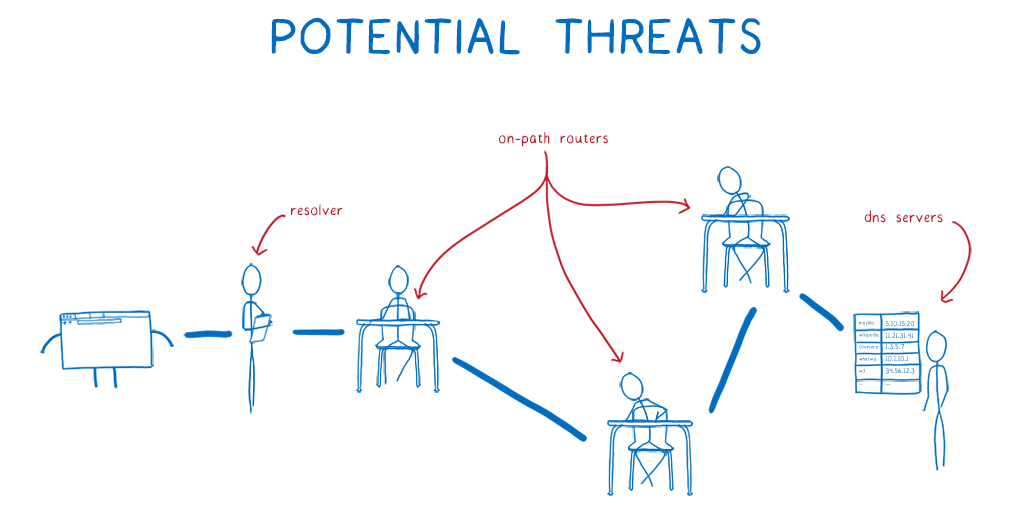
A cartoon intro to DNS over HTTPS – Mozilla Hacks - the Web developer blog
At Mozilla, we closely track threats to users' privacy and security. This is why we've added tracking protection to Firefox and created the Facebook container extension. In today's cartoon intro, ...
Certificates for localhost
Sometimes people want to get a certificate for the hostname “localhost”, either for use in local development, or for distribution with a native application that needs to communicate with a web application. Let’s Encrypt can’t provide certificates for “localhost” because nobody uniquely owns it, and it’s not rooted in a top level domain like “.com” or “.net”. It’s possible to set up your own domain name that happens to resolve to 127.0.0.1, and get a certificate for it using the DNS challenge. However, this is generally a bad idea and there are better options.
Some Secret Management Belongs in Your HTTP Proxy - exe.dev blog
do third-party integrations via HTTP header management

bpc-clone/bypass-paywalls-firefox-clean
Contribute to bpc-clone/bypass-paywalls-firefox-clean development by creating an account on GitHub.
was it loaded via http+dns+ssl? then it's server-first. (which is not bad. but it's not the local-first i want.)

Jake Lazaroff
this looks very cool, i mean that genuinely, but tbh i bristle a bit seeing "local-first" used as a straw man here. of course if your server is the source of truth you can eliminate a lot of local-first complexity — the entire point of that complexity is to avoid a server-authoritative architecture!
