

Using spaced repetition to create understanding
Automated Sentence Generation for a Spaced Repetition Software
This paper presents and tests AllAI, an app that utilizes state-of-the-art NLP technology to assist second language acquisition through a novel method of sentence-based spaced repetition. Diverging from current single word or fixed sentence repetition, AllAI dynamically combines words due for repetition into sentences, enabling learning words in context while scheduling them independently. This research explores various suitable NLP paradigms and finds a few-shot prompting approach and retrieval of existing sentences from a corpus to yield the best correctness and scheduling accuracy. Subsequently, it evaluates these methods on 26 learners of Danish, finding a four-fold increase in the speed at which new words are learned, compared to conventional spaced repetition. Users of the retrieval method also reported significantly higher enjoyment, hinting at a higher user engagement.
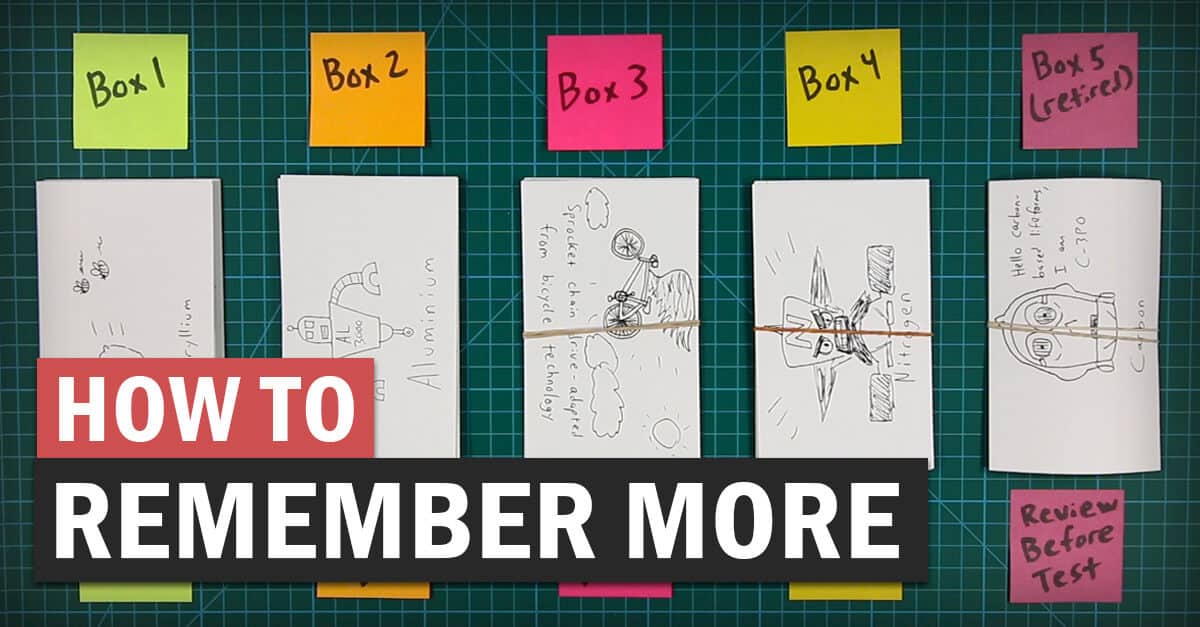
How to Remember More of What You Learn with Spaced Repetition
Using spaced repetition in conjunction with other study techniques can help you memorize information much, much more quickly. Here's how to do it.
Math Academy
Q. Michael Pershan’s main critique of spaced repetition in the context of Math Academy?A. It reinforces his memory of a shallow understanding.
Spaced repetition
Spaced repetition is an evidence-based learning technique that is usually performed with flashcards. Newly introduced and more difficult flashcards are shown more frequently, while older and less difficult flashcards are shown less frequently in order to exploit the psychological spacing effect. The use of spaced repetition has been proven to increase the rate of learning.

Mochi - Spaced repetition flashcards
Take notes and make flashcards using markdown, then study them using spaced repetition.
Using spaced repetition systems to see through a piece of mathematics
By Michael Nielsen, January 2019
Spaced mathematics practice improves test scores and reduces overconfidence
Abstract The practice assignments in a mathematics textbook or course can be arranged so that most of the problems relating to any particular concept are massed together in a single assignment, or these related problems can be distributed across many assignments–a format known as spaced practice. Here we report the results of two classroom experiments that assessed the effects of mathematics spacing on both test scores and students' predictions of their test scores. In each experiment, students in Year 7 (11–12 years of age) either massed their practice into a single session or divided their practice across three sessions spaced 1 week apart, followed 1 month later by a test. In both experiments, spaced practice produced higher test scores than did massed practice, and test score predictions were relatively accurate after spaced practice yet grossly overconfident after massed practice.

Enjoy it again: Repeat experiences are less repetitive than people think.
Home - 80/20 Japanese
Finally make sense of Japanese grammar Master Japanese grammar through visual explanations that show you why the language works the way it does, so you can build your own sentences with confidence, not just memorize phrases. “ Your course is AMAZING! It’s a lifesaver to having me communicate properly with my coworkers and getting around […]
Unlocking Scientific Concepts: How Effective Are LLM-Generated Analogies for Student Understanding and Classroom Practice?
Teaching scientific concepts is essential but challenging, and analogies help students connect new concepts to familiar ideas. Advancements in large language models (LLMs) enable generating analogies, yet their effectiveness in education remains underexplored. In this paper, we first conducted a two-stage study involving high school students and teachers to assess the effectiveness of LLM-generated analogies in biology and physics through a controlled in-class test and a classroom field study. Test results suggested that LLM-generated analogies could enhance student understanding particularly in biology, but require teachers’ guidance to prevent over-reliance and overconfidence. Classroom experiments suggested that teachers could refine LLM-generated analogies to their satisfaction and inspire new analogies from generated ones, encouraged by positive classroom feedback and homework performance boosts. Based on findings, we developed and evaluated a practical system to help teachers generate and refine teaching analogies. We discussed future directions for developing and evaluating LLM-supported teaching and learning by analogy.

Creative Reading: Scaffolding Reading for Transformation
Reading augmentation systems increasingly help readers process text at scale. While these tools address real constraints of time and cognitive load, they often implicitly frame reading as...

The Spacing Effect: How to Improve Learning and Maximize Retention
We are not taught how to learn in school, we are taught how to pass tests. The spacing effect is a far more effective way to learn and retain information that works with our brain instead of against it. Find out how to use it here.

Nobody. Understands. Punctuation.
“So. In the past few years, you’ve all learned that an essay should be five paragraphs. The first paragraph states your argument and includes a topic sentence. You develop your argument over the next three paragraphs, and finish with a conclusion paragraph that starts with the words ‘in conclusion’ or something.”